
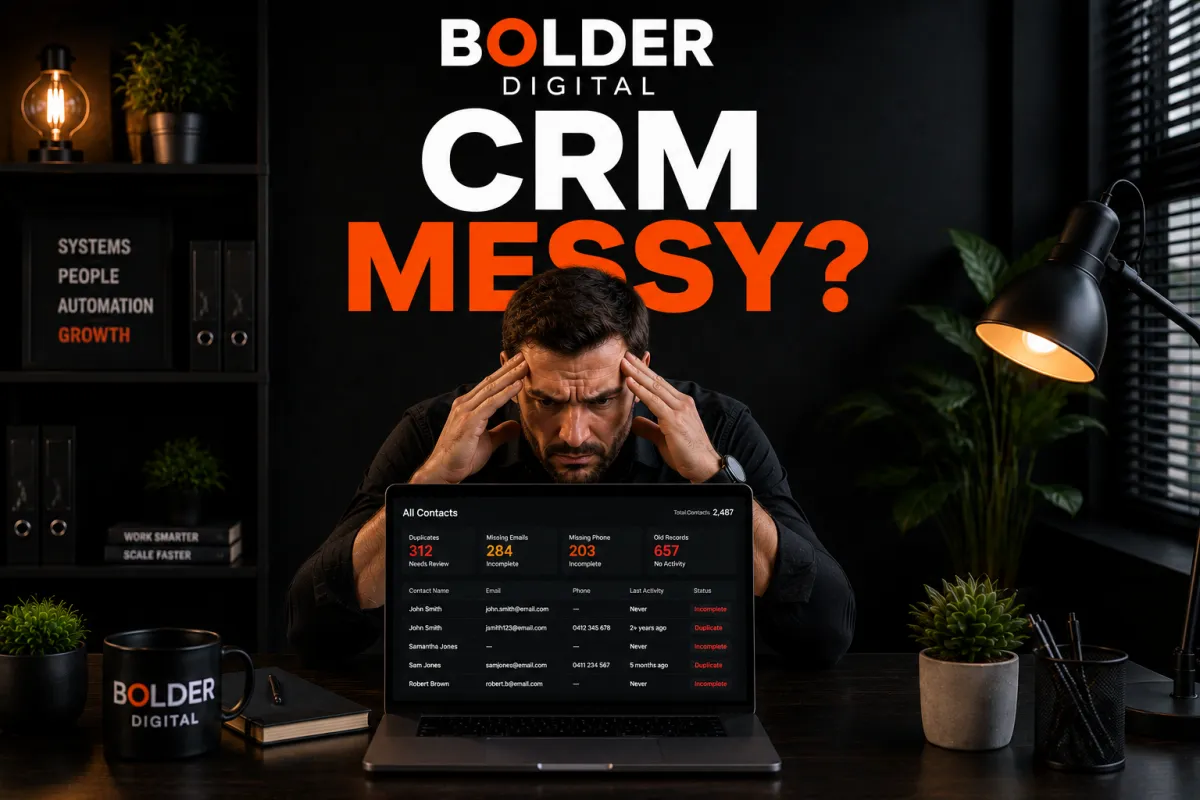
CRM Management Virtual Assistants: Keeping Your Data Clean
Every automation system I have written about in this blog series, instant lead response, nurture sequences, review requests, database reactivation, depends entirely on one thing working properly underneath it. Clean, accurate CRM data. A brilliant automation triggered on a wrong phone number, a duplicate contact, or an outdated tag does not just fail quietly. It actively damages the customer experience while looking, on the surface, like it is working exactly as intended.
Let me walk you through why this genuinely matters, and what a dedicated CRM management virtual assistant actually does to keep it from happening.
Just How Fast Data Actually Decays
CRM data does not stay accurate on its own. Research consistently shows contact databases decay somewhere between twenty two and thirty four percent every single year, as people change phone numbers, switch jobs, move house, or simply stop using an old email address. Left completely unmanaged for a couple of years, a genuinely large share of a database becomes inaccurate, while a business keeps paying for and building automations around all of it as though it were still current.
The 1 10 100 Principle: Why Prevention Beats Cleanup
A useful way to think about this comes from what is often called the 1 10 100 rule. Verifying a piece of data properly the moment it enters your system costs roughly one unit of effort. Cleaning it up later, once it has already sat wrong in your CRM for a while, costs roughly ten times that. Leaving it wrong entirely, and letting it actively cause a mistake, a wrong number called, a customer contacted with the wrong information, costs closer to a hundred times the original effort. This is exactly why treating CRM hygiene as an ongoing discipline, rather than an occasional cleanup project, genuinely pays for itself many times over.

What a CRM Management Virtual Assistant Actually Does Day to Day
This role covers a specific, genuinely valuable set of tasks. Deduplication, merging contacts that have accidentally been created twice under slightly different details. Standardisation, making sure phone numbers, names, and addresses follow a consistent format rather than a mix of styles that make searching and filtering unreliable. Flagging invalid data, bounced emails and disconnected numbers, so they get corrected or removed rather than silently sitting in your system indefinitely. And ongoing tag and segment management, keeping your tagging structure genuinely useful rather than a sprawling, inconsistent mess built up from months of ad hoc additions nobody ever cleaned up.
Why Dirty Data Specifically Breaks the Automation You've Already Built
Here is where this becomes genuinely urgent rather than just tidy admin. If you have built instant response automations, nurture sequences, or review requests, all of it depends entirely on the data underneath it being accurate. A duplicate contact means two separate automated sequences can fire for the same person, creating a confusing, unprofessional double contact experience. An outdated tag means someone ends up in entirely the wrong nurture sequence for their actual situation. A bounced, unflagged email address quietly damages your sender reputation every time a campaign goes out to it, exactly the kind of deliverability issue I have written about elsewhere in the context of proper email authentication. None of this shows up as an obvious error. It just quietly erodes the effectiveness of systems that otherwise look like they are working fine.
The Deduplication Problem Nobody Notices Until It's Bad
Duplicate contacts build up gradually and invisibly, one at a time, until a database that started clean is quietly carrying a meaningful share of records that are really the same person listed two or three times. Beyond the confusing customer experience this creates, it also distorts your actual numbers, inflating your contact count, skewing engagement metrics, and making genuine list size and reach look considerably better than reality. A dedicated CRM management virtual assistant catches and merges these consistently, rather than letting them accumulate until a proper cleanup becomes a genuinely large project.
Ongoing Maintenance Versus a One Time Cleanup
A single cleanup project, however thorough, only fixes the problem as it exists on that specific day. New data keeps entering your CRM constantly, and without ongoing maintenance, decay simply starts building again immediately. The businesses genuinely keeping their data clean over the long term treat this as a standing, recurring responsibility, not a project completed once and forgotten, which is exactly what a dedicated CRM management virtual assistant provides that an occasional cleanup never can.
Getting the Right Match for This Role
Given how directly clean data affects every other automation your business relies on, this is exactly the kind of role worth matching to a genuinely trained virtual assistant, rather than leaving it as an occasional, deprioritised task nobody quite owns. This is exactly the standard we hold every placement to, matching your business with a virtual assistant who treats CRM hygiene as an ongoing discipline rather than a one off cleanup. If your automations are only as reliable as the data underneath them, and you are not confident that data is genuinely clean right now, our virtual assistant service is built to close exactly that gap.
The Bottom Line
Clean CRM data is not a minor administrative nicety sitting behind your actual marketing and automation systems. It is the foundation every single one of them depends on to work correctly. Data decays constantly whether you notice it or not, and the cost of leaving it unmanaged compounds considerably more than the cost of maintaining it properly from the start. A dedicated CRM management virtual assistant treating this as ongoing, standing work is what actually protects the value of every other system you have already built.

Frequently Asked Questions
How quickly does CRM data actually become outdated?
Research consistently shows contact databases decay somewhere between twenty two and thirty four percent annually, as people change contact details, switch jobs, or simply stop using old accounts. Left unmanaged for a couple of years, a meaningful share of a database becomes genuinely inaccurate.
Why does dirty CRM data affect automation specifically, not just reporting?
Automations like instant response sequences, nurture campaigns, and review requests all trigger based on the data sitting in your CRM. A duplicate contact, an outdated tag, or a bounced email address can cause an automation to behave incorrectly or damage your email sender reputation, even though the automation itself is technically working exactly as built.
What is the 1 10 100 rule in the context of CRM data?
It describes how the cost of a data error compounds over time. Verifying data properly when it first enters your system costs roughly one unit of effort, cleaning it up later costs roughly ten times that, and leaving it wrong until it actively causes a mistake costs closer to a hundred times the original effort.
Is a one time CRM cleanup enough to keep data genuinely clean?
No, not on its own. A cleanup project only fixes the data as it exists on that specific day, and new data continues entering the system constantly afterward. Genuine, ongoing maintenance is needed to prevent decay from simply building up again immediately after a one time cleanup.