Digital Marketing Burnie: Marketing in a Port and Industry City
Burnie has always worked for a living. It is a port city on the north west coast, and for decades the port, freight, and industry have shaped its streets, its shifts, and its customers. Right now it is also a city with a lot happening: new energy projects, port upgrades, a rebuilt arts centre, and plans for the city centre. At Bolder Digital, we think that mix makes Burnie a distinct marketing challenge. Many businesses here are selling to two very different customers at the same time, and the marketing that suits one does not suit the other.
Burnie in Brief
Burnie is Tasmania’s fourth largest city, with around 20,000 residents at the 2021 census, and roughly 156,000 people living along the wider northern coast. It sits about 47 kilometres west of Devonport. The Port of Burnie handles more than five million tonnes of freight a year, including close to half of Tasmania’s containerised freight, and it secured a new 30 year lease in late 2025.
The city is also in the middle of a run of investment. According to Burnie City Council’s own project pages, projects under way or in planning include port and rail upgrades, work on the North West Regional Hospital’s emergency department, a redeveloped Burnie Arts Centre that opened late last year, and a new courts complex. Larger energy projects, including Marinus Link and TasNetworks’ North West Transmission Developments, are expected to bring construction work and contractors to the region.
Projects like these can shift, so build your plans on what you can see today, not on a single announcement.
Two Customers, Two Kinds of Marketing
Most Burnie businesses fall into one of two camps, and plenty straddle both.
Selling to the public. Cafes, shops, trades, health, hospitality, real estate, and services for locals and visitors.
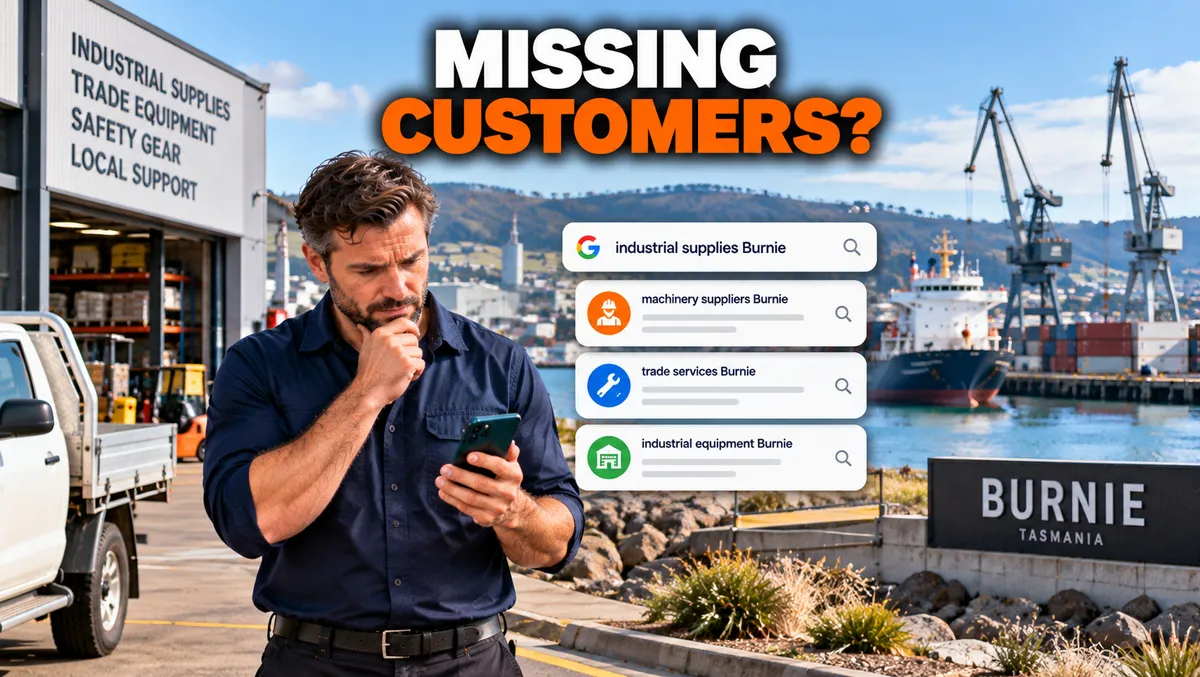
Selling to industry and projects. Engineering, logistics, equipment, safety, suppliers, contractors, and anyone providing services to the port, transmission works, and major employers.
The two audiences search differently, trust different signals, and buy on different timelines. A single message to both usually serves neither.
Marketing to the Public: Locals First
For consumer facing businesses, the foundations are the same as anywhere, and they matter a great deal in a city of this size.
A complete, accurate Google Business Profile, with correct hours and recent photos
A steady flow of genuine reviews, with replies to each
A fast website that works on a phone
An email or text list of regular customers
Content that speaks to Burnie, not a generic “Tasmania” audience
In a city where reputations travel quickly, being known as the reliable local choice is your biggest asset.
Marketing to Industry: Credibility Over Clicks
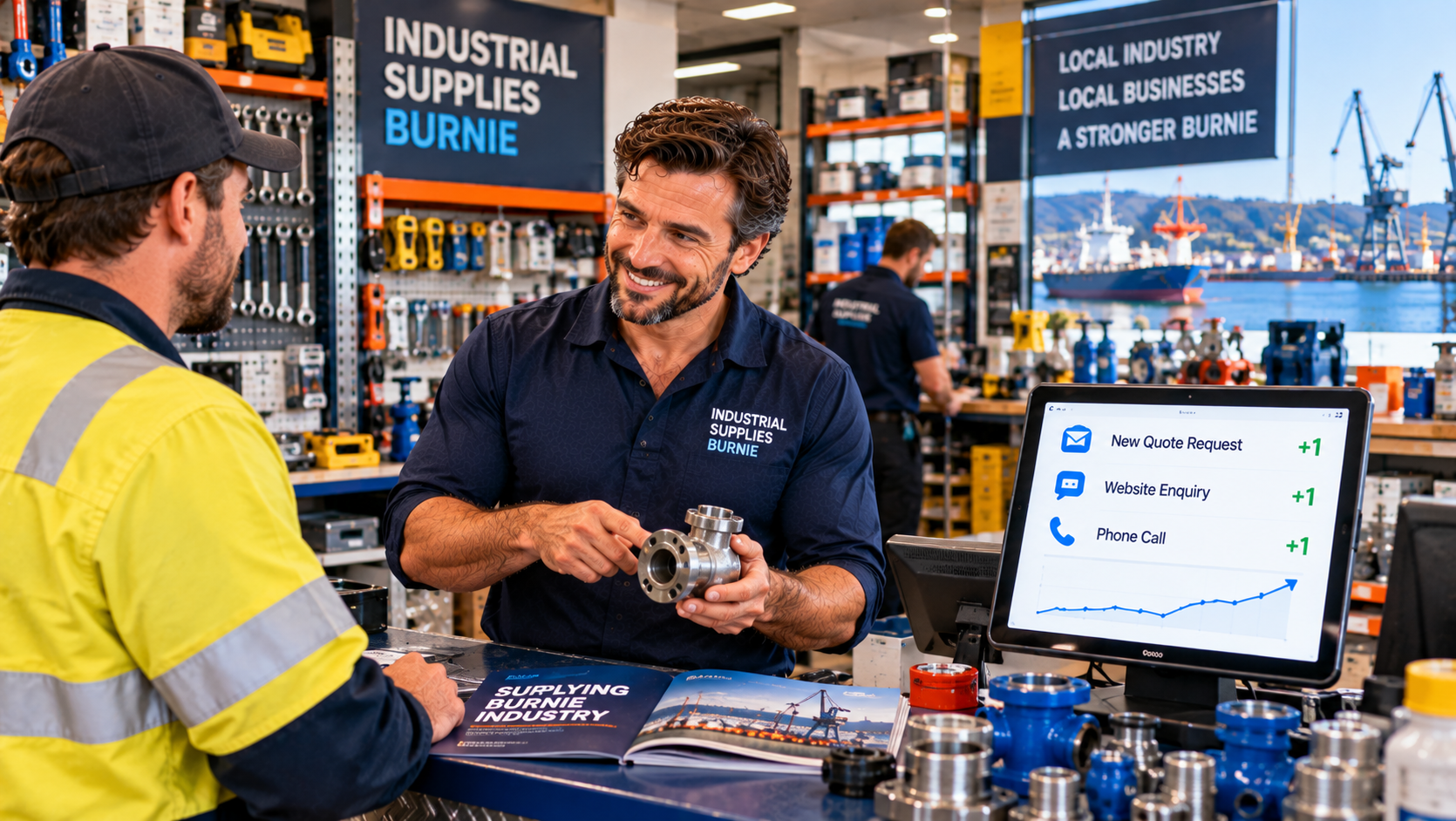
If you sell to the port, to project owners, or to larger employers, your marketing has a different job. Buyers here are checking whether you are safe, capable, insured, and local enough to respond when needed. A few things help:
A capability page. Plainly list what you do, your equipment, your accreditations, your insurance, and your safety record where you can.
Case studies, with permission. Show past work in plain terms, and avoid anything confidential.
A local presence that is easy to verify. A Google profile, a real address, and a phone that gets answered.
LinkedIn and direct outreach. Many industry buyers are found and checked there, and a short, relevant message to a procurement contact often works better than an advertisement.
Registering where it matters. Project owners such as TasNetworks have invited local contractors, suppliers, and service providers to register their interest in the work. If that is you, make sure you are listed, and make sure your website backs it up.
Selling to the Workforce Coming Through
Large projects bring crews, contractors, and visitors who need somewhere to eat, sleep, shop, and get things fixed. If you serve them, think about how they search:
They are often new to Burnie, so they search by need and “near me”, on their phones.
Their hours differ from the nine to five. Early starts and late finishes are common, so show opening hours that suit them.
Accounts, group bookings, or meals for a crew may matter more than walk in trade.
Practical details, such as parking for work vehicles, count for more than decoration.
Do not assume this demand will arrive on a schedule. Test it, measure it, and keep your core local customers happy as the base.
Shift Workers and Odd Hours
Industrial cities run on shifts. People working on the port or at major sites search and book at unusual times, such as before dawn or late at night. That has two consequences for your marketing:
Time your posts, emails, and ads for when people are actually awake and free, not just office hours.
Make sure enquiries are answered after hours. An AI chatbot or an AI receptionist can take bookings and questions overnight, so the enquiry does not go cold.
Visitors: A Gateway City
Burnie is also a gateway to the north west coast and the West Coast, with its beaches, parks, the Makers’ Workshop, penguins, and a growing food and whisky scene. A new whisky tourism experience launched in May. Visitors plan before they arrive and search on arrival, so give them what they need:
clear, current opening hours and photos on your Google profile
content that answers “what to do in Burnie” in your own corner of the market
easy booking for experiences, tables, and tours
Burnie also sits between Devonport and the rest of the coast, as we covered in our Devonport piece, so think about the whole north west corridor, not only the city limits.
A Channel Mix That Fits
Start with the foundations and build outward.
Google Business Profile and reviews: the base for every business.
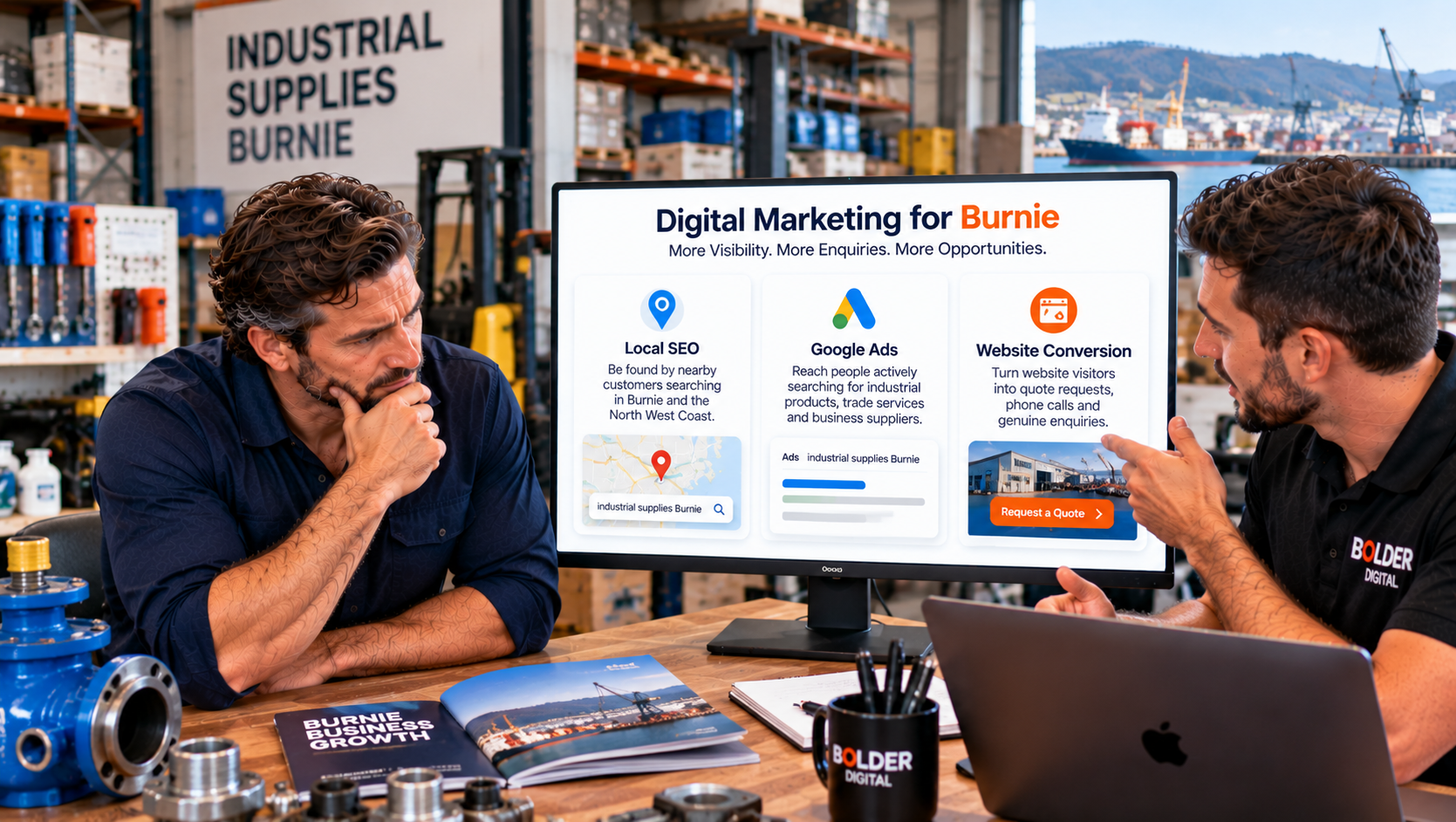
Local SEO: our Burnie work covers searches such as “near me” and suburb and service terms.
Google Ads: for high intent searches, such as trades, emergency services, or supplier terms.
LinkedIn and email: for industry buyers.
Social media: for local community and visitors.
Partnerships: with accommodation, tourism operators, and neighbouring businesses.
Our piece on marketing budgets covers how much to spend.
Housing and Workforce Pressure
Burnie City Council has flagged workforce housing pressure as an issue as projects ramp up. For businesses, that can mean difficulty hiring and slower growth than the pipeline suggests. It is a reason to market to recruit as well as to sell. A clear careers page, honest descriptions of roles, and a strong profile as a good local employer can matter as much as customer facing marketing.
Measure Each Audience Separately
Track consumer enquiries and industry enquiries as separate groups. Use tracking tags on campaigns, ask new customers how they found you, and record the source of every lead in your CRM. For industry work, note how long it takes to go from first contact to a job, since the cycle is usually longer.
A Burnie Checklist
Decide which audiences you serve, and write a message for each.
Tidy your Google profile and ask for reviews.
If you sell to industry, publish a capability page and case studies.
Register your interest where project owners invite it.
Match hours and content to shift workers.
Make sure after hours enquiries get an answer.
Show visitors practical details and easy booking.
Measure each audience separately.
How Bolder Digital Approaches Burnie
At Bolder Digital, we start by working out who you really sell to, and whether that is residents, visitors, industry, or all three. We build the foundations, then add campaigns and content for each audience, and track what works. You can see how this fits with our local SEO services in Burnie, our digital marketing in Burnie, and our Google Business Profile optimisation.
The Bottom Line
Burnie is a working port city with real investment on the horizon. That makes it a city of two audiences, and marketing that treats them differently will outperform marketing that treats them the same. Build a strong local reputation, show credibility to industry buyers, serve the shift workers and visitors passing through, and measure each group on its own terms. Do that, and you will be ready whichever way the projects land.
Frequently Asked Questions
What is Burnie’s economy based on?
Historically heavy industry and the port. The Port of Burnie handles more than five million tonnes of freight a year and close to half of Tasmania’s containerised freight, and the city is also a hub for health, education, and services for the north west coast.
How should a business that sells to industry market itself?
Focus on credibility. Publish a clear capability page, use case studies with permission, keep a local, verifiable presence, use LinkedIn and direct outreach, and register your interest where project owners invite local suppliers.
Will the new energy projects bring more customers?
They may bring contractors and construction activity to the region, but timelines can change. Plan on what you can see, test demand, and keep your core local customers as the base.
How do I reach shift workers online?
Time your marketing for when they are awake and free, show opening hours that suit early and late shifts, and make sure enquiries are answered after hours.
How does Bolder Digital help Burnie businesses?
We work out which audiences you serve, build your Google profile and reputation, create campaigns for each audience, and measure the results separately.
Jarryd Holmes, Founder & Owner, Bolder Digital | Prospect Vale, Tasmania | bolderdigital.com.au