Digital Marketing for Hospitality: Filling Tables and Rooms
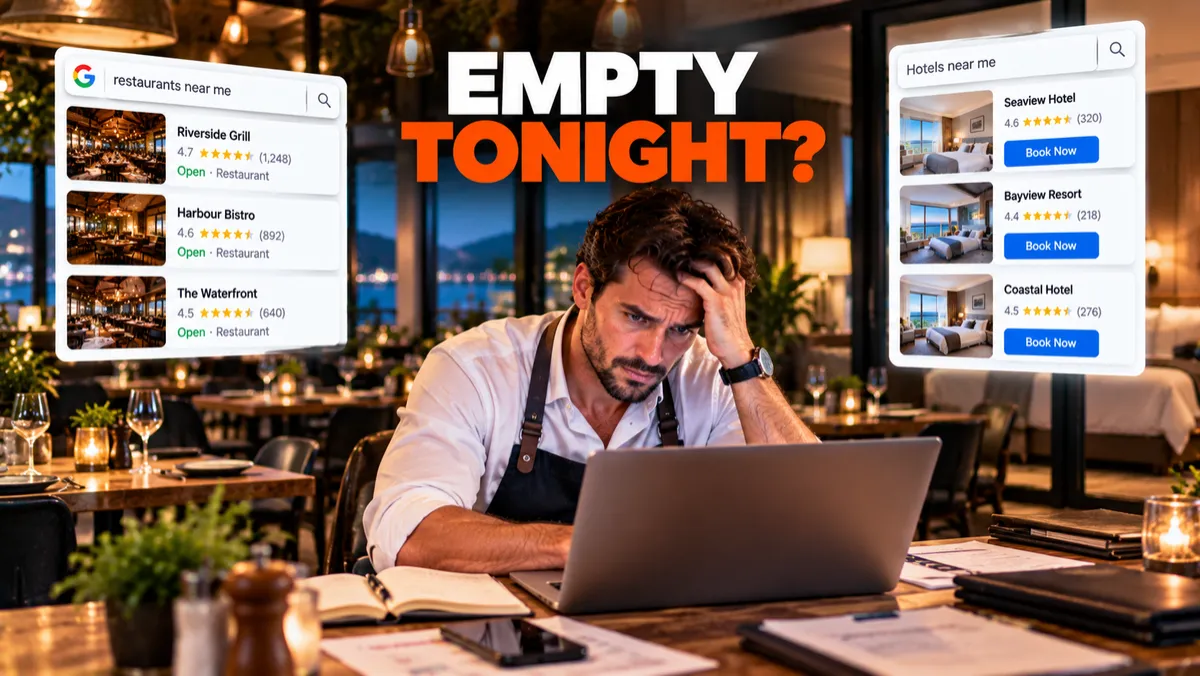
A restaurant with an empty Tuesday night and a motel with unsold rooms on a quiet weekend share the same underlying problem. Neither has an overall demand problem. They have a visibility problem at specific moments, and a margin problem on the bookings they do get. At Bolder Digital, we work with both kinds of venue, and the approach has more in common than most owners expect.
The Commission Problem on the Accommodation Side
For accommodation, the clearest financial leak is online travel agent commission. Commonly cited figures put these commissions somewhere between fifteen and twenty five percent of booking revenue in Australia. A property taking eighty thousand dollars a month through an agent at twenty percent is giving up sixteen thousand dollars a month before a single guest arrives.
Online agents bring reach, and nobody should pretend they do not. The goal is not to abandon them. It is to shift the mix gradually toward bookings the property keeps in full, because every percentage point moved to direct improves margin without needing a single extra guest.
Your Google Business Profile Is Your Real Front Door
For both restaurants and accommodation, the Google Business Profile does a large share of the work that a website used to do. It is where a traveller or a local sees photos, reviews, opening hours, booking links, and directions in one place, often before they ever reach your website.
For hospitality, the profile deserves particular care:
Fill every field, including amenities, check in and out times for accommodation, and attributes such as outdoor seating, takeaway, or pet friendly.
Keep photos current and honest, showing the actual room, the actual plate, the actual view.
Link directly to your booking system or menu so the next step is one tap.
Respond to reviews, including the critical ones, promptly and genuinely.
Local search results for hospitality tend to be decided by prominence, which is built from reviews and engagement, as I have written about for Elizabeth Street and the Bellerive boardwalk. In dense dining precincts, this matters even more.
Filling the Quiet Nights, Not Just the Busy Ones
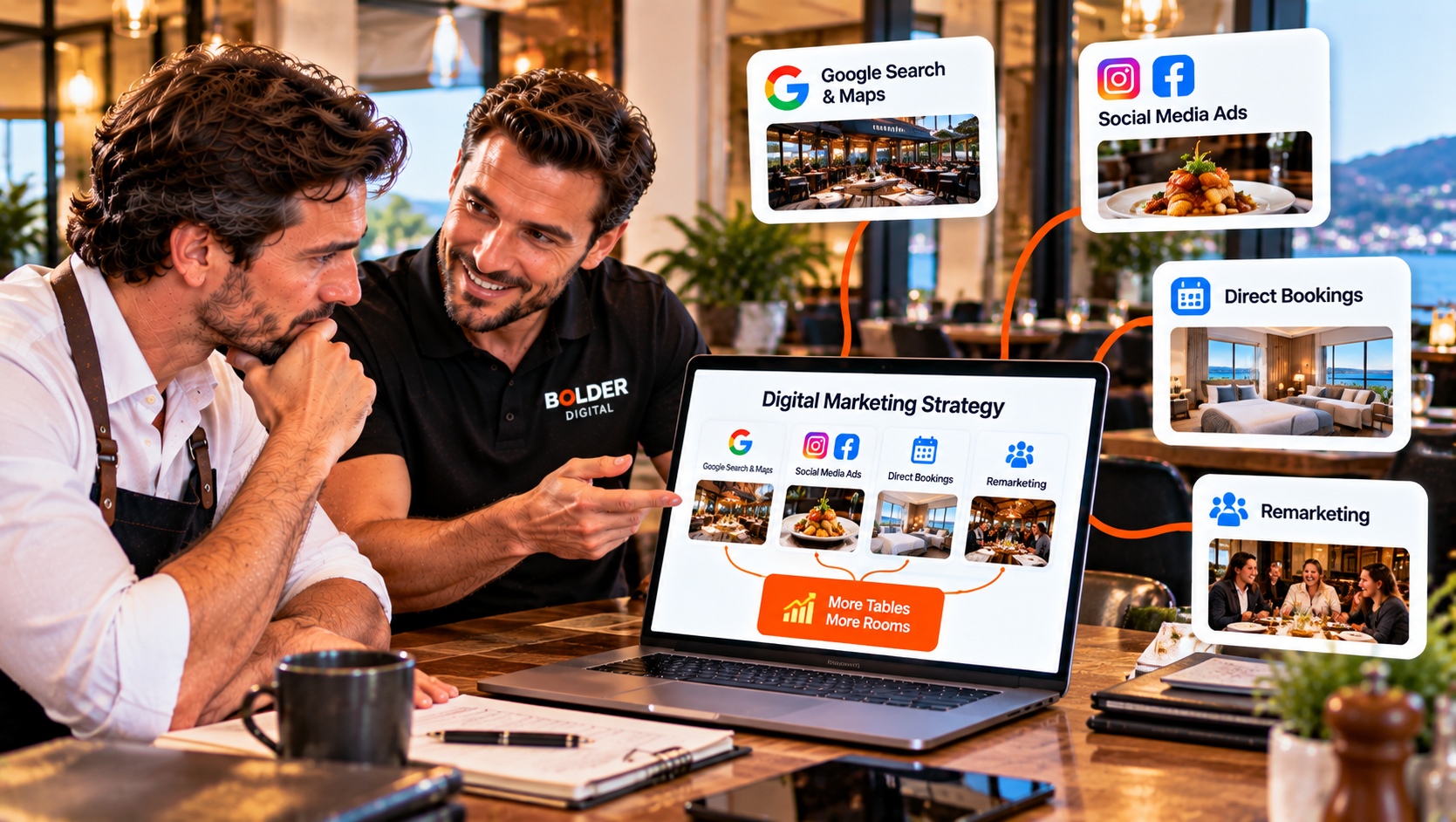
Most hospitality venues do not struggle on a Saturday. The empty seats and rooms sit on the quiet days, and marketing should aim directly at them.
For restaurants, that might mean:
a midweek set menu or trivia night promoted to people who have dined before
a local offer sent to your email or SMS list for Tuesday and Wednesday
an event page for live music or a themed night, so it is findable in search
For accommodation, it means promoting midweek or shoulder season stays directly to past guests and local audiences, with a clear reason to book now. If you offer an incentive, such as a direct booking benefit, state the terms plainly. Genuine, specific offers outperform vague discounting, and they protect margin better than simply cutting your rate.
Own Your Guest List
An online agent owns the relationship with the guest it sends you. A direct booking, or a direct reservation at your restaurant, gives you a name, an email address, and a number you can contact again, with proper consent. That list is one of the most valuable things a hospitality business can build, because a returning guest costs very little to bring back compared to winning a new one.
This is where automation earns its keep. A simple automated message after a visit that thanks the guest, asks for a review, and invites them back at a quiet time keeps the whole cycle running without staff time. Any marketing message sent by text or email needs proper consent and an easy way to unsubscribe, which is the Spam Act rule I have covered elsewhere in this series.
Paid Advertising: Use It Where It Pays
Paid advertising can help, but it works best when pointed at a clear goal. For accommodation, that often means Google's accommodation and search advertising tied to your booking engine. A direct booking can justify its acquisition cost when it avoids a commission, but only if the direct price and the booking experience are at least as good as the agent listing. If the agent is cheaper or easier, a campaign will struggle however well it is run. One note for anyone reading older advice: Google changed how its hotel advertising bidding works in 2025, so check current options before planning.
Reviews: The Quiet Deciding Factor
For a guest choosing where to eat or stay in an unfamiliar place, reviews often decide the outcome. A steady flow of recent, specific reviews tells a stranger the place is real, current, and worth the trip. Asking for reviews at the right moment, such as when a guest checks out or after a meal, and responding to each one, does more for a hospitality business than most paid campaigns.
How Bolder Digital Approaches Hospitality
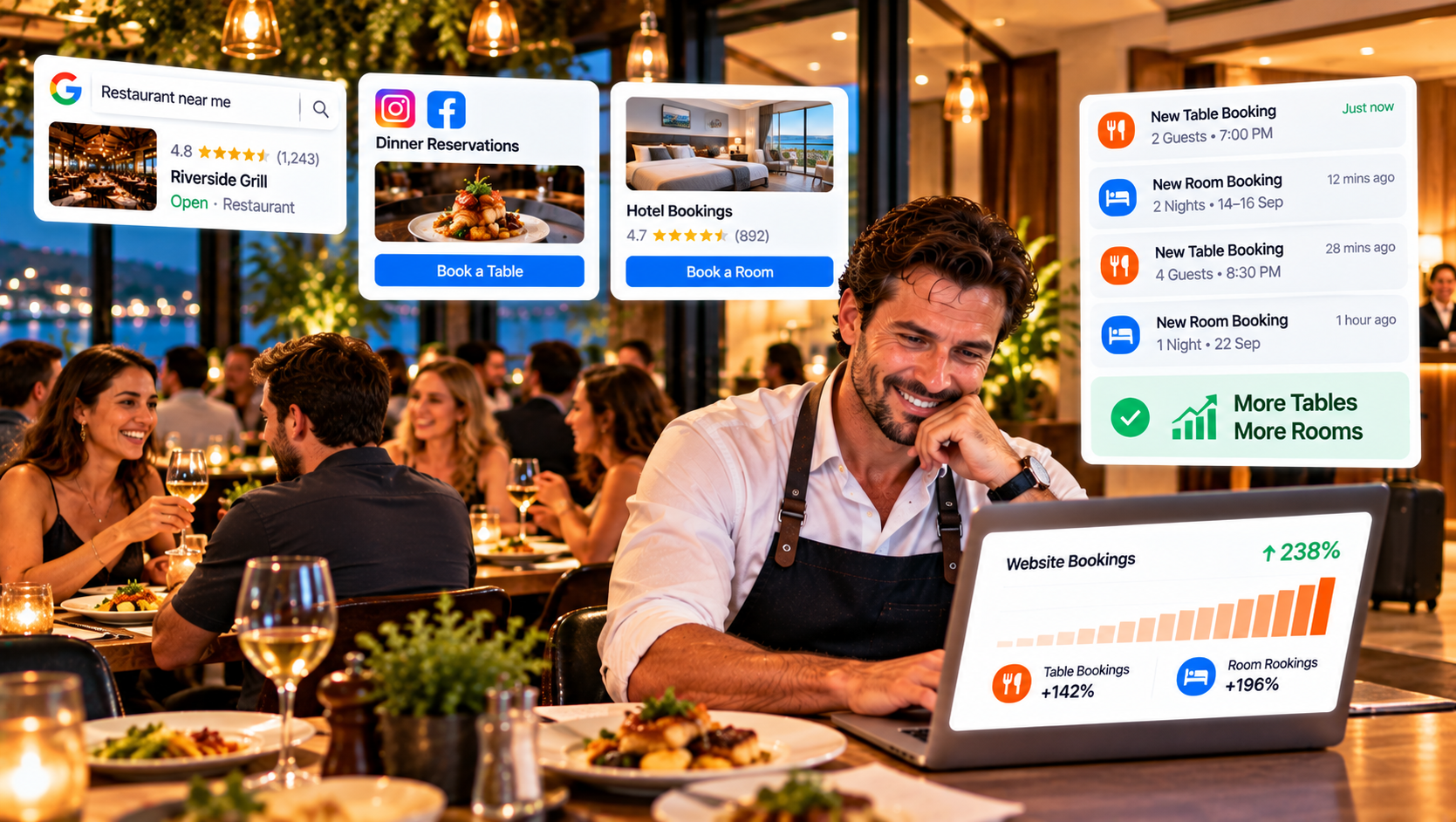
At Bolder Digital, we start where the money leaks. For accommodation, that is the commission mix, and for restaurants it is the quiet nights. We optimise your Google Business Profile, set up an automated guest follow up and review request, and build the simple campaigns that point at your slow periods. We then track direct bookings and covers against what you were getting before, so the result is measurable.
You can see how this fits into our Google Business Profile optimisation and review management services, built to put your venue in front of the right guest at the right moment.
The Bottom Line
Hospitality marketing comes down to three things. Be easy to find in the moments that matter, keep more of each booking by building direct relationships, and aim your effort at the nights and rooms that sit empty, not the ones that fill themselves. A strong Google Business Profile, a steady flow of reviews, and a guest list you own do most of that work, and none of them requires a large budget to start.
Frequently Asked Questions
Why do accommodation providers want more direct bookings?
Online travel agents commonly charge fifteen to twenty five percent commission in Australia. A direct booking keeps that margin and gives the property a guest relationship it can use again, which is why moving the booking mix toward direct improves profit without needing more guests.
Should a hotel or motel stop using online travel agents?
Not necessarily. Agents bring reach, particularly with travellers who have never heard of you. The aim is to shift the balance gradually, so that more of your bookings, especially repeat guests, come direct.
What is the most important free marketing asset for a restaurant or hotel?
Usually the Google Business Profile, because it shows photos, reviews, hours, booking links, and directions in one place and often appears before a guest ever reaches your website.
How can a restaurant fill its quiet nights?
By aiming marketing at them directly. That can mean a midweek offer or event promoted to past guests through email or SMS with proper consent, an event page that can be found in search, and an automated message inviting recent diners back at a quiet time.
How does Bolder Digital help hospitality businesses?
We optimise your Google Business Profile, set up automated guest follow up and review requests, and build campaigns aimed at your slow periods, then track direct bookings and covers so you can see the change.
Jarryd Holmes, Founder & Owner, Bolder Digital | Prospect Vale, Tasmania |bolderdigital.com.au