Digital Marketing for Professional Services: Trust Before the First Call
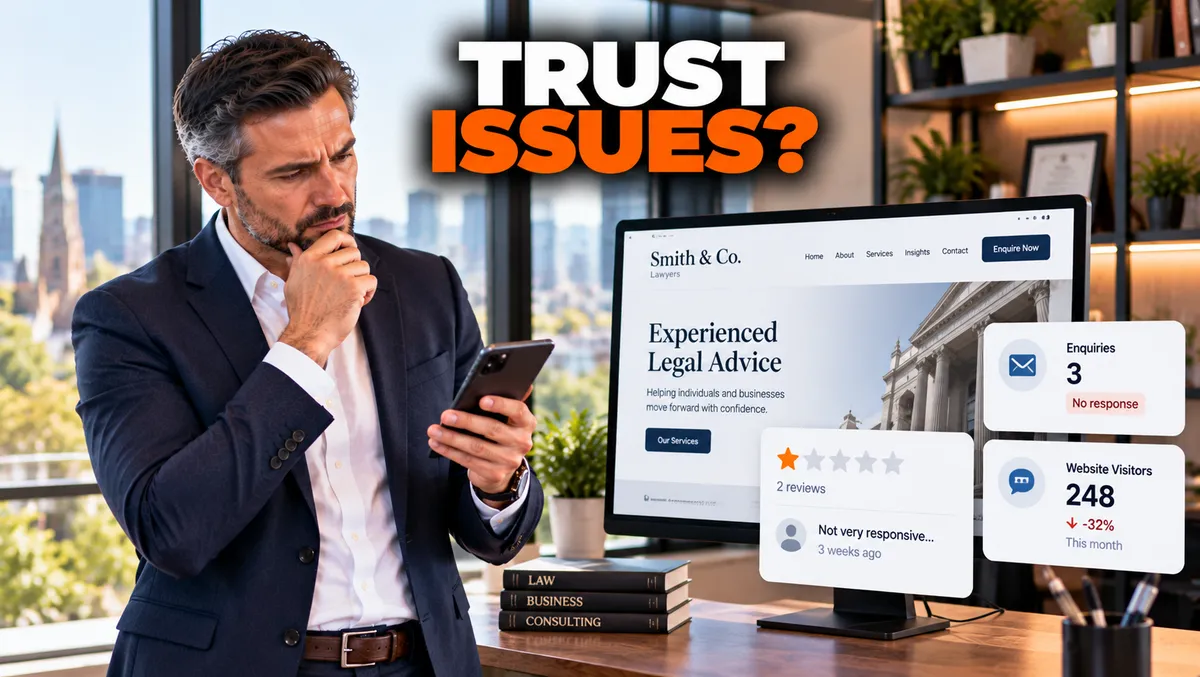
Nobody hires a solicitor, accountant, or consultant on impulse. They hear a name, usually from someone they trust, and then they check. They search for you, read your website, glance at your reviews, and compare you with a couple of others. By the time they pick up the phone, much of the decision has already been made. At Bolder Digital, this is the lens we use for digital marketing for professional services. The work is not about shouting. It is about making sure the quiet checking goes your way.
Referrals Start the Conversation. The Web Often Finishes It.
Referrals remain the lifeblood of most professional firms, and that is not changing. What has changed is that referred clients verify. Articles on how clients choose law firms and accounting firms describe the same pattern: ask someone you trust, research online, shortlist a few firms, read recent reviews, and contact the one that looks credible and responds clearly.
One study of professional services buyers, widely cited and now fairly old, found that more than half of respondents had ruled out a referred firm before speaking to it. It is a US study, so treat it as indicative, but it matches what many owners quietly suspect. A thin or outdated online presence can undo a perfectly good referral.

What People Are Actually Checking
When someone looks you up before the first call, they are quietly asking five questions:
Are you real? A proper website, a verifiable address, named people, and a profile that matches what they were told.
Do you do what I need? Clear descriptions of what you specialise in, in plain language.
Are you good? Evidence of competence, such as credentials, experience, and what other clients say.
What will it be like? Whether you seem approachable, clear, and quick to respond.
What will it cost, and what happens next? Honest information on how you work and charge.
A page that says "we provide personalised services to individuals and businesses" answers none of these.
Say Who You Are For
Generic positioning is the quiet killer of professional firm websites. Compare these two:
"We provide accounting and tax services."
"We help small trade and construction businesses in Northern Tasmania with BAS, payroll, and tax planning."
The second is the one a tradie keeps reading. Specificity does two jobs. It tells the right person they are in the right place, and it gives Google a clearer picture of when to show you.
Show the People Behind the Firm
Professional services are bought from people. A page for each key person, with a real photo, their qualifications and registrations, their area of focus, and a short, human description of how they work, does a lot of quiet work. Where a public register exists, such as the Tax Practitioners Board register for tax agents or the ASIC register for financial advisers, linking to your entry lets a visitor verify you in a click. Verifiability is one of the strongest trust signals there is.
Reviews Matter, With Care
Prospective clients read reviews for recency and relevance, not just the star rating. A review that mentions a matter similar to theirs, or praises clear communication, counts for more than a bare five stars.
Two cautions apply to professional firms:
Ask ethically. Never offer rewards for reviews, which Google's policies restrict, and never write or edit them yourself.
Protect confidentiality when replying. A public reply should not confirm someone is a client or reveal any detail of their matter. A short, polite response that invites them to contact you directly is usually safest.
Proof Without Breaking Confidence
Case studies and results are persuasive, and they are also risky. A case study that lets a reader work out who the client is can breach confidentiality. If you use them, get written consent, anonymise carefully, and avoid claims that read like guarantees. Statements such as "hundreds of successful matters" need to be provable.
Be Careful With What You Claim
Marketing for regulated professions sits inside rules that most web designers have never read.
Lawyers: In states that follow the Uniform Law, the solicitors' conduct rules require advertising not to be false, misleading, deceptive, or offensive. Testimonials are not banned the way they are for registered health practitioners, but they must be genuine and carry consent. Personal injury advertising has extra state restrictions. Tasmania has its own legislation, so check with the Law Society of Tasmania.
Accountants and tax agents: The Australian Consumer Law applies, and so do professional body codes and the TPB's Code of Professional Conduct. Avoid promises such as guaranteed refunds.
Financial advisers: Advertising must comply with the Corporations Act and ASIC's expectations. Endorsements need to be genuine, and claims that sound like guarantees are a red flag.
Everyone: Avoid superlatives such as "the best", guarantees of outcome, and claims you cannot substantiate. A disclaimer does not rescue a misleading headline.
Publish Useful Things, Not Advice
Helpful, plain English content builds trust before anyone calls. Short pages that answer the questions clients actually ask, such as what to expect at a first meeting, how a process works, or what documents to bring, show competence without giving individual advice. Date your content and keep it current. An article that quotes last year's thresholds or a repealed rule does more harm than good.
Make the First Call Easy
Trust can evaporate at the point of contact. Make it simple to reach you, and reply quickly. Confirm each enquiry, say what happens next, and avoid asking for sensitive detail in a first message. A secure, clearly explained contact method matters more here than in most industries. We cover where chatbots fit in our piece on AI chatbots for professional services.
Keep Everything Consistent
Your name, address, phone number, and the way you describe your services should match across your website, Google Business Profile, directories, and social pages. Inconsistency makes a firm look careless, and careless is not what a client wants from a professional.
How Bolder Digital Approaches This
At Bolder Digital, we start by looking at your firm the way a prospective client would, searching for you and checking what they find. We then tighten your Google Business Profile, sharpen your positioning and profile pages, set up an ethical review process, and keep every claim within the rules of your profession. You can see how this fits into our Google Business Profile optimisation and review management services.
The Bottom Line
For professional services, marketing is mostly about the quiet moment between a recommendation and a phone call. Be specific about who you serve, show the real people behind the firm, make credentials easy to verify, collect honest and specific reviews, publish useful content, and respect the advertising rules of your profession. Do that and the checking works in your favour.

Frequently Asked Questions
Why do referred clients still research my firm online?
Because hiring a professional is a high trust decision. Studies and industry articles consistently describe clients asking someone they trust, then verifying online through search results, reviews, and your website before making contact.
Can lawyers use client testimonials and reviews?
Generally yes, as they are not banned the way they are for registered health practitioners, but they must be genuine, consented, and not misleading, and some areas such as personal injury have extra restrictions. Check your own state rules and professional body.
How should I reply to a Google review as a professional?
Keep it short and courteous, and do not confirm that the person is a client or reveal any detail of their matter. Inviting them to contact you directly is usually the safest approach.
What claims should regulated professionals avoid?
Guarantees of outcome, unsubstantiated superlatives such as the best, and statistics you cannot prove. The Australian Consumer Law applies, along with professional conduct rules and, for financial advice, ASIC's requirements.
How does Bolder Digital help professional firms?
We review your online presence as a prospective client would, optimise your Google Business Profile and positioning, set up an ethical review process, and keep marketing claims within your profession's rules.
Jarryd Holmes, Founder & Owner, Bolder Digital | Prospect Vale, Tasmania | bolderdigital.com.au