
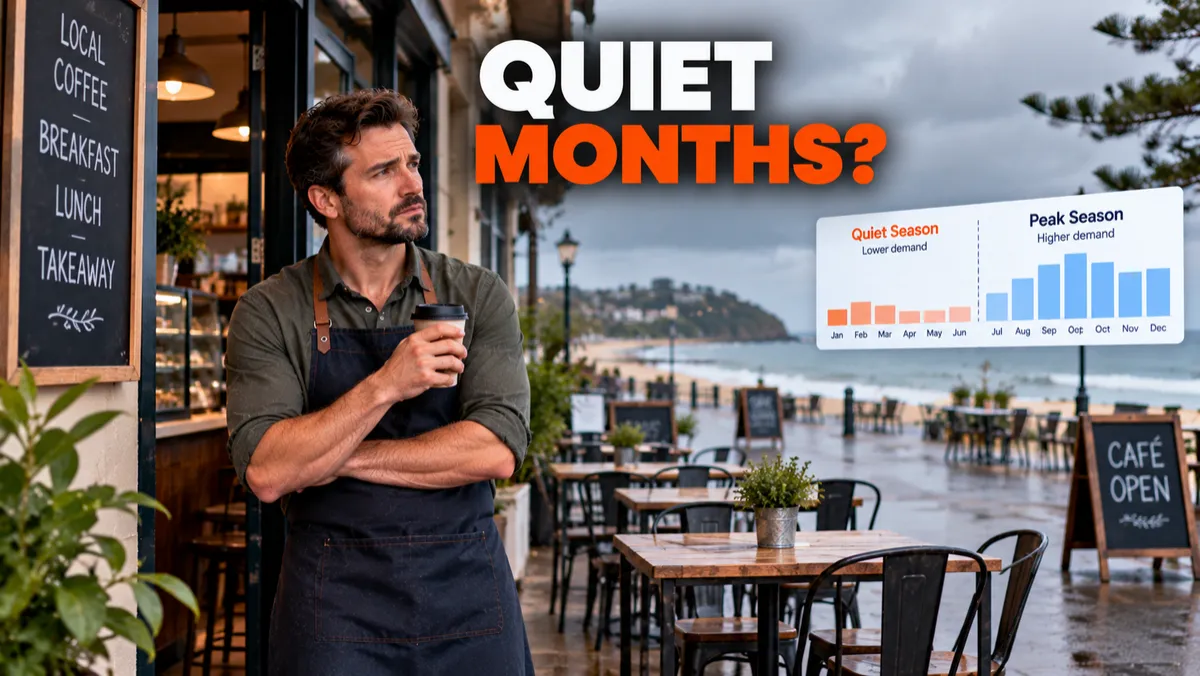
Digital Marketing for Seasonal Businesses: Planning Around the Quiet Months
If your business has a season, you know the pattern. The busy months pay for everything, and the quiet months test your nerve. Marketing is usually the first thing to be cut when money is tight, which is exactly backwards. At Bolder Digital, we tell seasonal business owners the same thing every time. The quiet months are not downtime. They are when next season’s results get built.
Know Your Curve First
Before planning anything, map your year. Look at your own sales and enquiry records for the last two or three years, and sketch the shape.
When do enquiries start to rise, well before sales do?
When is the peak?
How long is the tail, when demand fades but has not gone?
How deep is the quiet period?
A Tasmanian business might peak over summer with the tourists, in winter with a major event, in autumn before heating season, around Christmas, or before the end of the financial year. The pattern differs, but the principle holds. Demand leads the season, and the work you do before it determines how much of it you capture.
Search Demand Starts Before the Season
People research before they buy or book. Holiday accommodation, wedding venues, heating, garden supplies, and tax help are all searched for weeks or months ahead. Guides on seasonal SEO say pages need time to be found and trusted. Advice varies, from a couple of months for simple local searches to three to six months for competitive terms.
It is mid October as I write this. If your peak is the summer holidays, the time for brand new pages was a while ago. This is the time to refresh, check your tracking, start early campaigns, and capture the planners who are searching now. If your peak is winter or autumn, you are in the quiet months, and this is the building window.

A Four Phase Calendar
Think of the year in four phases.
1. The quiet months: build.
Fix website problems and speed up key pages.
Write or refresh seasonal and evergreen content.
Update photos and descriptions.
Follow up last season’s customers and ask for reviews you missed.
Set up or tidy your tracking, so you can read next season’s results.
Plan offers, partnerships, and your budget.
2. The ramp up: prepare and warm up.
Publish and refresh seasonal pages ahead of demand.
Start paid campaigns a few weeks early, so they have time to learn.
Email your list with early planning information, and consider early bird offers.
Update your Google Business Profile hours, services, and photos.
3. The peak: capture and convert.
Promote the content you already published.
Reply to every enquiry quickly.
Collect reviews steadily, since this is when you have the most happy customers.
Capture email addresses, with proper consent.
Avoid big experiments when the stakes are highest.
4. The tail: keep and rebook.
Thank customers, ask for feedback, and invite them back.
Offer rebooking for next season.
Learn from what worked and what did not.
Keep Seasonal Pages Permanent
A common mistake is creating a new page every season. A summer holiday page that is replaced each year loses the history and links the old one built up. Keep a permanent address, such as a page for your seasonal service, and update the content each year with fresh details. That preserves what Google already knows about it, and avoids splitting your authority across duplicate pages.
Look After Your Google Business Profile in the Off Season
Google’s own guidance is specific. If your business will close for more than about a week, or closes for the off season, mark it as temporarily closed. For short closures, such as a public holiday or a few days off, use special hours instead. A few more points:
Do not mark the listing as permanently closed. That is for businesses that have shut for good, and creating a new profile every season is a headache.
If you stay open with reduced hours, set accurate hours instead.
Use your description to explain the season clearly, so visitors know when you operate.
Check dates against regional holidays, which differ across Tasmania.
Keep replying to reviews and posting the occasional update, so the profile does not look abandoned.
Reopen the profile on time, with the correct hours.
Build Your Email List Before You Need It
The most reliable off season investment is a list of people who have chosen to hear from you. Past customers and enquirers are the warmest audience you will ever have. Build the list through the peak, when customers are happiest, using a clear sign up and proper consent. The Spam Act requires consent and an easy way to unsubscribe.
Through the quiet months, send occasional useful emails, such as what is coming next season, early access, or a seasonal guide. Early bookings, vouchers, and presales can also bring cash in before the rush. Keep the terms clear and honest.
Budget for the Whole Year
Cash is tightest when the quiet months arrive, so planning ahead matters. A few habits help:
Set aside part of your peak profits for off season marketing.
Protect the compounding work, such as your Google Business Profile, reviews, tracking, and content, even when paid spending is trimmed.
Fund the ramp up, since that is when marketing most directly turns into bookings.
Keep a baseline running through the quiet months, however small.
Our piece on marketing budgets covers how to set the overall number.
Give Yourself Something to Sell in the Quiet Months
Many seasonal businesses add a complementary offer for the slow period. A tourism business might target locals with a residents’ offer, or groups and corporate bookings, or gift vouchers. A seasonal retailer might sell online or run an event. This is not about discounting for the sake of it. It is about giving the people who are around in the quiet months a reason to choose you.
Do Not Go Dark
A quiet season does not mean nobody is looking. People still search, enquire, and plan next year’s trip. If staff are away or the phone is unattended, make sure enquiries are not lost. An automatic reply that says when you reopen and how to book, a chatbot that takes bookings and answers questions, or an AI receptionist covering the phone can keep leads warm until you are back.
Compare Year on Year
Seasonal businesses fool themselves with month to month comparisons. A fall from December to May means nothing. Compare each period with the same period last year, track how long enquiries take to turn into bookings, and set targets for each phase. Write down what you learn while it is fresh, so you do not rely on memory next year.
How Bolder Digital Approaches Seasonal Businesses
At Bolder Digital, we start by mapping your curve, then build a calendar around it. We use the quiet months to fix the foundations, tighten your Google Business Profile, set up tracking, and plan your content and email. We time the ramp up, support you through the peak, and review the year honestly. You can see how this fits into our Google Business Profile optimisation, review management, and AI Chatbot services.
The Bottom Line
Seasonal marketing is about timing. Build during the quiet months, prepare before the rush, convert through the peak, and rebook in the tail. Keep your pages and profile alive, grow a list of people who want to hear from you, and budget for the full year. The businesses that do well are not the ones that spend the most in the peak. They are the ones that did the work before it arrived.

Frequently Asked Questions
When should a seasonal business start marketing for its busy season?
Earlier than most expect. Guides suggest anywhere from a couple of months for simple local searches to three to six months for competitive terms, with paid campaigns starting a few weeks before the peak so they can learn.
Should I stop marketing during the quiet months?
Not entirely. Keep the compounding work running, such as your Google Business Profile, reviews, content, and email list, and trim paid spending if cash is tight. The quiet months are the best time to build.
How should I set my Google Business Profile for the off season?
Google’s guidance is to mark the listing temporarily closed if you close for the off season or for more than about a week, use special hours for short closures, and never mark it permanently closed if you plan to reopen. If you stay open with reduced hours, set accurate hours.
Should I create new seasonal pages each year?
Generally not. Keep a permanent page for each seasonal offer and update it every year, so you keep the history and links it has built up.
How do I measure a seasonal business fairly?
Compare each period with the same period last year, track how long enquiries take to become bookings, and set targets for each phase of the year, not just a monthly average.
Jarryd Holmes, Founder & Owner, Bolder Digital | Prospect Vale, Tasmania | bolderdigital.com.au