

Digital Marketing ROI: How to Actually Measure What's Working
"I know half my marketing works. I just don't know which half." It is an old line, and it is still how many small business owners feel. At Bolder Digital, the first question we ask a new client is not what they want to spend. It is how they will know if the spending is working. Measurement does not need to be complicated, but it does need to be set up on purpose.
Start With the Right Formula
The basic formula is simple: return minus cost, divided by cost, times one hundred. The trouble is what goes in as the return.
Most reports use revenue. What your business keeps is profit. A simple example, with made up numbers:
You spend $3,000 on marketing and it brings in $12,000 in sales.
On revenue, that is a 300 percent return.
If your gross margin is 30 percent, that $12,000 is really $3,600 of gross profit, so your return after the $3,000 spend is only 20 percent.
Same campaign, two very different answers. A useful related number is break even return on ad spend, which is one divided by your gross margin. At a 30 percent margin, you need about $3.33 of sales for every $1 of ads just to break even. Know your margin before you judge any campaign.
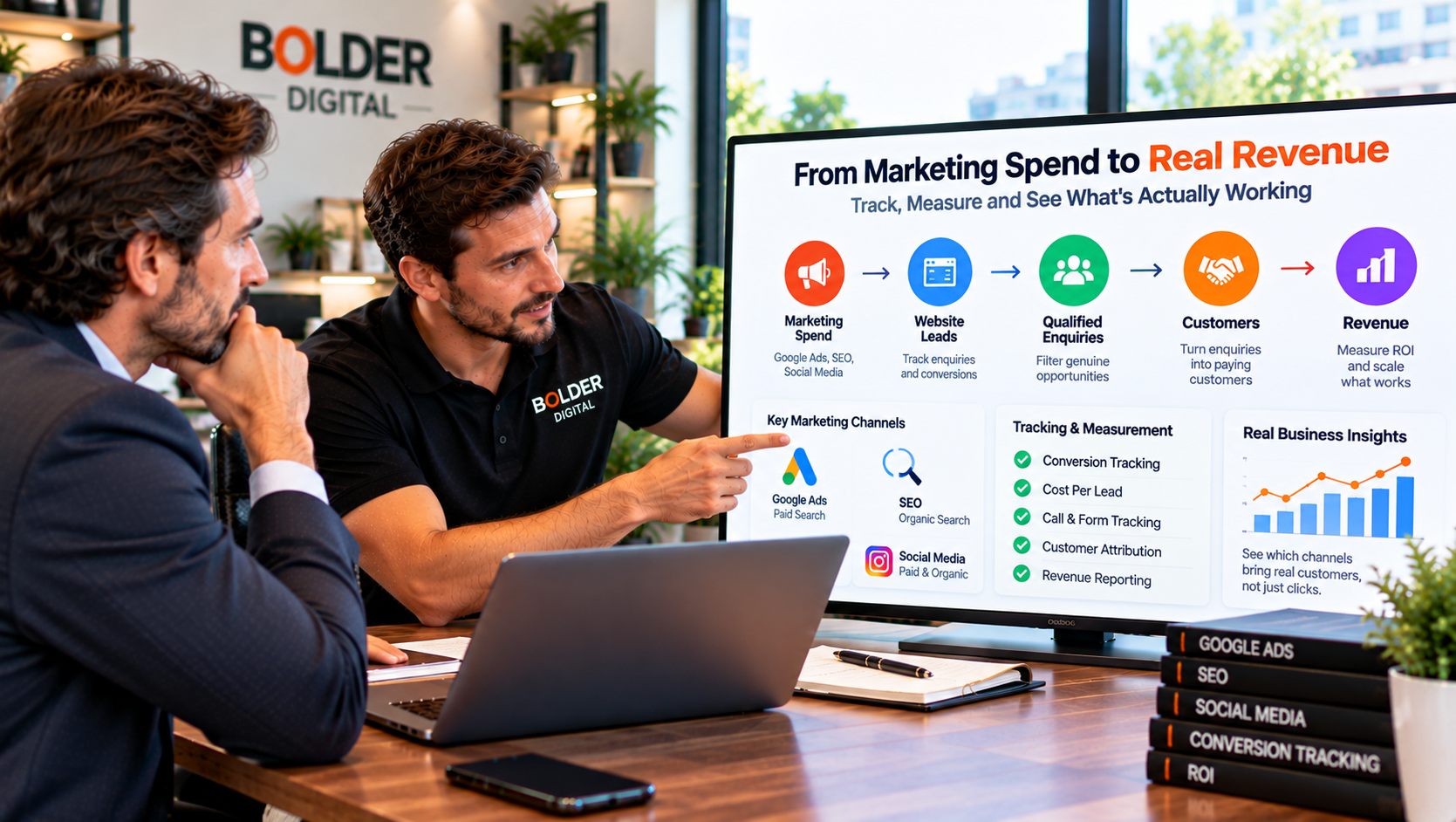
Why Platform Numbers Cannot Be Trusted on Their Own
Ad platforms are keen to tell you how well they are doing. The problem is that they each claim credit for the same customer. Someone sees a Facebook ad, later clicks a Google result, and buys. Both platforms report the sale. Add up what every platform says and you can end up with more revenue than your business actually made.
Two rules help:
Never add up platform reported conversions across channels.
Check every figure against your own records, such as your booking system, invoices, or bank account.
Five Tracking Basics for a Small Business
You do not need an expensive stack. These five habits cover most of what matters:
One list of what counts as a result.For most local businesses that means phone calls, form enquiries, bookings, and messages. Decide this first.
Tag your links.Use UTM tags on links in ads, emails, and social posts, so your analytics can tell you where a visit came from.
Track your calls.Many local enquiries arrive by phone, and a website tracker will not see them. Unique numbers for different channels, or a call tracking tool, close that gap. If calls are recorded, announce it at the start, and see our voice AI compliance guide for the Tasmanian position.
Ask every customer how they heard about you.Put it on forms, in your booking process, and in your phone script. People misremember, but it catches word of mouth, AI search, and anything else analytics cannot see.
Record the source and outcome in your CRM.Each enquiry should carry its source, and later whether it was won or lost and for how much. Without this, you are guessing.
Follow the Lead All the Way to the Sale
Cost per lead looks good on a report and tells you little. A campaign that brings twenty cheap enquiries that never buy is worse than one that brings five good ones. What you want is cost per customer: total spend divided by the number of paying customers it produced.
That means tracking what happens after the enquiry. How fast did you respond? How many became quotes? How many became customers? Poor follow up is one of the most common reasons good marketing looks bad, which is why we pair measurement with automation and fast response.
Give Slow Channels Time
Some channels pay back quickly, and some take months. Paid ads can produce enquiries within days but stop the moment you stop paying. Local search, reviews, and content build slowly and keep working. Judging all of them after one month would unfairly favour the fast ones.
Two ideas help here:
Payback period:how many months of gross profit from a customer it takes to cover what you spent winning them.
Lifetime value:if customers come back, one sale undervalues them. A common rule of thumb is to aim for a lifetime value of about three times your cost to acquire a customer.
A Simple Monthly Scoreboard
Keep one sheet, updated monthly, with these columns:
spend by channel
enquiries by source
customers by source
revenue and gross profit by source
cost per customer
payback period
If you can fill in that sheet each month, you know more than most businesses do. Trends matter more than any single month.
Honest Ways to Test When You Cannot Be Sure
Perfect attribution does not exist, but you can get close enough to decide:
Pause test:if it is safe to do so, switch off one channel for a few weeks and see what happens to enquiries.
Before and after:compare similar periods, allowing for seasonality.
Ask referrers:when a customer mentions someone, record it.
None of these is perfect, but together they give you a reasonable picture.
Local Businesses Have Extra Signals
For local businesses, a lot of value shows up outside your website. Calls, direction requests, and website clicks from your Google Business Profile are real outcomes and should be counted. A drop in website visits with steady calls is not a problem. As I covered in our piece on traffic quality, measuring only sessions can hide good news.
How Bolder Digital Approaches This
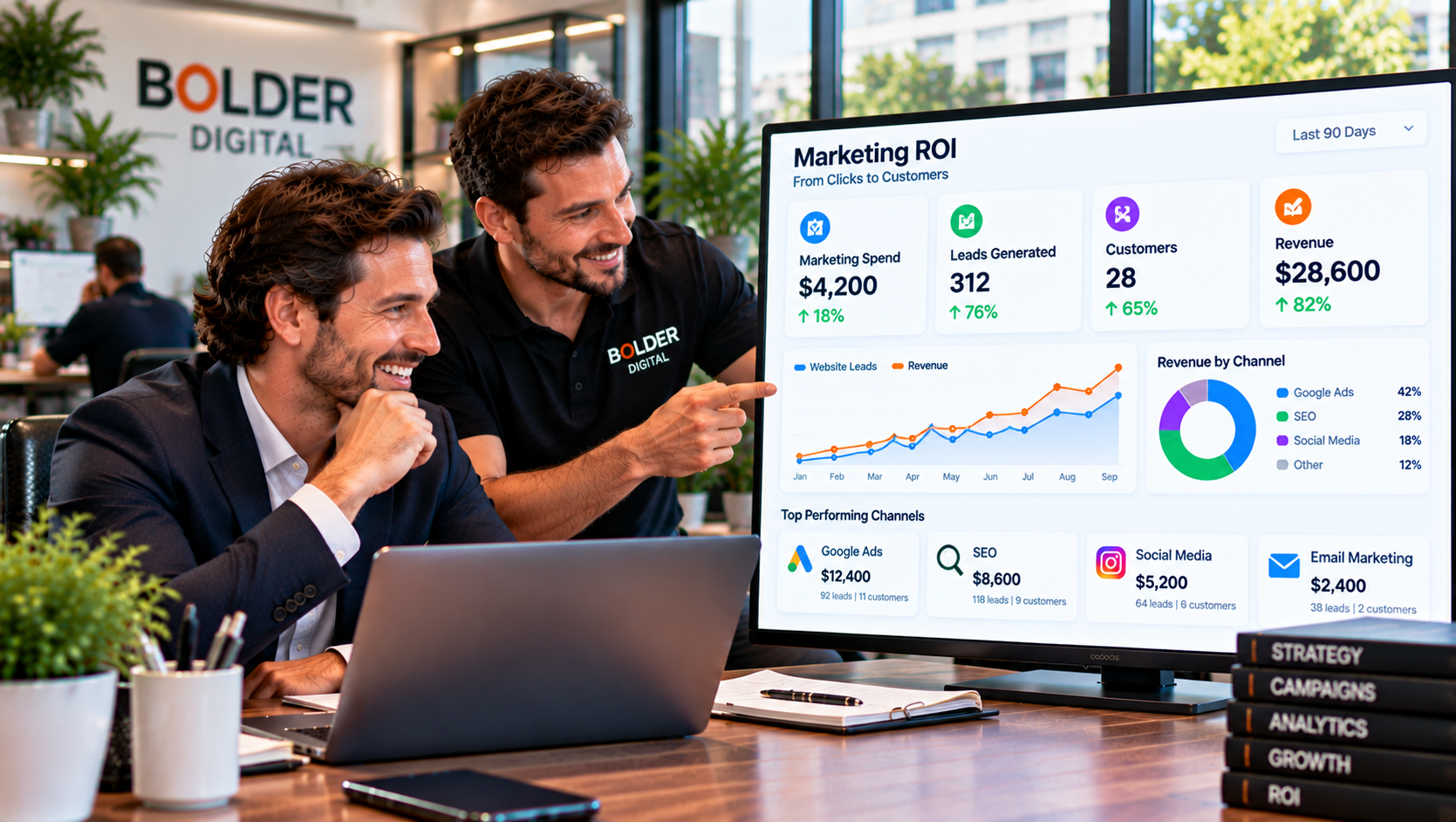
At Bolder Digital, we set up measurement before we spend. We agree what counts as a result, tag the links, set up call and form tracking, and build source fields into your CRM so every enquiry can be followed to a sale. We then report on customers, cost per customer, and payback, not just clicks. You can see how this fits into our Google Business Profile optimisation ,review management, and GoHighLevel setup services.
The Bottom Line
Measuring digital marketing ROI comes down to a few honest habits. Use profit, not just revenue. Do not trust platform totals. Track calls and forms, ask customers how they found you, follow every lead to a sale, and give slower channels time. You will never have perfect numbers, but you will have good enough numbers to put your next dollar in the right place.
Frequently Asked Questions
How do I calculate marketing ROI?
Subtract your marketing cost from the return, divide by the cost, and multiply by one hundred. For a truer picture, use gross profit instead of revenue, since revenue ignores what it costs to deliver the sale.
Why do ad platforms report more sales than I actually made?
Each platform claims credit for conversions it influenced, and several can claim the same customer. Adding the totals together can exceed your real sales, so always check against your own records.
Is asking customers how they heard about us reliable?
It is imperfect, because people misremember, but it captures word of mouth, AI search, and other sources that analytics miss. Use it alongside tracked data, not instead of it.
What is a good return on marketing spend?
It depends on your margin and how long customers stay. Break even return on ad spend is one divided by your gross margin, and a common rule of thumb is a customer lifetime value of about three times acquisition cost.
How does Bolder Digital measure marketing results?
We agree on what counts as a result, set up link, call, and form tracking, record source and outcome in your CRM, and report on customers, cost per customer, and payback.
Jarryd Holmes, Founder & Owner, Bolder Digital | Prospect Vale, Tasmania |bolderdigital.com.au