
Digital Marketing Traffic: Why More Is Not Always the Right Goal
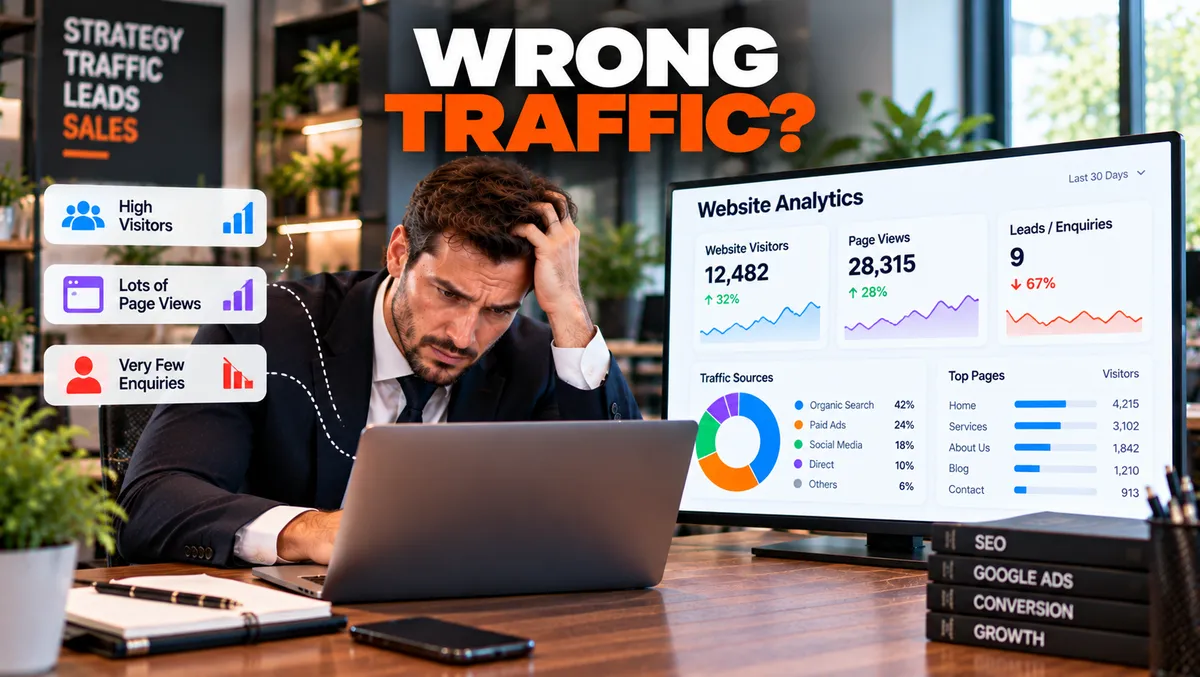
A website with ten thousand visitors a month sounds impressive. If three of them enquire, it is not. A different site with six hundred visitors and thirty enquiries is quietly doing far better. At Bolder Digital, one of the most common conversations we have with business owners is about this gap. Traffic is easy to count and easy to celebrate, but it is not the same thing as business.
What "Traffic" Actually Includes
Before asking whether you need more traffic, it is worth asking what is in the number you already have. Security research from Thales, formerly Imperva, estimates that automated traffic made up about 53 percent of all web traffic in 2025, with bad bots accounting for around 40 percent. Those are global figures across large sites, and a small local website will look different. The practical lesson is that analytics counts can include visits from software, staff, and people who were never going to buy.
Even among real people, plenty of traffic is the wrong kind. Visitors who found you by accident, who live in another state, who wanted a free resource, or who were looking for a job are all counted as visits.
Quality Means the Right Person, in the Right Place, With the Right Intent
Quality traffic has three features:
Right person:someone who actually buys what you sell.
Right place:someone you can serve, which matters a great deal for a Tasmanian business.
Right intent:someone looking to hire, book, or buy, not just browsing.
A Hobart plumber gets almost nothing from a visitor in Sydney, however long they stay on the page. A cafe gains little from people searching for a recipe. Each of those visits makes your report look better and your business no better off.

The Maths Most Reports Hide
Here is an illustration, with made up numbers. Site A attracts 2,000 visits a month through a broad campaign, and one percent enquire, which is 20 enquiries. Site B attracts 500 visits from people searching for a specific service in the local area, and six percent enquire, which is 30 enquiries. Site B has a quarter of the traffic and half again as many leads.
Doubling traffic at one percent conversion gives you 40 enquiries. Lifting conversion from one percent to two percent on the same traffic gives you the same result, usually for far less money. That is why we look at what happens to visitors before asking where more should come from.
Check the Geography First
For a local business, location is the cheapest quality filter. In Google Ads, the default location setting reaches people who are in your area and also people who have shown interest in it, which can bring in visitors from elsewhere. Switching to people who are physically present in your service area removes much of that waste.
Two other habits help:
Review the search terms report regularly and add the irrelevant ones as negative keywords, such as job, free, or DIY.
Set your service area carefully on your Google Business Profile, so you appear for the suburbs you actually serve.
AI Search Is Changing the Count Anyway
Search results increasingly answer questions directly. Pew Research found that people clicked a traditional result in about 8 percent of visits when an AI summary appeared, compared with about 15 percent without one. Other studies give different numbers, but they point the same way. Fewer people click.
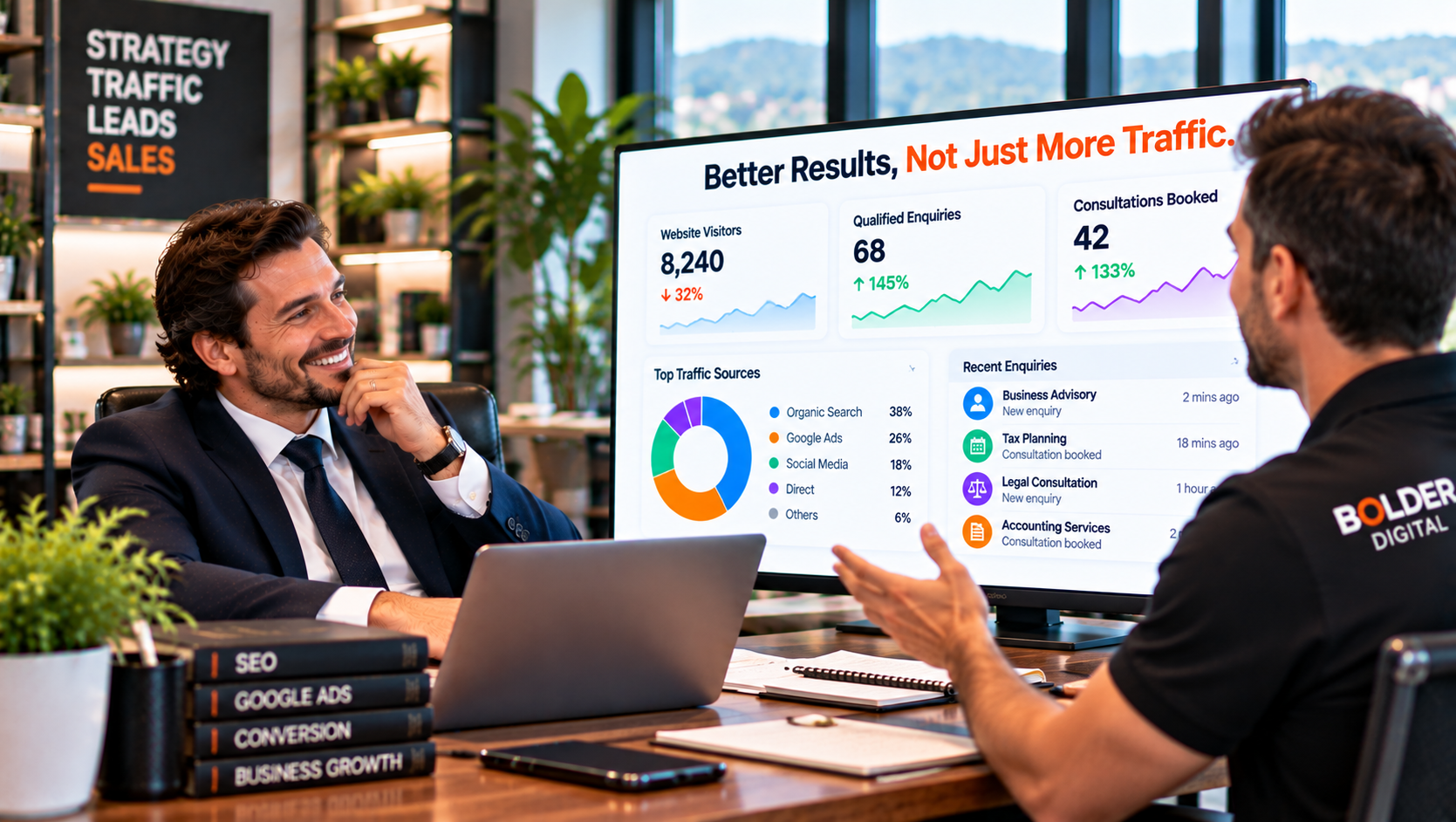
The people who do click tend to be further along. They have had the basic question answered and are following a link to check, compare, or act. A lower click count can come with the same number of calls and bookings, or more.
Local searches add another wrinkle. Map results, calls, and direction requests from your Google Business Profile never show up as website visits at all. A report that counts only website sessions can show a decline while the phone is ringing more.
What to Measure Instead
Keep traffic on the dashboard, but give these more weight:
enquiries, calls, form submissions, and bookings
the conversion rate from visit to enquiry
the source of each enquiry
calls, direction requests, and website clicks from your Google Business Profile
cost per enquiry and cost per customer, not cost per click
the number of enquiries that become paying customers
A useful extra step is to track AI search referrals separately where possible, since Google Analytics may group them with other sources by default.
Where Quality Traffic Comes From
The most reliable sources are usually the least glamorous:
your Google Business Profile, with accurate details and a steady flow of reviews
pages built around specific services in specific places, matching what people search for when they are ready to act
searches that signal intent, such as near me, price, quote, or book
referrals and returning customers, including an email list
content that answers the questions your customers actually ask before they buy
None of these produce enormous numbers. All of them tend to produce the right people.
When More Traffic Is the Right Goal
I do not want to overcorrect. Sometimes volume is exactly what a business needs:
a new business with no visibility, where nobody knows it exists
a site that converts well but gets very few visitors, so the limit is traffic
a business whose income comes from advertising or from brand awareness
The test is simple. If your conversion rate is healthy and your visitors are the right people, more traffic is a good goal. If it is not, more traffic mostly adds cost.
Five Questions for Your Monthly Report
How many enquiries did we get, and from where?
How many were the kind of customer we want?
What did each one cost us?
Where did traffic rise or fall, and did enquiries move with it?
What is the single biggest leak between visit and enquiry?
If your current report cannot answer these, it is measuring activity, not results.
How Bolder Digital Approaches This
At Bolder Digital, we report on enquiries, bookings, and cost per customer before we report on visits. We tighten your location targeting, build your Google Business Profile and reviews so local searches turn into calls, and make sure enquiries are captured and followed up quickly. Our Google Business Profile optimisation and review management services are built around reaching the right people, not the most people.
The Bottom Line
More traffic is an easy goal to set and a hard one to defend. The better question is whether the right people are finding you, in the right place, ready to act, and whether you capture them when they do. Count enquiries, check where traffic comes from, and chase quality first. Volume is worth chasing once what you already have is converting.
Frequently Asked Questions
Why is my website traffic up but my enquiries are not?
The extra visitors are probably the wrong kind, such as people outside your service area, people with no buying intent, or automated traffic. Check where visitors come from and what they searched for, and compare them against enquiries by source.
How much of my website traffic is bots?
Global estimates suggest more than half of web traffic is automated, though the figure varies widely by site and industry. A small local site will differ, but analytics counts can still include visits from software and non customers.
Is falling website traffic always a problem?
Not necessarily. AI summaries and map results mean fewer people click through to websites, even when rankings hold. If calls, bookings, and enquiries are steady or rising, a smaller click count may reflect higher quality visits.
What is the best single measure of whether marketing is working?
Enquiries and customers by source, alongside cost per customer. Visits and clicks are useful context but do not show whether the business is gaining.
How does Bolder Digital measure traffic quality?
We report on enquiries, bookings, and cost per customer by source, review location targeting and search terms, and track Google Business Profile calls and direction requests alongside website visits.
Jarryd Holmes, Founder & Owner, Bolder Digital | Prospect Vale, Tasmania |bolderdigital.com.au