How AI Is Changing What Virtual Assistants Actually Do in 2026
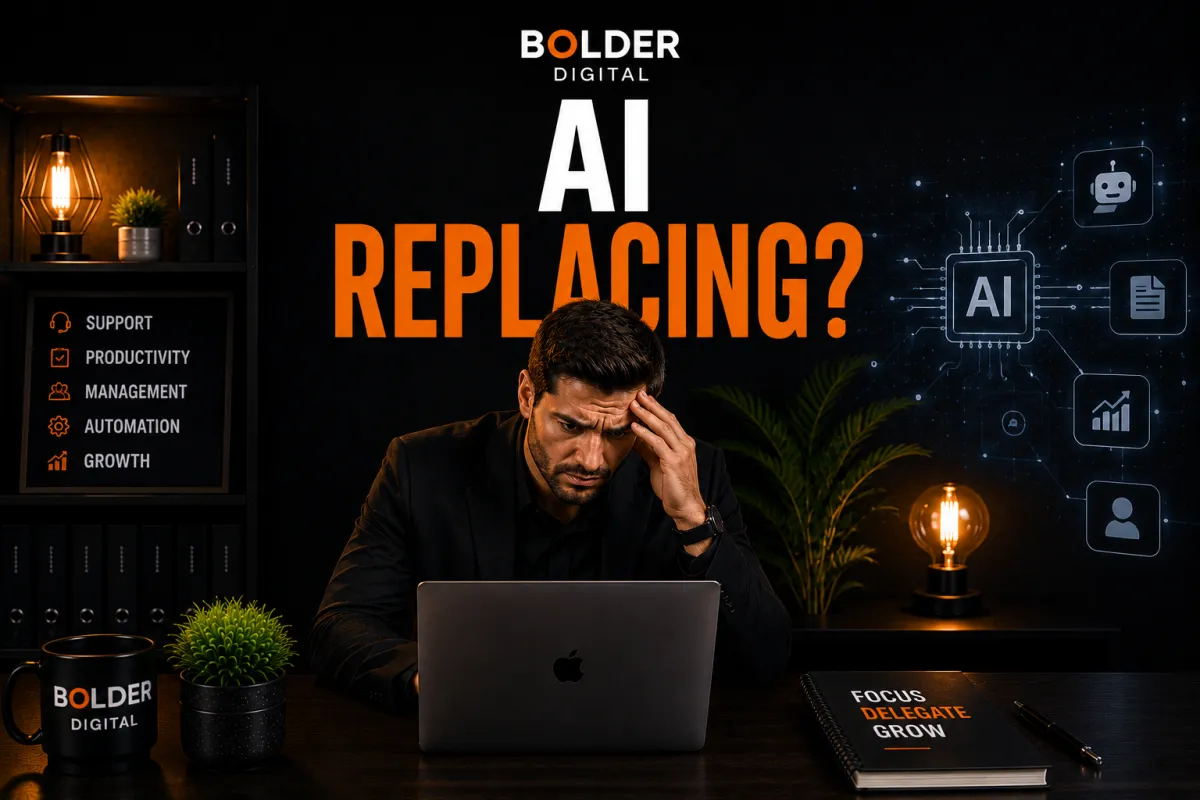
"Is AI coming for my virtual assistant's job?" I hear a version of this question constantly, usually from a business owner who has just watched an AI tool draft a genuinely decent email in about four seconds and started wondering what that means for the human they are paying to do similar work. The honest answer is more nuanced than either the AI hype or the reassurance you might expect, and understanding it properly changes how you should actually think about hiring and working with a virtual assistant right now.
Let me walk you through what has genuinely shifted, what has not, and why the distinction matters.
The Core Shift: From Task Executor to Workflow Operator
The clearest way to describe what has changed is this. A virtual assistant's role has moved from being primarily a task executor, someone completing a defined list of individual actions, toward being a workflow operator, someone who owns an entire process end to end, using AI tools to handle volume while applying human judgement to everything that actually requires it. One properly AI enabled assistant can now genuinely cover scheduling, drafting, follow up, research, and process coordination that previously needed to be split across several people.
This is not a small semantic difference. It changes what a business should actually expect from a virtual assistant, and what a virtual assistant should actually expect from themselves.
What Has Genuinely Moved to AI
The routine, repeatable, low judgement parts of the role have shifted the most. Basic data entry, simple scheduling, first draft emails, and standard document preparation are increasingly handled with AI doing the initial heavy lifting, with a human reviewing and refining rather than typing from a blank page every time. This tracks with broader labour market research specifically identifying administrative and secretarial style tasks as facing the fastest decline in demand for pure manual execution, precisely because generative AI now handles the routine version of this work competently.

What Stays Firmly Human, and Why
Here is the genuinely consistent finding across virtually every serious analysis of this shift. Jobs built on judgement, discretion, and relationship management hold up considerably better than jobs built on narrowly defined, repeatable tasks. For a virtual assistant specifically, this means prioritisation, confidential decision making, and genuinely representing someone else's voice and judgement remain firmly, stubbornly human. Deciding what actually deserves your attention today, handling a sensitive client conversation, and making a judgement call in a genuinely unusual situation are not tasks AI reliably handles well, and they are precisely the tasks that separate a valuable virtual assistant from a replaceable one.
The Prompt Engineer Trap Worth Understanding
I want to flag something genuinely important here, because it gets glossed over constantly. Using AI properly is not free. Writing a genuinely good prompt, iterating when the first output misses the mark, fact checking what comes back, and formatting it properly is real work in itself. A virtual assistant spending two hours a day prompting an AI tool and cleaning up its output has not actually automated anything. They have simply given themselves a new job, and if that process is not managed well, it can genuinely eat as much time as doing the task manually would have.
This matters because it means AI fluency is not simply flipping a switch. It is a genuine skill, one some virtual assistants have developed properly and others have not, and the gap between the two shows up directly in how much value a business actually gets.
Why AI Fluency Has Become a Genuine Hiring Criterion
This is exactly why AI fluency has become a real, meaningful differentiator when hiring a virtual assistant in 2026, not just a nice to have. A virtual assistant who genuinely knows how to prompt effectively, verify AI output before it goes anywhere near a client, and know when a task needs their own judgement instead delivers considerably more value than one either avoiding AI tools entirely or leaning on them uncritically without proper review.
The Human in the Loop Model, and Why It Keeps Winning
Research from McKinsey and others consistently finds that businesses combining human talent with AI tools properly see meaningfully stronger productivity gains than automation alone. A significant share of digital transformation efforts specifically fail because AI gets deployed without genuine human oversight sitting behind it. This human in the loop model, AI handling volume and speed, a person handling judgement and final accountability, keeps winning precisely because it avoids the failure mode of either extreme, a human doing everything manually with no efficiency gain, or AI running unchecked with nobody catching the moments it gets something wrong.
What This Means When You're Hiring a Virtual Assistant Now
If you are hiring a virtual assistant in 2026, the questions worth asking have genuinely shifted. Beyond the standard checks on reliability and communication, ask specifically how they use AI tools in their actual workflow, how they verify AI generated output before it reaches you or your customers, and where they draw the line on what still needs their own direct judgement rather than an AI draft. A candidate with a clear, considered answer to these questions is showing you exactly the kind of AI fluency that separates a genuinely valuable hire from one still operating like it is 2020.
Getting the Right Match for How the Role Has Changed
The virtual assistants delivering real value right now are the ones who have genuinely adapted, using AI to handle volume while keeping their own judgement firmly in the driver's seat for everything that actually matters. This is exactly the standard we hold every placement to, matching you with a virtual assistant who uses AI tools properly rather than either avoiding them or leaning on them uncritically. If you want to know your virtual assistant is genuinely working this way rather than guessing, our virtual assistant service is built around exactly that standard.
The Bottom Line
AI has not replaced virtual assistants, and the fear that it eventually will is largely misdirected. What has genuinely happened is a shift in what the role actually involves, from manually executing every individual task to operating an entire workflow, using AI to handle volume while applying judgement, discretion, and genuine human relationship management to everything that actually requires it. The virtual assistants and the businesses hiring them who understand this shift clearly are the ones getting real value from 2026's version of this role, not the ones still measuring it against what it looked like five years ago.

Frequently Asked Questions
Is AI actually going to replace virtual assistants?
The evidence consistently points toward augmentation rather than replacement. Roles built on judgement, discretion, and relationship management hold up considerably better than purely repetitive task based work, and the businesses seeing the strongest results are combining AI tools with skilled human oversight rather than choosing one over the other.
What tasks have genuinely shifted to AI for virtual assistants?
Routine, repeatable, low judgement work has shifted the most, basic data entry, first draft emails, simple scheduling, and standard document preparation. A human virtual assistant increasingly reviews and refines this output rather than producing every piece of it manually from scratch.
Why does using AI tools well count as a genuine skill rather than something automatic?
Writing effective prompts, iterating on results, and fact checking AI generated output before it reaches a client all take real time and judgement. A virtual assistant who has not developed this skill properly can end up spending as much time managing AI output as they would have spent doing the task manually.
What should I ask a virtual assistant candidate about AI in 2026?
Ask specifically how they use AI tools in their actual daily workflow, how they verify AI generated output before it reaches you or your customers, and where they draw the line on what still needs their own direct judgement rather than an AI draft. A clear, considered answer signals genuine AI fluency rather than either avoidance or uncritical reliance.