
Local SEO St Leonards: Why Edge of Town Trades Businesses Need a Different Strategy
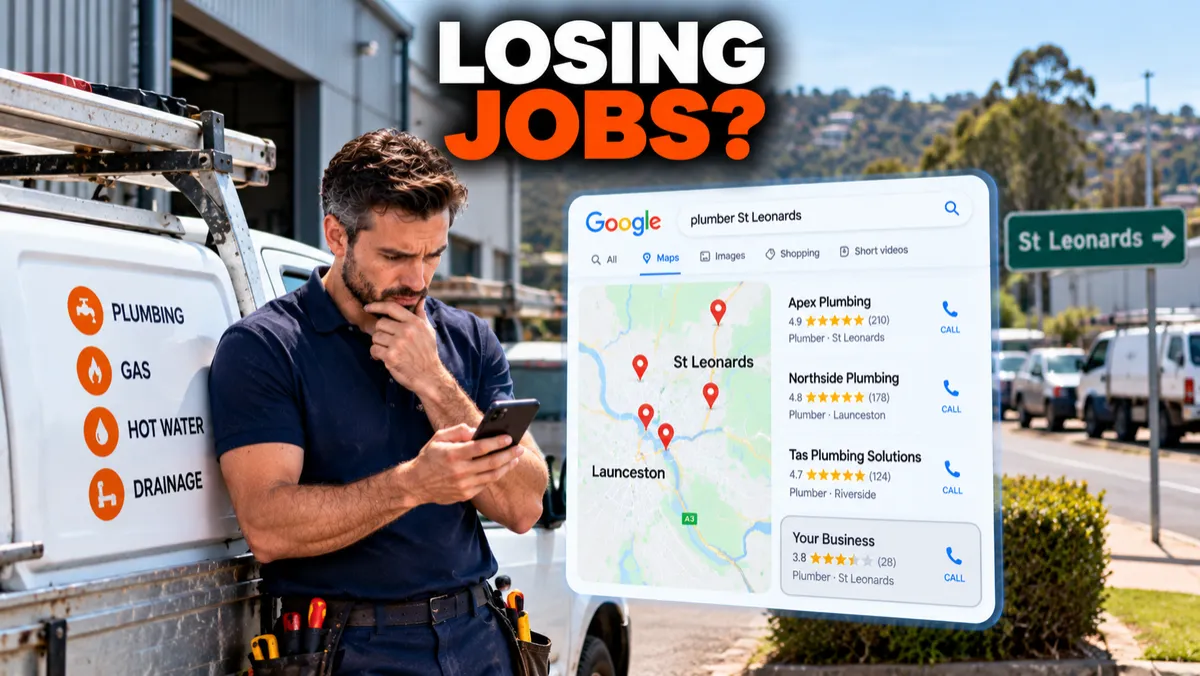
If you run a trades business from St Leonards, you probably spend your days driving somewhere else. Your customers are in Newstead, Riverside, Kings Meadows, and everywhere in between. That is how trades work. But it creates a puzzle for local SEO, because Google’s map results are largely a distance game, and a business on the edge of town starts a few kilometres from the middle. At Bolder Digital, we think that is a manageable disadvantage, as long as you plan for it instead of pretending it does not exist.
A Semi Rural Suburb on the Edge
St Leonards is a semi rural residential locality in the City of Launceston, about 5.7 kilometres from the city centre. It had a population of around 2,000 at the 2016 census. St Leonards Road runs through it, and it neighbours Norwood, Waverley, and Nunamara. It is often described as an alternative to city living, with more space and a quieter feel, and it shares the 7250 postcode with much of Launceston.
For a tradie based here, that location has real strengths: lower overheads, easy access to the eastern side of the city, and a semi rural customer base that the city centre businesses may overlook. It also has the central weakness of any edge of town base, which is distance.
How Google Sees a Tradie on the Edge
Google says local results are based mainly on relevance, distance, and prominence. Distance means how far the business is from the person searching, or from the place named in the search.
Two practical effects follow:
When someone searches for “plumber Launceston” or “electrician Launceston” without saying more, the search tends to centre on the middle of the city. Businesses closer to that point have an advantage in the map results.
Local SEO practitioners generally report that Google measures distance from the address you verified, even if you hide it. So you tend to rank strongest near your base, and the strength fades as you move away.
That does not mean you cannot win. It means you need a strategy designed around it.
Move One: Win Your Own Side of Town First
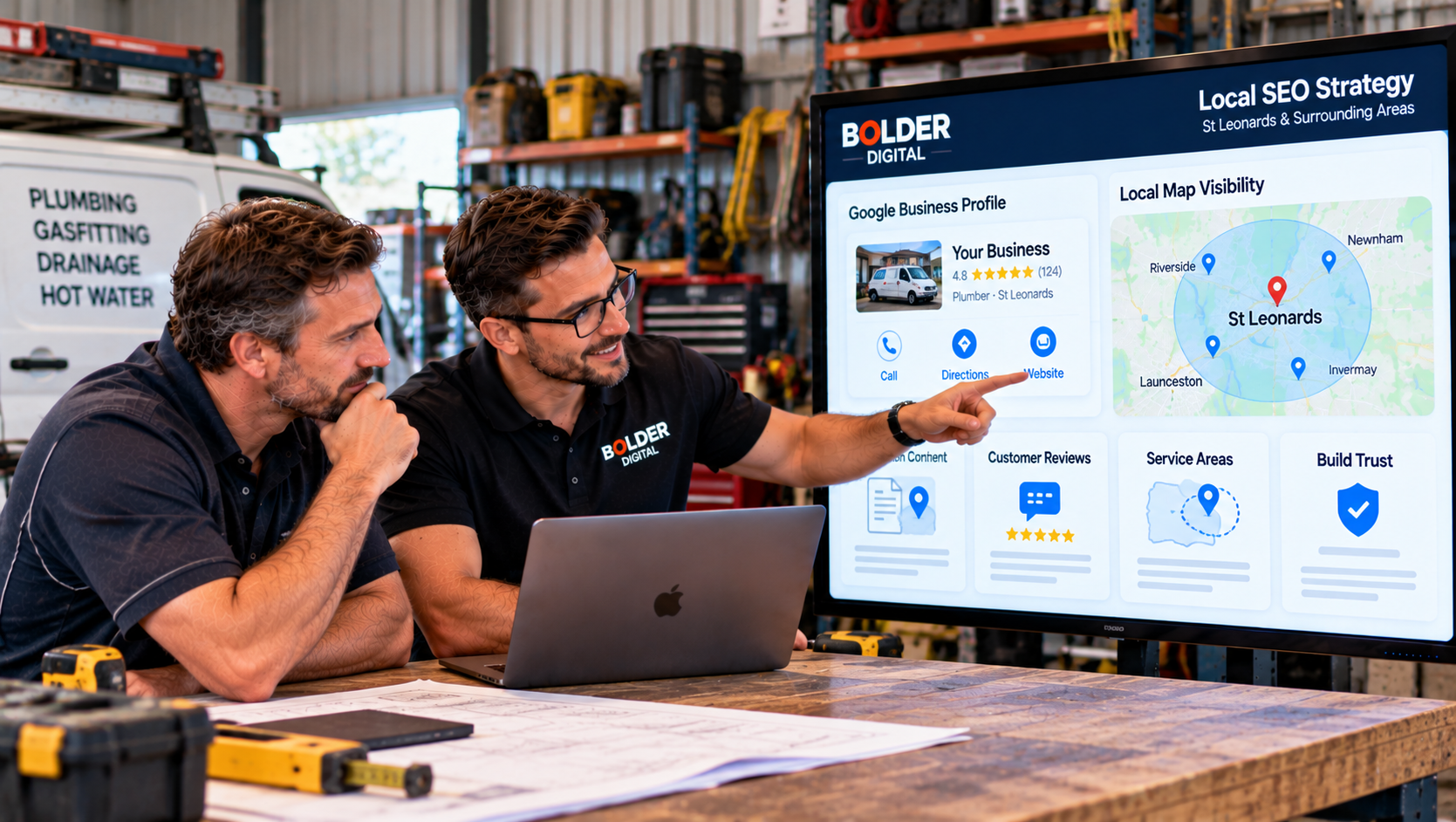
Start where you have the advantage. People near St Leonards searching for a local tradie, or “near me” from their phones, are close to your base. Suburbs such as Norwood, Waverley, Nunamara, and the surrounding semi rural areas are your home turf. Show up strongly there first, with a complete profile, strong reviews, and pages that speak directly to those areas.
Move Two: Build Relevance and Prominence Beyond Your Base
Distance is the one thing you cannot change, but relevance and prominence you can. Over time, these signals help you appear further afield:
a complete, accurate Google Business Profile
a steady stream of recent, specific reviews
a website with strong, genuine service and area pages
consistent listings across directories
evidence of real work in the areas you want to serve
Move Three: Do Not Depend on the Map Pack Alone
The map results are not the only way customers find you. Ordinary search results, Google Ads, referrals, and repeat customers all matter. A tradie with a strong website that ranks for service searches, a good review record, and a base of repeat clients is not at the mercy of a few kilometres.
Set Up Your Google Business Profile as a Service Area Business
If you travel to customers and do not receive them at your address, Google’s guidance is to remove or hide your address and set your service areas instead. A few rules matter:
You can set up to 20 service areas, using cities, postcodes, or named areas. You cannot set a simple radius.
Be specific and accurate. List the places you genuinely serve, not every suburb in the hope of ranking in each.
Choose the most specific primary category, and list your services.
Do not add keywords to your business name. That is one of the most common reasons profiles get suspended, along with showing an address that should be hidden.
Verify honestly, and keep your hours and phone number accurate.
Adding more areas does not widen your ranking reach on its own, so treat the list as an honest description of where you work.
Build Pages That Earn Their Place
Your website can do what the profile cannot. Create a page for the areas that matter most, such as St Leonards and the eastern and southern suburbs, and make each one worth reading:
examples of jobs you have done there, with photos
reviews from customers in the area
practical details about how you work, response times, and travel
the services you offer, in plain language
Avoid making near identical pages that swap one suburb name for another. They add nothing and can hurt you. Link these pages together, and to your main Launceston page, using the hub and suburb approach we use across Launceston.
Reviews That Carry a Place Name
Reviews that mention the type of job and the area it was in are powerful. A customer who writes about a hot water repair in Norwood tells Google and the next customer that you work there. You cannot script this, and you should never offer anything in return for a review, but you can ask customers to say what you did and where. Reviews from jobs across the city, including the central suburbs, help build credibility there.
Own the Semi Rural Niche
Many tradies concentrate on town. A semi rural base lets you serve customers that city based competitors may avoid or overlook, such as properties on larger blocks, tank water and pump systems, septic and drainage, fencing, outbuildings, and access that needs a bit more know how. Customers with these needs often search with the locality in the words. Write about them. Explain how you handle travel and call out fees, and what you do on rural properties. A clear niche can beat raw proximity.
Think About the Economics of Distance
It is tempting to chase every suburb. But drive time costs money. Work out which areas pay for the travel, and set a realistic service range. Consider these habits:
group jobs by area and day, so you are not criss crossing the city
be clear about call out fees and minimum charges
say which suburbs you cover on which days
decline or quote differently for outlying jobs
A smaller, well served area with strong reviews beats a vast one where you barely appear.
Do Not Miss Calls While You Are on the Tools
Tradies often miss calls when they are working, and that is where edge of town businesses lose the work they have earned. A missed call usually goes to the next name on the list. Use a missed call text back, answer enquiries through your Google profile, and consider an AI receptionist that can book and take details while you work. Speed matters when someone has a leak or a power fault.
Mind the Name
“St Leonards” is also the name of well known places elsewhere in Australia, including a large Sydney suburb. Always include Launceston and Tasmania, or the 7250 postcode, in your profile, website titles, and listings, so that customers and Google are not left guessing.
Measure What You Actually Win
Track where your enquiries come from by suburb, and ask new customers how they found you. Rank checking tools that show your map position across a grid of locations can also show how your visibility fades with distance. That tells you where to focus next.
A Simple Edge of Town Checklist
Set up your Google Business Profile as a service area business, with your address handled correctly.
List genuine, specific service areas.
Build pages for your home turf and your best suburbs, with real local proof.
Collect specific reviews, naming the job and the area, with no rewards.
Show your semi rural strengths and be clear about travel and fees.
Cover missed calls and enquiries when you are on the tools.
Use Launceston, Tasmania, and the postcode to avoid name confusion.
How Bolder Digital Approaches Edge of Town Trades
At Bolder Digital, we start by mapping where your best customers are and where you currently appear. We then set up your profile correctly, build honest area pages, put a steady review process in place, and make sure you can answer enquiries while you work. You can see how this fits into our local SEO services in St Leonards, our Google Business Profile optimisation, our review management, and our AI Receptionist service.
The Bottom Line
A trades business at the edge of town cannot move closer to the middle, but it can play a smarter game. Own your side of the city, build relevance and prominence beyond it, set your profile up properly, collect reviews that carry place names, lean into the semi rural work others skip, and answer every call. Distance sets the starting point, but it does not decide who gets the job.

Frequently Asked Questions
Why do businesses closer to the centre rank higher for general Launceston searches?
Google weighs distance as one of three main factors, alongside relevance and prominence. A general search such as “plumber Launceston” tends to centre on the middle of the city, so closer businesses have an advantage in the map results.
Should a tradie show their address on Google?
If you travel to customers and do not receive them at your address, Google’s guidance is to hide it and list your service areas instead. Showing an address that should be hidden is one of the common reasons for suspension.
How many service areas can I add, and does a bigger list help?
Up to 20, based on cities, postcodes, or named areas, and not a radius. A longer list does not widen your ranking reach by itself, so list only the places you genuinely serve.
How can a tradie rank in suburbs far from their base?
By building relevance and prominence: a complete profile, steady specific reviews, useful pages with real local proof, and consistent listings. Distance remains a factor, so also rely on ordinary search results, ads, and referrals.
What should I do about missed calls when I am on a job?
Use a missed call text back, answer through your Google profile, and consider an AI receptionist that can take details and book while you work.
Jarryd Holmes, Founder & Owner, Bolder Digital | Prospect Vale, Tasmania | bolderdigital.com.au