Marketing Automation for Small Business in Australia
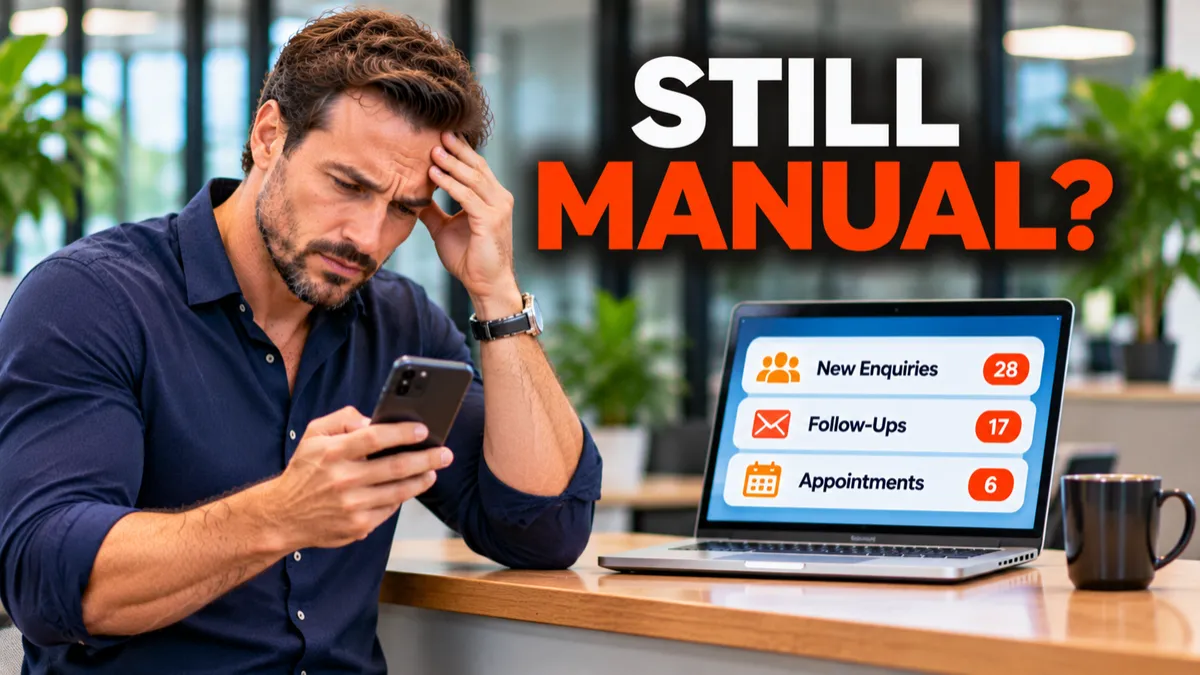
Most small businesses do not lose customers because their service is poor. They lose them because someone enquired on a Tuesday afternoon, the owner was up a ladder, and by the time anyone replied on Thursday, the customer had called someone else. Marketing automation for small business is the fix for exactly that. It is not about robots spamming people. It is about making sure the right message goes to the right person at the right time, even when you are busy. I am Jarryd Holmes from Bolder Digital, and full disclosure, we set up automation for clients, including on GoHighLevel, so I have a stake. Here is the plain English guide I would want a friend to read before spending a cent.
What Marketing Automation Actually Is
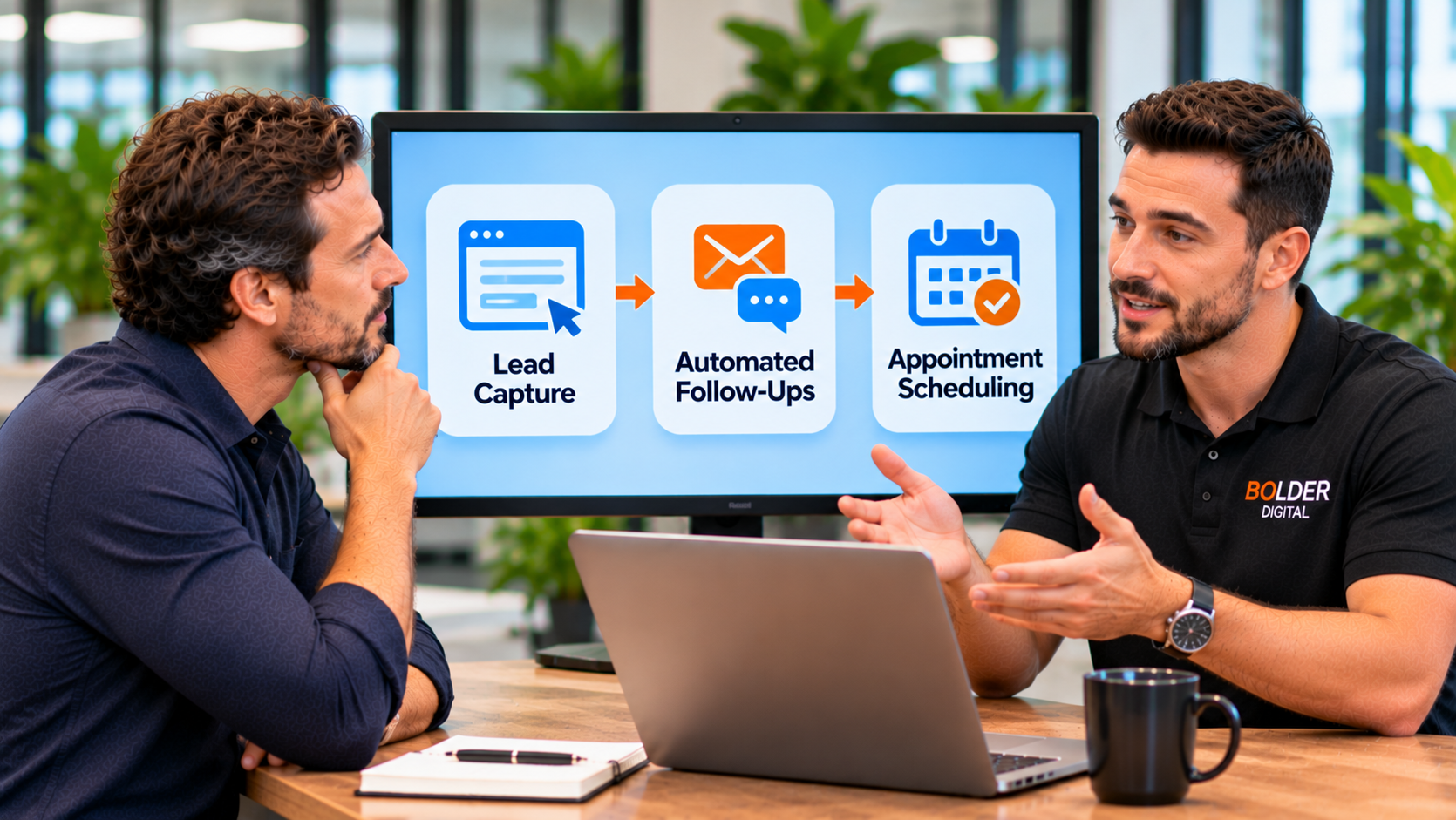
Marketing automation means setting up a trigger and an action, so something happens automatically when a customer does something.
Someone fills in your enquiry form, and they get a reply within a minute.
Someone misses your call, and they receive a text asking how you can help.
You send a quote, and three days later a polite check in goes out.
A job is completed, and the customer receives a request for a Google review.
A customer has not been in touch for six months, and they get a friendly note.
None of that needs a big budget or a marketing department. It needs a clear idea of what you want to happen, and a tool that does it reliably.
Why It Matters for a Small Business
Small businesses live on follow up, and follow up is the first thing to slip when the work gets busy. Automation helps in three ways.
Speed.Many small businesses take hours or days to reply to an enquiry. A reply within a minute or two puts you ahead of most competitors.
Consistency.The follow up happens every time, not only when you remember.
Time.Vendor surveys claim automation saves small business owners hours each week. The numbers vary wildly, so judge it by your own diary, but the direction is believable.
Six Automations to Start With
Start with the ones that recover revenue you are already losing, in this order.
1. Instant response to every enquiry.
When a form, chat, or message arrives, the customer gets an immediate reply and you get an alert. The reply confirms you have their enquiry and tells them what happens next. This is the single biggest leak for most businesses.
2. Missed call text back.
When a call goes unanswered, an automatic text goes out. For example: “Hi, it’s Sam from Smith Plumbing. Sorry we missed your call. What can we help with? Reply here and we’ll get back to you shortly.” Our guide on missed call text back covers the setup.
3. Quote follow up.
Most quotes go quiet. A sequence that checks in after a day, a few days, and a week brings many of them back. For example: “Hi Jess, just checking you received the quote for the deck. Happy to answer any questions or adjust it. Cheers, Sam.” Stop the sequence the moment they reply.
4. Appointment reminders.
A text and email the day before, and another a few hours before, reduce no shows. Vendors report reductions of 30 to 50 percent or more. Whatever your figure, a no show costs you real money, so test it.
5. Review requests.
After a completed job, a short message asks for a Google review, with a direct link and one polite reminder. Do not offer rewards for reviews, do not screen who gets asked, and do not tell people what to write, since Google’s rules prohibit those. Our guide on review automation covers the details.
6. Reactivation.
Your database is full of people who once did business with you. A friendly message to those who have gone quiet for 60 to 90 days, such as a seasonal reminder or an offer to book, often brings some back.
Other useful additions include a welcome sequence for new contacts, seasonal reminders, and, for online shops, abandoned cart emails.
The Rules You Must Follow
Automation makes it easy to send a lot of messages. The Spam Act 2003 sets the rules for commercial emails and texts, and ACMA enforces them. It applies to small businesses too. Three obligations matter.
Consent.You must have express or inferred consent before sending a commercial message. ACMA prefers express consent, such as a ticked box or a form, and describes inferred consent as less reliable. A one off purchase generally does not create consent, and you carry the burden of proving you had it.
Identify yourself.Every message must clearly say who sent it, with accurate contact details.
Unsubscribe.Every commercial message needs a working unsubscribe option, free and simple, honoured within five business days.
Some points to remember:
Even automated welcome emails and follow ups are commercial messages if they promote your business.
Messages that are purely about an existing booking, such as a reminder, are generally treated as transactional, but adding a promotion changes that.
Phone calls for marketing are covered separately by the Do Not Call Register rules.
Penalties for breaches can be severe.
Keep records of when and how each person gave consent.
Our guides onemail marketing and the Spam Act and SMS marketing in Australia go into more detail. Handle personal information carefully too, and take advice on how privacy law applies to you.
Choosing Your Tools
There is no single right answer. The main options are:
All in one platforms,such as GoHighLevel or HubSpot, which combine a customer database, texting, email, booking, forms, and automation in one place. We use GoHighLevel, so I am biased, and it is not the only good choice.
Email focused tools,such as Mailchimp or ActiveCampaign, which suit businesses that mainly send email.
Connectors,such as Zapier, which link separate tools together.
Questions to ask before you choose:
Does it send texts to Australian numbers, and what does that cost?
Does it connect to your booking system and accounting software?
Can you export your data if you leave?
How easy is it for someone without a technical background to change a message?
What is the total monthly cost, including usage, and in what currency?
Costs range from free or very cheap tiers up to a few hundred dollars a month for fuller platforms, before any setup help. Our guide to GoHighLevel pricing in Australia shows how to work out the real cost of one of them.
A 30 Day Plan
You do not have to do everything at once.
Week 1: Map and tidy.Write down what happens from enquiry to completed job, and where customers fall through. Clean your contact list and note where you have clear consent.
Week 2: Speed.Set up instant response and missed call text back.
Week 3: Follow up.Add quote follow up and appointment reminders.
Week 4: Reputation and return.Add review requests and a reactivation message for old customers.
Then look at the results, fix what is weak, and only then add more.
Common Mistakes
Automating a broken process.If your enquiry handling is a mess, automation just makes the mess faster.
Too many messages.Frequent, pushy messages annoy people and lead to unsubscribes.
Forgetting to stop the sequence.A customer who has replied should not keep receiving follow ups.
No human behind it.Automations should alert a real person when a customer replies or books.
Fake personalisation.Messages that sound robotic or get the name wrong hurt more than they help.
No unsubscribe, or unclear consent.These are the fastest way to trouble with ACMA.
Set and forget.Check your messages and results every month.
Keep It Sounding Like You
For a small Tasmanian business, relationships are your advantage. Write messages the way you speak, keep them short, and sign them with a real name. The goal is for the customer to feel looked after, not processed. Automation should make you more reliable and personal, not less.
What to Measure
time from enquiry to first reply
how many enquiries become bookings
no show rate
new reviews each month
customers brought back through reactivation
unsubscribes and complaints, as a health check
How Bolder Digital Helps
At Bolder Digital, we set up automation that fits how your business really works. We map your enquiry journey, build the follow up, reminders, and review requests, make sure consent and unsubscribes are handled properly, and check the results with you. We often use GoHighLevel, and you can read about our GoHighLevel Certified Admin service. We can also add an AI chatbot to answer questions and capture leads around the clock.
The Bottom Line
Marketing automation for small business is not complicated. It is a handful of reliable habits, carried out by software, so that no enquiry goes unanswered, no quote goes cold, and no happy customer goes unasked. Start with speed, add follow up and reminders, build your reviews, follow the Spam Act, and keep your own voice. Do that, and you will recover revenue you are already earning but never collecting.

Frequently Asked Questions
What is marketing automation for a small business?
Software that sends the right message at the right time, based on what a customer does, such as replying to an enquiry, missing a call, or finishing a job. It handles follow up, reminders, and review requests so nothing depends on you remembering.
What should I automate first?
Instant response to new enquiries, then missed call text back, quote follow up, appointment reminders, review requests, and reactivation of old customers.
Does the Spam Act apply to small businesses?
Yes. It applies to commercial emails and texts with an Australian link, whatever your size. You need consent, clear sender details, and a working unsubscribe honoured within five business days.
How much does it cost?
From very little, using free or low cost tools, to a few hundred dollars a month for a fuller platform, plus any help with setup. Check usage fees for texts and AI, and the currency you are billed in.
Will automation make my business feel impersonal?
Not if you write messages in your own voice, keep them short, and make sure a real person steps in when a customer replies.
Jarryd Holmes, Founder & Owner, Bolder Digital | Prospect Vale, Tasmania |bolderdigital.com.au