SEO vs Paid Ads: Where Should Your Digital Marketing Budget Actually Go
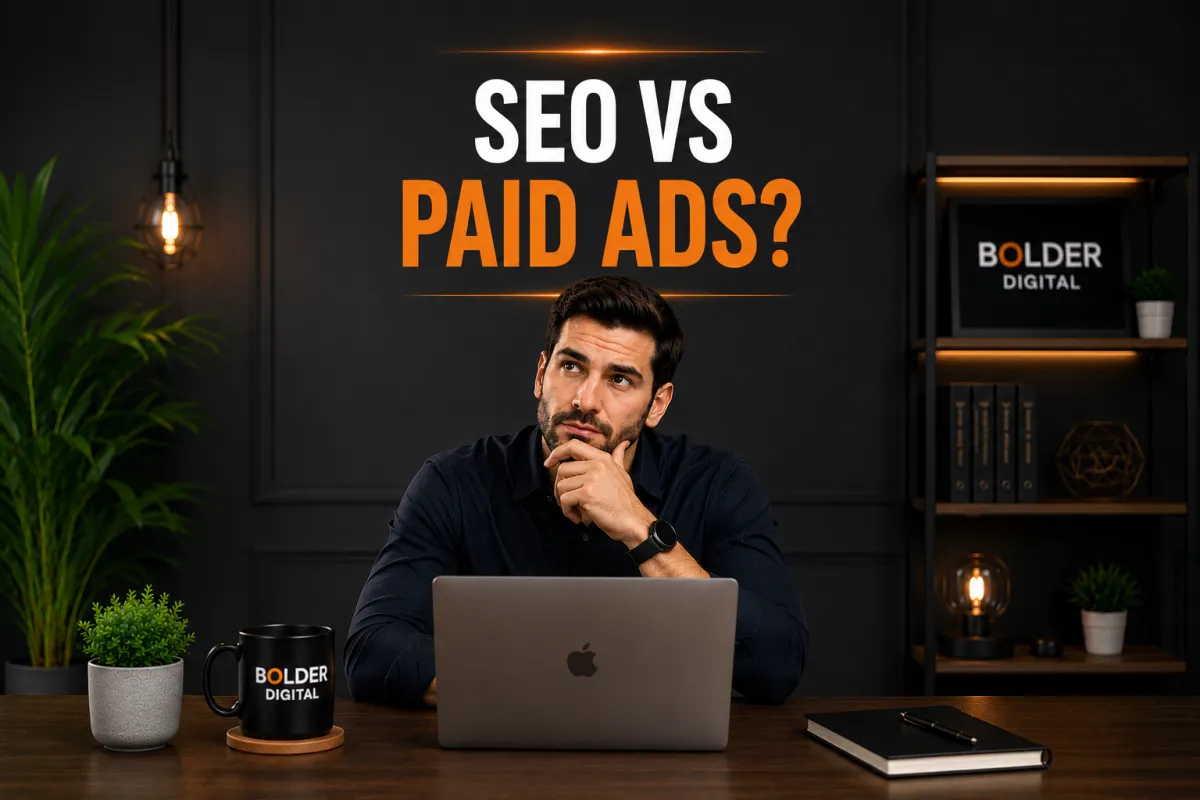
This is one of the most common questions Australian business owners ask when they finally sit down to plan a digital marketing budget, and it is usually framed as an either or decision. Should I put my money into SEO or into Google Ads. The honest answer is more nuanced than picking a side, and understanding the actual trade offs will help you allocate your specific budget far more effectively than following generic advice built for a completely different business.
The Fundamental Trade Off You Are Actually Making
SEO and paid advertising are not really competing for the same job, they are solving two different problems on two different timelines. Paid ads can drive traffic and leads starting tomorrow, the moment your campaign goes live. SEO might take three to six months before you see meaningful organic traffic, sometimes longer in competitive industries, but that visibility keeps working without ongoing cost once it is established. The real question underneath SEO versus paid ads is not which is better, it is which one still works for your business the moment you stop spending on it.
What the Actual Numbers Show
Looking at comparable marketing investment across both channels, SEO has been shown to generate meaningfully higher long term revenue from the same total spend compared to paid advertising, sometimes over double, though it requires considerably more patience before that return materialises. Paid search, when properly managed, can deliver a genuinely strong return, with three to four dollars back for every dollar spent considered a solid benchmark in most industries. The gap is not that one channel is inherently better, it is that they generate their return on completely different timelines, and comparing them on a single month's numbers alone will always make paid ads look like the clear winner, simply because SEO has not had time to compound yet.

Why Your Specific Business Model Changes This Answer Entirely
The right split between SEO and paid ads depends heavily on what you are actually selling and how your customers actually buy. If you are selling a lower cost, impulse style purchase, paid ads can reasonably drive the majority of your revenue, since the buying decision happens fast and a well targeted ad catches that moment directly. If you are selling a higher value service with a longer consideration period, SEO and organic content often influence the majority of eventual deals, even when a paid ad gets the first click, since the customer typically researches extensively across multiple visits before actually committing.
A commonly cited starting framework is a seventy thirty split, putting seventy percent of budget toward whichever channel aligns with your primary current objective, growth or stability, and the remaining thirty percent toward the supporting channel. A business urgently needing leads this month should weight more heavily toward paid ads initially, while building SEO in parallel for the months ahead. A business with more runway and a longer term growth objective can comfortably weight more toward SEO from the outset.
Why Paid Ads Alone Becomes a Trap Over Time
Here is a genuine risk worth understanding before committing entirely to paid advertising. Businesses relying purely on paid ads without any organic SEO investment commonly see their cost per lead rise over time as competition for the same keywords increases, since every competitor bidding on the same terms pushes prices up for everyone. Businesses investing consistently in SEO alongside paid ads tend to see the opposite pattern, a gradually decreasing cost per lead as organic visibility grows and reduces how dependent the business becomes on ad spend alone. Over a twelve to twenty four month period, total paid ad spend can genuinely exceed what it would have cost to build comparable organic visibility through SEO, without that visibility disappearing the moment you stop paying for it.
Why SEO Alone Also Has a Real Downside
I do not want to oversell SEO either, since it comes with its own genuine limitation. If your business needs leads this month, SEO alone cannot deliver that, regardless of how well it is eventually going to perform. A new website with no established authority commonly takes three to six months minimum before organic traffic becomes meaningful, and in genuinely competitive industries, considerably longer than that. A business relying purely on SEO during that ramp up period, with no supporting paid presence, often experiences a genuine revenue gap while waiting for organic visibility to build.
How AI Search Is Changing This Calculation Right Now
A meaningful new factor worth building into this decision is how AI powered search is reshaping both channels simultaneously. AI generated search summaries are increasingly answering queries directly, meaning SEO in 2026 needs to focus more heavily on structured content, clear direct answers, and genuine FAQ sections that AI tools can cite confidently, rather than purely traditional keyword targeting. At the same time, paid advertising is becoming increasingly automated through AI driven bidding systems, meaning the skill required to run paid ads effectively is shifting from manual keyword and bid management toward properly structuring campaigns for these automated systems to optimise against.
What This Means for Local Australian Businesses Specifically
For local Australian small businesses specifically, SEO carries a particular advantage worth weighing heavily, since ranking well in local search results and maintaining a strong Google Business Profile can generate consistent leads without any ongoing per click cost at all. That said, combining a strong local SEO foundation with even a modest paid ads budget commonly produces faster overall growth than relying on either channel alone, since paid ads can fill the gap while your organic local visibility is still building.
A Practical Way to Actually Decide for Your Business
Rather than picking a side in the abstract, ask yourself specifically how urgently you need new leads right now, how much budget you genuinely have available each month, and how long your typical customer's buying decision actually takes. A business needing leads this month with a modest budget should weight more heavily toward paid ads initially, while building supporting SEO content for the months ahead. A business with more breathing room and a longer sales cycle should weight more toward SEO from the outset, using a smaller paid budget to fill immediate gaps rather than carry the majority of lead generation.
Getting the Foundation Right Regardless of Which Way You Lean
Whichever way you weight your budget, both channels ultimately depend on the same underlying foundation converting well once traffic actually arrives, a properly optimised Google Business Profile, a strong and current review presence, and a website that actually converts the visitors either channel sends. Without that foundation solid, additional spend on either SEO or paid ads simply generates more traffic that leaks away before it ever becomes an enquiry.
This is exactly the gap our GBP Optimiser and Review System are built to close for Australian businesses navigating this budget decision. Rather than pouring more spend into either channel on top of a weak foundation, these systems make sure whatever traffic your SEO or paid ads generate actually has something solid to convert against.
The Bottom Line
There is no universal right answer to SEO versus paid ads, only the right answer for your specific business, budget, urgency, and typical customer buying cycle. Most Australian businesses ultimately benefit from running both, in a deliberate ratio matched to their actual situation, rather than treating this as an either or decision. The businesses that get this wrong are usually the ones copying a generic split recommended for a completely different type of business, rather than working out what their own numbers and timeline actually require.

Frequently Asked Questions
Should a small business with a limited budget choose SEO or paid ads first?
If leads are needed immediately and budget is limited, paid ads typically deliver faster results. If the business can commit to a longer timeline of three to six months or more, SEO tends to build stronger, more sustainable long term visibility without ongoing per click costs.
Why does relying purely on paid ads become more expensive over time?
Cost per lead through paid ads commonly rises over time as competition for the same keywords increases, since every business bidding on the same terms pushes prices up. Businesses that also invest in SEO tend to see the opposite trend, with cost per lead gradually decreasing as organic visibility grows.
What is a reasonable starting split between SEO and paid ads budget?
A commonly used framework is a seventy thirty split, with seventy percent of budget going toward whichever channel matches your current primary objective, and thirty percent toward the supporting channel, adjusted based on urgency, budget, and how long your typical customer takes to make a buying decision.
How is AI search changing the SEO versus paid ads decision?
AI generated search summaries are increasingly answering queries directly, meaning SEO needs to focus more on structured, directly useful content that AI tools can cite confidently. Paid advertising is simultaneously becoming more automated through AI driven bidding, shifting the skill required from manual management toward properly structuring campaigns for these systems.