
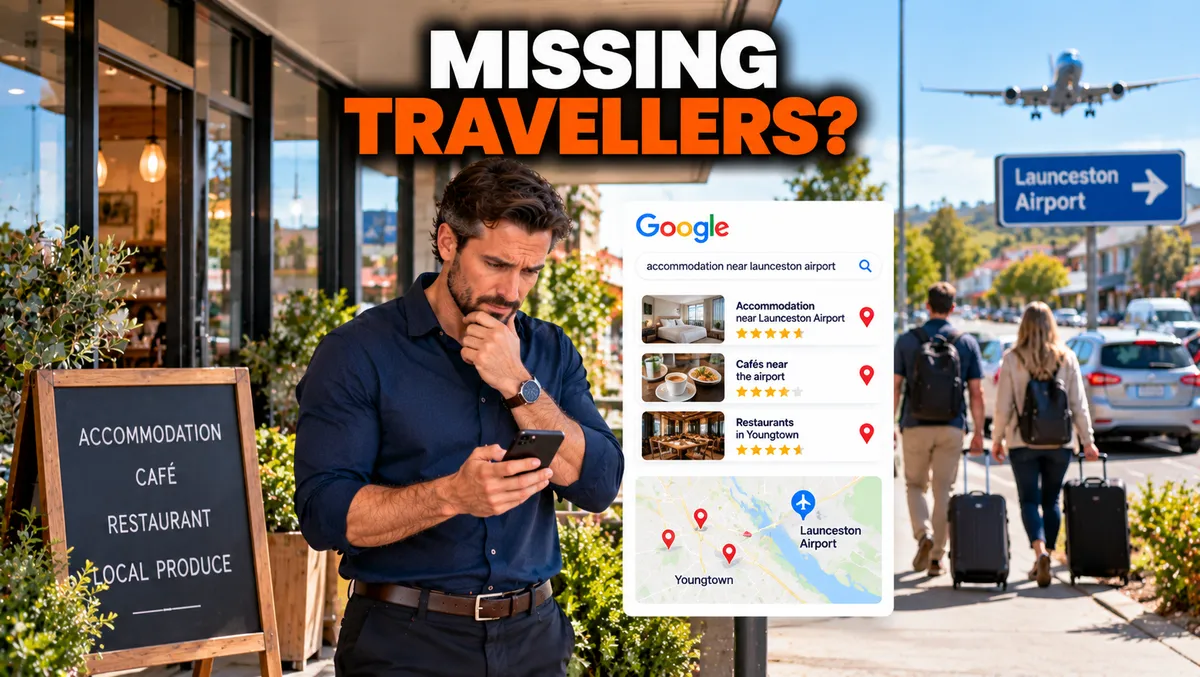
SEO Youngtown: Capturing Searches From Travellers Near the Airport
Most people who land at Launceston Airport are not looking for Youngtown. They are looking for a coffee, a petrol station, a supermarket, or a bed. But the road from the terminal into the city runs right past it. Youngtown is one of those places that travellers pass through without thinking, and a business here has a quiet opportunity if it can be the answer to the question a driver is typing at that moment. At Bolder Digital, we think local SEO for Youngtown is less about the suburb and more about the road.
Where Youngtown Sits
Youngtown is a small southern suburb of Launceston, about six kilometres from the city centre, with fewer than 300 residents at the 2016 census. It is home to Youngtown Oval, where the South Launceston Football Club plays its home games, and to Youngtown Primary School. The Midland Highway, National Route 1, forms its south western boundary, and the Western Railway Line runs along much of its east. It uses postcode 7249.
Launceston Airport is a little further south at Western Junction, about 15 kilometres from the city centre. That means Youngtown is not beside the airport. It is on the way between the airport and Launceston, along the main route in and out.
Why the Airport Road Matters
Launceston Airport had its busiest year on record in 2025 to 26, with almost 1.5 million passengers, and its CEO has noted that more than 90 percent of travellers arrive in Tasmania by air. January is the busiest month, and the airport recorded more than 6,000 passengers in a single day at the start of 2025. Many of those travellers hire a car and drive straight into Launceston, which brings them along this corridor.
Two moments create demand for a business on the route:
First stops after landing.A coffee, breakfast, groceries, fuel, a pharmacy, or a place to freshen up.
Last stops before flying.Refuelling a hire car, a final meal, or last minute supplies before the drive back.
Neither moment has much loyalty attached, so the business that shows up in the search wins.

How Travellers Search
People on the road search differently from people planning a trip. Typical searches look like:
“petrol near me”, or “fuel near Launceston Airport”
“coffee on the way to Launceston”
“where to refuel hire car Launceston Airport”
“open now”, especially very early or very late
“supermarket near me”, “pharmacy open now”, “takeaway near me”
Most of these happen on a phone, often through maps, and the results depend heavily on where the searcher is at that moment. Google’s local results weigh distance from the person searching, so a business on the route has a natural advantage over one a few kilometres off it. Your job is to make sure it can be found, and believed.
Be Honest About “Near the Airport”
It is tempting to say your business is “next to the airport”. Do not, unless it is true. Drivers can tell, and it will cost you reviews. Instead:
Check the real drive time from the airport to your door, and use it accurately, such as “about X minutes from Launceston Airport on the way into the city”.
Describe yourself as being on the route, which is true and useful.
Make sure your address and pin are accurate, so navigation takes people to the right entrance.
Never add “Airport” or other keywords to your business name on Google. Keyword stuffed names are a common reason for profiles being suspended, and your name should be the one on your signage.
Set Up Your Google Business Profile for Drivers
For a roadside business, the profile does most of the work.
Hours that match flights.Early departures and late arrivals mean demand outside the normal day. Show accurate hours, and set special hours for public holidays.
The right categories and services,such as fuel, convenience, café, pharmacy, car services, or accommodation, as they apply.
Photos that help a driver decide. Show your frontage, entrance, parking, and anything that tells a tired traveller you are easy to stop at.
Practical details.Parking for vans and trailers, easy turning access, toilets, and card payments, where true.
A correct pin and clear signage,so drivers can spot you from the road.
Q&A.Answer the obvious questions, such as whether you are open early and whether hire cars can refuel.
Create Helpful Pages That Match the Moment
A few well written pages can capture the planning searches that come before the drive:
“Where to refuel your hire car before returning it at Launceston Airport”
“Coffee, groceries, and fuel between Launceston Airport and the city”
“What to do before your flight from Launceston”
Keep them practical and honest, with the real route and distances, and no claims about prices or availability that could change. Do not create many near identical pages. A few useful ones beat a dozen thin ones.
Use Reviews to Show You Are Worth Stopping For
Travellers have no history with you, so reviews decide quickly. Ask every customer in the normal way, with a simple link or QR code, and reply to every review. Do not offer rewards, and do not tell people what to write. A steady flow of recent reviews tells a stranger you are reliable.
Consider Ads for the Gaps
Because many of these searches are urgent and local, search ads with location details can help, particularly during peak travel periods. Target the route and the airport area, schedule around flight times, and measure results. Our piece on marketing budgets covers how much to spend.
Think About Partnerships
Car hire companies, accommodation providers, and tour operators all send travellers along this road. A simple partnership, such as appearing on a recommended stops list or being mentioned on their information pages, can put you in front of people before they search.
Do Not Forget the Locals
Youngtown is small, but it sits beside Prospect, Prospect Vale, and Kings Meadows, and the oval brings people through on match days. Locals keep a roadside business going when the planes are quiet, and they notice if you ignore them. Make sure your regular customers are served well, and keep them in touch with a list and a reminder.
Seasons and Peaks
Airport traffic rises in summer, with January the busiest month, and around school holidays and long weekends. Plan your hours, stock, staffing, and posts around those peaks, and prepare a few weeks ahead. Regional public holidays across Tasmania can also shift travel patterns, so check dates.
Technical Basics That Help
Use consistent name, address, and phone details across your website, Google profile, and directories.
Include Youngtown, Launceston, and Tasmania in your headings and descriptions, since Youngtown is also a place name elsewhere in the world.
Make sure your website loads quickly on a phone and shows your hours and phone number clearly.
Add structured data, so search engines understand your business.
Measure What You Win
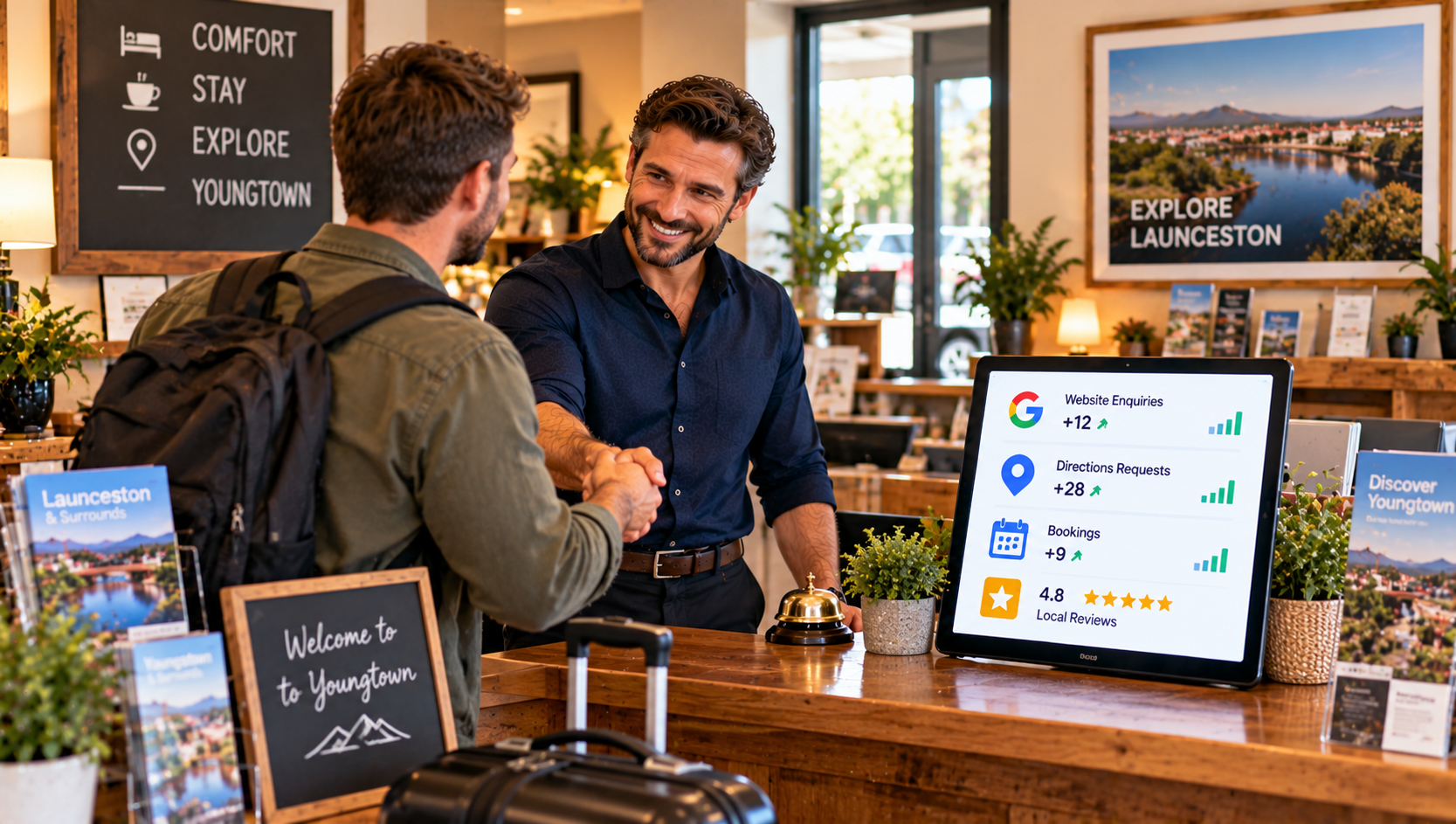
Track the actions that matter for a roadside business: calls, direction requests, and visits to your profile, ideally by time of day. Compare peak months with quiet ones, and ask new customers how they found you. If most direction requests come from the highway, your route strategy is working.
A Youngtown Checklist
Check the real drive time from the airport and describe your location honestly.
Keep your business name exactly as it appears on your signage.
Set accurate hours, with special hours for holidays.
Add photos, practical details, and answers to common questions.
Publish a few genuinely helpful pages for travellers.
Ask every customer for a review, and reply to each one.
Look at partnerships with car hire and accommodation providers.
Look after your local customers.
Track calls and directions by time of day.
How Bolder Digital Approaches Youngtown
At Bolder Digital, we start by working out who passes your door, and why they would stop. We then tighten your Google Business Profile, build accurate pages for travellers, set up a steady review process, and measure the calls and directions it brings. You can see how this fits into ourlocal SEO services in Youngtown, ourGoogle Business Profile optimisation, and ourreview managementservice.
The Bottom Line
Youngtown is not beside the airport, and it does not need to be. It sits on the road that nearly a million and a half travellers use each year, and a business here can win those quick, local searches with an accurate profile, honest descriptions, helpful content, and good reviews. Be the easy, trustworthy stop on the way, and the traffic does the rest.
Frequently Asked Questions
Is Youngtown close to Launceston Airport?
Not directly. Youngtown is about six kilometres south of the city centre, while the airport is at Western Junction, around 15 kilometres from the centre. Youngtown sits on the route between the two, so check the drive time and describe it accurately.
How do travellers find businesses on the airport road?
Mostly through phone searches and maps, using terms such as “near me”, “open now”, and “on the way”. Google’s local results weigh the searcher’s location, so an accurate, complete Google Business Profile matters most.
Can I add “airport” to my business name on Google?
No. Adding keywords to your business name is against Google’s guidelines and can lead to suspension. Use the name on your signage.
What content helps a roadside business?
A few practical, accurate pages for travellers, such as where to refuel a hire car, or what is open between the airport and the city. Avoid claims about prices or availability that could change.
How does Bolder Digital help Youngtown businesses?
We tighten your profile and listings, create helpful pages for travellers, set up a steady review process, and measure the calls and directions your marketing brings.
Jarryd Holmes, Founder & Owner, Bolder Digital | Prospect Vale, Tasmania |bolderdigital.com.au