Virtual Assistant Services vs Hiring In House: The Real Cost Comparison for 2026
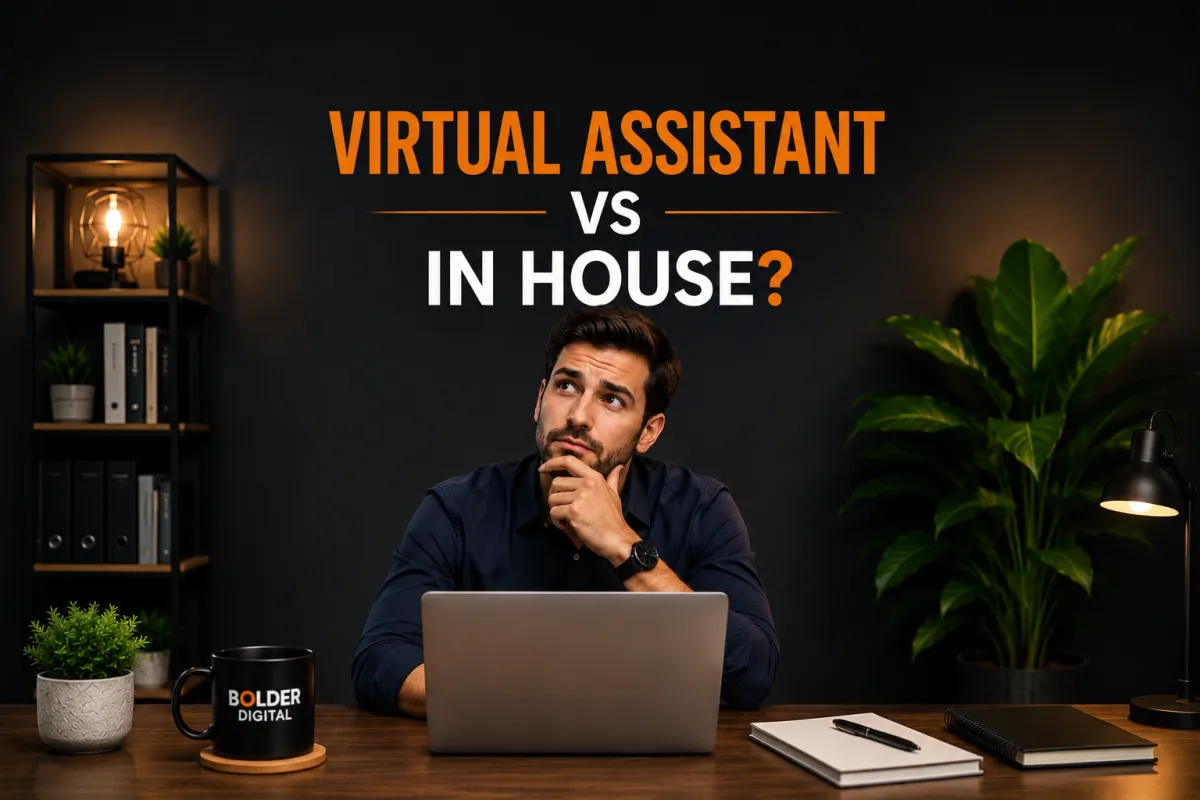
Every business owner considering virtual assistant services eventually asks the same question. Is this actually cheaper than just hiring someone locally, or is it a false economy that ends up costing more once you factor in everything else? I want to give you the actual numbers for 2026, not a rough guess, so you can make this decision properly rather than on gut feeling.
The Real Cost of an In House Hire, All In
Hiring a full time administrative employee in Australia typically starts at fifty five to eighty thousand dollars a year in base salary alone, and that is before a single additional cost is added. Once you factor in superannuation, currently sitting at eleven and a half percent and rising to twelve percent by 2027, annual leave, personal leave, workers compensation insurance, recruitment costs, and the weeks of onboarding time before a new hire becomes genuinely productive, a mid level admin hire commonly costs closer to seventy five to one hundred and ten thousand dollars a year once every true cost of employment is included.
Office space adds another layer most business owners forget to factor in. An additional employee typically requires somewhere between five and fifteen thousand dollars a year in office space and equipment, depending on your location, with capital city CBDs commanding a noticeable premium over that.
What Virtual Assistant Services Actually Cost
Virtual assistant services in Australia in 2026 vary considerably depending on where the assistant is based and what they specialise in. Based on data from over a thousand virtual assistant engagements, the average hourly rate across Australia sits around thirty two dollars, with basic administrative support at the lower end of the range and specialist skills, such as bookkeeping, technical support, or marketing management, commanding a premium closer to forty five dollars an hour. Offshore virtual assistant services, particularly those based in the Philippines, typically start considerably lower, often between eight and twenty five dollars an hour depending on specialisation.
On an annual basis, a properly managed virtual assistant engagement commonly lands somewhere between fifteen and thirty thousand dollars a year for genuine full time equivalent support, compared to the seventy five to one hundred and ten thousand dollar range for an equivalent local employee once every true cost is included. Most Australian businesses using virtual assistant services report costs running thirty to fifty percent lower than an equivalent in house hire, and in some direct comparisons using offshore providers specifically, the saving stretches closer to sixty to eighty percent.

Why the Gap Is Wider Than It First Appears
Here is the part that genuinely surprises business owners once they see it laid out properly. The gap between virtual assistant services and an in house hire is not simply about hourly rate versus salary. It is about paying only for hours you actually need rather than a fixed thirty eight hour week regardless of workload, avoiding the fixed overhead costs of superannuation, leave entitlements, and office space entirely, and skipping the weeks of onboarding time before a new local hire becomes genuinely productive, since a well matched virtual assistant, properly trained on your systems, is typically productive from the very first week.
Is the Output Actually Comparable, or Are You Losing Quality
This is the question that genuinely matters, and it deserves an honest answer rather than pure salesmanship. For most ongoing administrative and operational work, a well matched virtual assistant produces somewhere around eighty five to ninety percent of the output of an equivalent in house employee, for roughly thirty five to forty percent of the total cost. That gap in output is rarely about capability, it typically comes down to slightly less deep familiarity with your business's specific nuances compared to someone sitting in your office every day, a gap that closes considerably the longer a well trained virtual assistant works with your business.
For genuinely process driven, repeatable work, email management, scheduling, data entry, customer support, bookkeeping support, and CRM management, that output gap is often negligible in practice. For roles requiring deep, ongoing strategic judgement specific to your business, the gap tends to be more noticeable, at least initially.
Where In House Hiring Still Makes More Sense
I want to be genuinely fair here rather than present this as a one sided decision. Hire in house rather than using virtual assistant services when the role requires physical presence, such as a receptionist greeting walk in clients. Hire in house when the role represents a genuine long term career growth path into a senior position within your business specifically, since virtual assistant arrangements are generally better suited to defined operational scope than long term leadership development. And hire in house when the role legitimately requires an Australian resident, customer facing voice for compliance or brand reasons specific to your industry.
Outside of these specific situations, and for the vast majority of ongoing administrative, operational, and support functions, virtual assistant services now deliver comparable output at meaningfully lower cost.
The Replacement Risk Most Comparisons Ignore
There is a genuine risk factor worth weighing here that a pure cost comparison misses entirely. If an in house hire turns out to be a poor fit, you are facing notice periods, a fresh recruitment round, and months of lost momentum while you find and onboard a replacement. A properly managed virtual assistant arrangement through a reputable provider typically allows a far faster replacement process if a specific match is not working out, since the provider itself carries the vetting and matching responsibility rather than the entire process resting on you starting from scratch.
Making the Decision Properly for Your Business
The genuinely smart approach is not simply choosing the cheapest option on paper. It is being honest about which category your specific role actually falls into, physical presence and long term leadership development toward in house hiring, and everything else, which represents the vast majority of ongoing operational work, toward virtual assistant services. Once you have made that call, the actual cost comparison strongly favours virtual assistant services for the majority of roles most Australian small and medium businesses are trying to fill.
Getting the Match Right From the Start
The real determinant of whether virtual assistant services deliver that eighty five to ninety percent output figure, or fall short of it, comes down entirely to proper vetting, training, and matching before the arrangement even begins. This is exactly the standard we hold every placement to, training each virtual assistant specifically on your existing systems before they start, rather than having them learn on the job at your expense. If you are weighing up virtual assistant services against an in house hire and want the genuine cost saving without sacrificing the output your business needs, our virtual assistant service is built specifically to close that gap properly.
The Bottom Line
For the vast majority of Australian small and medium businesses, virtual assistant services deliver comparable output to an in house hire at thirty to eighty percent lower total cost, depending on the specific role and provider chosen. The decision only genuinely favours in house hiring when physical presence, long term leadership development, or a specific compliance requirement is directly involved. For everything else, and that is most of what actually fills up a business owner's week, the cost comparison for 2026 makes virtual assistant services very hard to ignore.

Frequently Asked Questions
How much cheaper are virtual assistant services compared to hiring in house in Australia?
Most Australian businesses save thirty to fifty percent using virtual assistant services compared to an equivalent in house hire, with offshore providers specifically often delivering savings closer to sixty to eighty percent once superannuation, leave entitlements, and office costs are factored in.
Do virtual assistant services deliver the same quality as an in house employee?
For process driven, repeatable work, a well matched and properly trained virtual assistant typically delivers around eighty five to ninety percent of the output of an in house employee, for roughly thirty five to forty percent of the total cost, making it a strong trade off for most operational functions.
What is the true annual cost of an in house admin hire in Australia?
A mid level administrative hire typically costs seventy five to one hundred and ten thousand dollars a year once base salary, superannuation, leave entitlements, workers compensation, recruitment costs, and office space are all included, well above the advertised salary figure alone.
When does hiring in house make more sense than using virtual assistant services?
In house hiring makes more sense when a role requires physical presence, represents a genuine long term career growth path within the business, or legally requires an Australian resident customer facing voice for compliance reasons specific to that industry.