Virtual Assistant vs Automation: When You Need a Human and When You Do Not
This is one of the most common questions I get from Australian business owners once they start exploring virtual assistant services and business automation at the same time. They usually come in assuming it has to be one or the other. Hire a virtual assistant, or set up automation. Pick a lane.
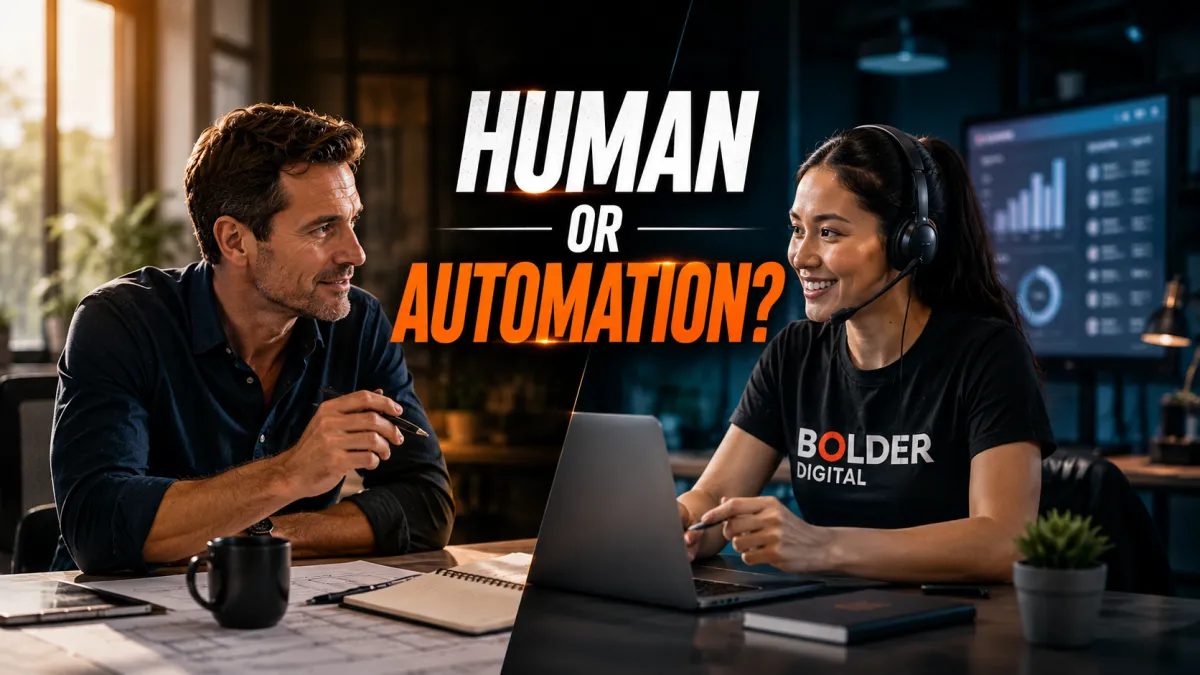
The truth is that this is not really an either or decision. The businesses that scale the fastest are the ones that understand exactly which tasks need a human virtual assistant and which ones should be automated completely. Get that split wrong, and you either overpay for a person to do robotic work, or you frustrate your customers with a bot pretending to be a human.
Here is how I actually think through this with clients, and how you should think through it for your own business.
What Automation Does Better Than Any Human
Automation is unbeatable at anything repetitive, rule based, and time sensitive. If a task follows the same steps every single time and does not require judgement, automation should be doing it, not a person.
This includes things like sending appointment reminders, following up with a lead who filled out a form at two in the morning, tagging and sorting contacts in your CRM, sending review requests after a job is completed, and answering the same five questions your website visitors ask every day. A well built automation workflow through GoHighLevel can handle all of this instantly, without breaks, without sick days, and without ever forgetting a follow up.
The mistake I see constantly is business owners paying a virtual assistant to manually do these exact tasks. It is not that the VA cannot do it. It is that you are paying human hourly rates for work a workflow could do for a fraction of the cost, freeing that person up for something that actually needs a brain.

What a Virtual Assistant Does Better Than Automation
On the flip side, automation falls apart the moment a task requires judgement, empathy, or genuine problem solving. This is where a skilled virtual assistant becomes essential, not optional.
A frustrated customer who needs to be talked down before they leave a bad review. A complex booking that does not fit your standard calendar rules. Managing your social media in a way that actually sounds like your brand instead of a generic template. Researching a competitor's pricing and putting together a genuine comparison. Handling an inbox where half the emails need a real, thoughtful reply rather than a canned response.
These are not tasks you can fully automate, at least not without customers noticing and being annoyed by it. A trained virtual assistant brings judgement, tone, and adaptability that automation simply cannot replicate yet, no matter how advanced the AI behind it becomes.
The Real Answer Is Usually Both, Working Together
The businesses I see winning are not choosing virtual assistant support over automation. They are using automation to handle the repetitive backbone of their operations, and a virtual assistant to handle everything that requires a human judgement call, with the two working side by side.
Here is what that actually looks like in practice. Automation captures the lead, sends the instant follow up text, and books an initial slot in the calendar. The virtual assistant then confirms the appointment personally, handles any scheduling conflict, and manages the actual conversation if the customer has questions that a bot cannot answer well. Automation reminds a customer about an upcoming appointment. The virtual assistant handles it if that customer needs to reschedule and has three follow up questions about pricing.
This combination is exactly why we built our virtual assistant service the way we did. Our VAs are trained to work inside CRM and automation systems rather than around them, so the handoff between bot and human is seamless instead of clunky.
How to Decide What to Automate and What to Delegate to a Human
When a client asks me where to draw the line, I ask them three questions about the task in front of them.
Does this task follow the exact same steps every time, with no exceptions. If yes, it should be automated.
Does this task require reading tone, handling an objection, or making a judgement call. If yes, it needs a human virtual assistant.
Would a customer be annoyed or confused if they realised this was automated. If yes, put a person on it, even if it costs more.
Most Australian small businesses I work with are currently getting this balance wrong in one specific way. They are using expensive human hours on tasks that should have been automated months ago, while the tasks that genuinely need a human touch, like following up with a warm lead who has real questions, get delayed because the business owner is too buried in admin to do it personally.
Why This Matters More for Australian Businesses Specifically
Australian small businesses often run lean, with the owner or one or two staff members wearing every hat in the business. That makes the automation versus virtual assistant question even more important, because there is no large team to absorb inefficiency.
Getting a virtual assistant trained on your specific business, paired with automation handling the repetitive tasks in the background, tends to give a small Australian business the effect of a much larger team without the overhead of hiring full time staff. That combination is often the actual difference between a business that is constantly playing catch up and one that runs smoothly while the owner focuses on the parts of the business only they can do.
Getting Started the Right Way
If you are trying to figure out where to start, my advice is always the same. Map out every repetitive task eating up your week first, and automate those before you even think about hiring. Then look at what is left, the tasks that genuinely need judgement, tone, and a human brain, and bring in a virtual assistant specifically trained to handle those, ideally one who already knows how to work inside your existing systems rather than needing everything explained from scratch.
If you already have a GoHighLevel account with automations running but still find yourself buried in tasks that need a human, or you are not sure which tasks should be automated versus delegated, that is exactly the gap our virtual assistant service is built to close. We match Australian businesses with trained virtual assistants who work alongside your automation rather than duplicating it, so nothing falls through the cracks and nothing gets over automated either.

Frequently Asked Questions
Should I hire a virtual assistant or set up automation first?
Start with automation for anything repetitive and rule based, such as reminders, follow ups, and review requests. Once that is running, bring in a virtual assistant for the tasks that need judgement, tone, or a genuine conversation, since trying to automate those usually frustrates customers.
Can a virtual assistant work alongside my existing automation system?
Yes, and this is actually the ideal setup. A trained virtual assistant should work inside your CRM and automation workflows, picking up where the automation leaves off, such as handling a reply that needs a human judgement call after an automated message has gone out.
What tasks should never be fully automated?
Anything involving a frustrated customer, a complex or unusual request, genuine relationship building, or a conversation where tone and empathy matter. These require a human virtual assistant rather than a bot, even if automation could technically attempt it.
Is it cheaper to use a virtual assistant or automation?
Automation is almost always cheaper for repetitive, high volume tasks since it runs continuously without an hourly cost. A virtual assistant is a better investment for lower volume tasks that require judgement, where the cost of getting it wrong through automation, such as annoying a customer, outweighs the cost of a person handling it properly.