Voice AI Accents: Why an Australian Voice Actually Matters
This is not a marketing talking point. It is a genuinely documented, researched problem. Academic studies on speech recognition consistently find that AI systems perform measurably worse on accents underrepresented in their training data, and Australian English sits among the accents this actually affects. Understanding why matters if you are considering voice AI for your business, because it changes what you should actually be testing before you commit to a provider.
Let me walk you through what the research genuinely shows, on both sides of the conversation.
The Word Error Rate Problem: What "Underrepresented" Actually Means
Speech recognition systems are trained on enormous amounts of recorded speech, and researchers measure how well a system actually performs using something called word error rate, essentially how many words get misheard, dropped, or wrongly inserted compared to what was genuinely said. Published research testing a state of the art speech recognition model against a wide variety of labelled accents found a clear, measurable accuracy bias, favouring the accents most heavily represented in the original training data, predominantly North American English, with underrepresented accents showing meaningfully higher error rates by comparison.
The Specific Place Name Problem
Here is a concrete, genuinely Australian example of exactly how this shows up in practice. Research from UNSW specifically points to Australian place names, Wagga Wagga and Canberra were both given as examples, as a category speech recognition systems commonly get wrong, precisely because this kind of Australian named entity is thin in the data these systems were originally trained on. For a voice agent taking a customer's suburb or address over the phone, this is not an abstract academic concern. It is exactly the kind of specific, practical failure that could mean a booking captured with the wrong location entirely.
It's Not Just About Understanding You: The Output Side Matters Too
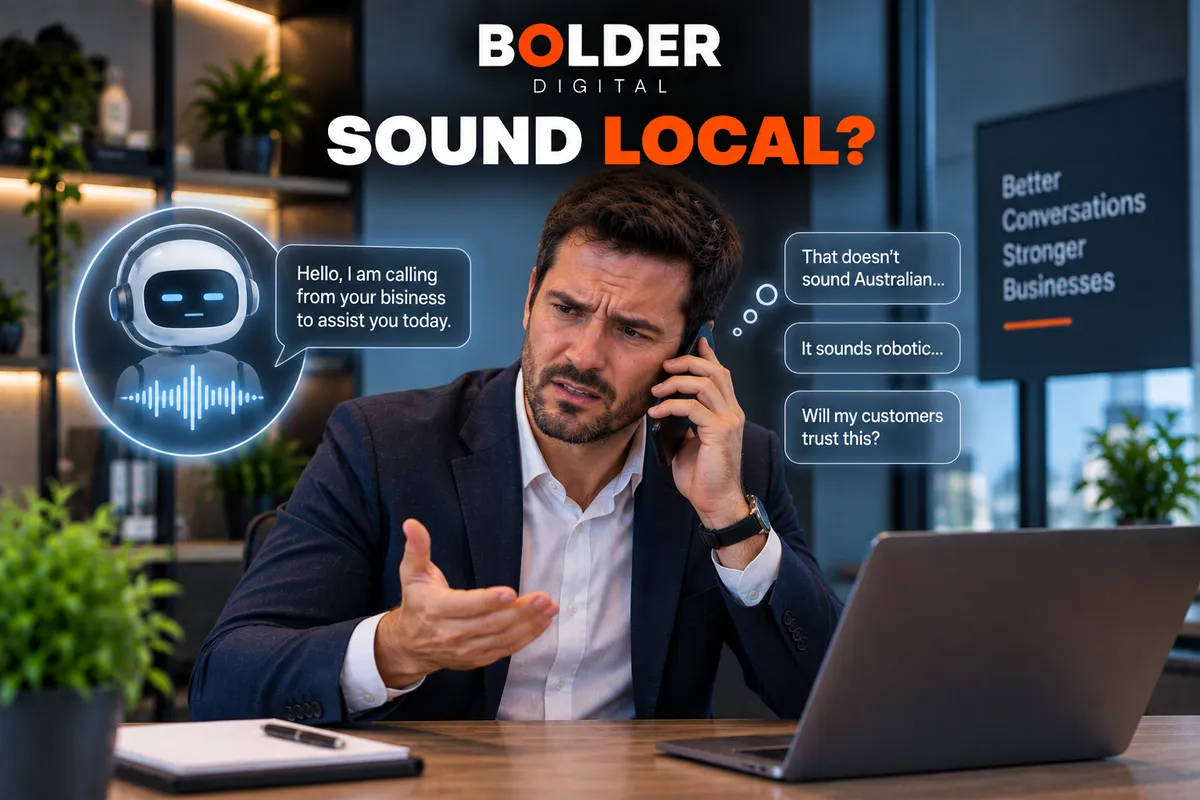
This problem genuinely runs in both directions, and the output side is where I think most businesses underestimate the issue. A peer reviewed study specifically testing how listeners perceived AI generated Australian accented voices found something worth knowing. When participants heard a voice a platform had specifically labelled as Australian, their actual agreement with that label sat considerably lower than for American or British voices, and in one specific test, participants uniformly disagreed with the platform's own Australian accent designation entirely. In plain terms, a voice technically marketed as Australian does not automatically sound convincingly Australian to an actual Australian listener.
Why "Has an Australian Voice Option" Isn't the Same as "Sounds Genuinely Australian"
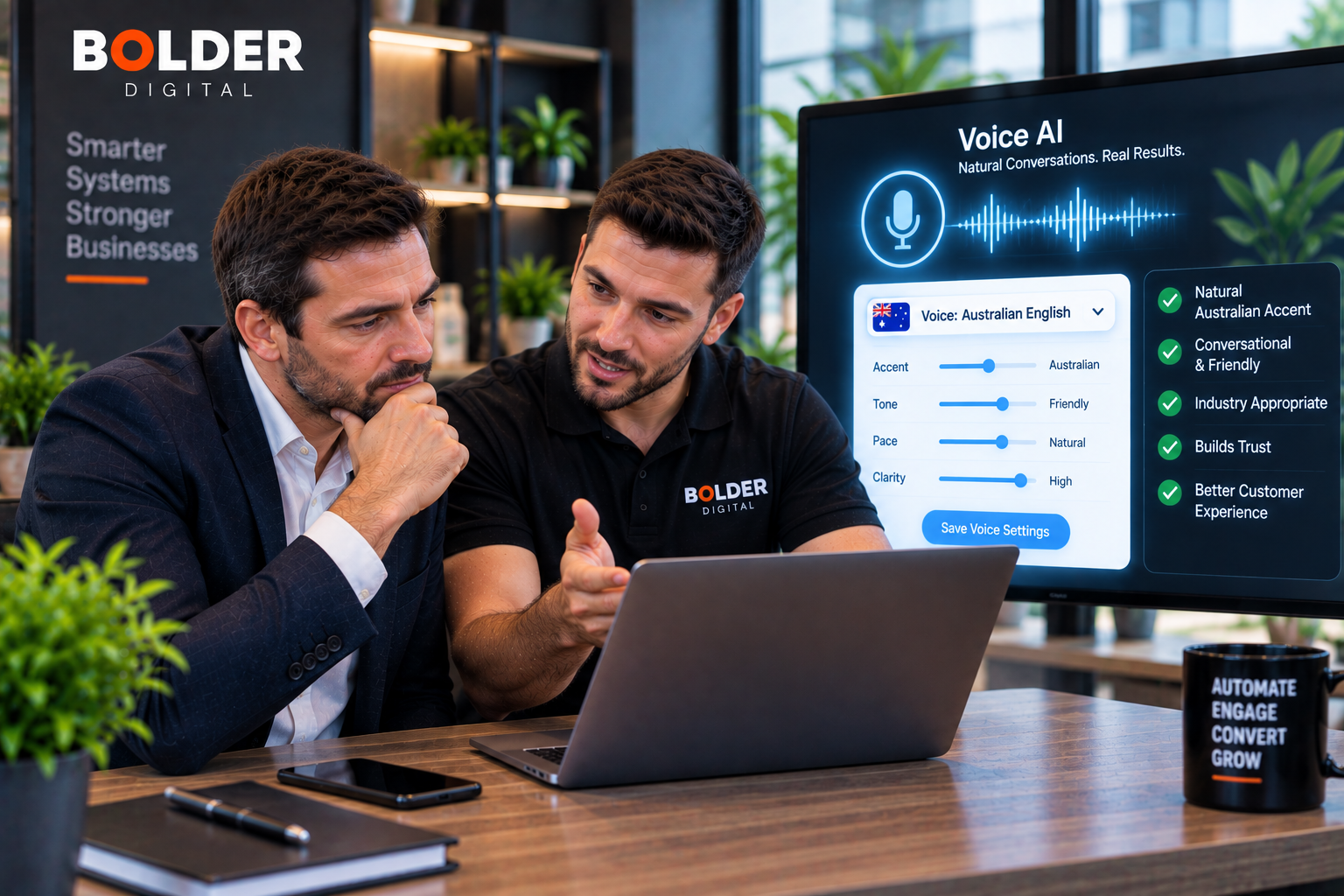
This distinction genuinely matters when evaluating a voice AI provider. A platform ticking the box of offering an Australian accent option is not the same as that voice actually landing as authentic to a real Australian caller. This is exactly why listening to a genuine sample, ideally with a specific Australian place name or piece of local terminology included, matters more than trusting a provider's own accent label at face value.
The Credibility Cost of Getting This Wrong
Published research in cognitive science has specifically examined whether accented speech affects perceived credibility, and the answer is genuinely yes. An obviously mismatched or unconvincing accent does not just sound slightly off. It measurably affects how much a listener trusts what they are actually hearing. For a business, this translates directly into a caller's confidence in the interaction itself, an agent that sounds subtly wrong creates friction before the conversation has even properly started.
Why This Is a Solvable Problem, Not a Permanent Limitation
I want to end on a genuinely constructive note, because this is not an unfixable limitation of the underlying technology. Some providers are actively building what researchers describe as accent agnostic systems, deliberately trained to perform consistently well across a genuinely diverse range of English accents rather than favouring whichever accent happened to dominate the original training data. This is exactly why the specific underlying technology choice behind a voice agent genuinely matters, not just whether a generic Australian accent option exists somewhere in a settings menu.
Getting This Set Up Properly
Building a voice agent that genuinely understands Australian place names, local terminology, and the way Australians actually phrase a request, on both the listening and the speaking side, requires deliberately choosing technology built to handle this properly, then testing it against real, specific Australian content before it ever answers a genuine customer. This is exactly what our AI Receptionist service is built around, tested against genuine Australian speech, not just a checkbox accent setting assumed to work correctly.
The Bottom Line
The gap between how well voice AI handles Australian English and how well it handles the accents most represented in its training data is genuinely documented, researched, and measurable, on both the listening and the speaking side of the conversation. This is not a reason to avoid voice AI. It is a reason to test any provider specifically against genuine Australian content, place names, local terminology, an actual Australian voice sample, before assuming it works properly, rather than trusting a marketing label alone.

Frequently Asked Questions
Is it actually true that AI speech systems struggle more with Australian accents?
Yes, this is a genuinely researched finding, not just anecdotal. Published studies measuring word error rates across different English accents consistently find higher error rates for accents underrepresented in a system's original training data, which includes Australian English compared to North American English specifically.
Why do voice AI systems sometimes mishear Australian place names?
Research specifically points to a lack of Australian named entities, place names like Wagga Wagga and Canberra were given as examples, in the data many speech systems were originally trained on, making these specific terms more likely to be misheard or mistranscribed.
Does labelling a synthetic voice as "Australian" guarantee it actually sounds authentic?
Not necessarily. Research testing listener perception found meaningfully lower agreement with a platform's own Australian accent label compared to American or British labels, meaning a voice technically marketed as Australian does not always sound convincingly authentic to an actual Australian listener.
Can this accent gap actually be fixed, or is it a permanent limitation?
It is genuinely solvable with the right underlying technology. Some providers are specifically building systems designed to perform consistently across a wide range of accents rather than favouring whichever accent dominated the original training data, which is why the specific technology choice behind a voice agent matters considerably.