
Voice AI for Pest Control and Emergency Callouts: Triage After Hours
Pests do not keep business hours. A wasp nest becomes a problem at the weekend when the kids are in the garden. A rat turns up in the kitchen at nine at night. A wasp sting at dusk becomes something far more serious. For a pest control business or any emergency callout trade, the after hours phone is where the stakes are highest, and where the wrong response is most costly. At Bolder Digital, we see voice AI as a strong fit here, but only when triage is designed carefully. Getting it right means answering every call, sorting the genuinely urgent from the merely annoying, and never letting the agent play doctor or promise what it cannot deliver.
Two Kinds of Emergency
The first thing to get straight is that “emergency” means two different things.
A safety emergency.Someone’s health or life is at risk. This is a job for emergency services, not for your technician.
A business emergency.The situation is urgent enough to justify waking your on call technician, but nobody’s life is in danger.
Mixing them up is dangerous in one direction and expensive in the other. After hours planning guides for pest control make the same point, and recommend keeping safety escalation and business escalation as separate paths.
A Four Tier Model
Here is a framework we use as a starting point. You should adjust it to your own business.
Tier 0: Safety.Someone is having a severe reaction to a sting or bite, has trouble breathing, has swelling of the face or throat, has been bitten by a snake, or is otherwise in danger. The agent does one thing, using fixed wording written by you: it tells the caller to hang up and call 000 straight away. It does not diagnose, reassure, or keep taking details first. If the caller is unsure, treat it as an emergency.
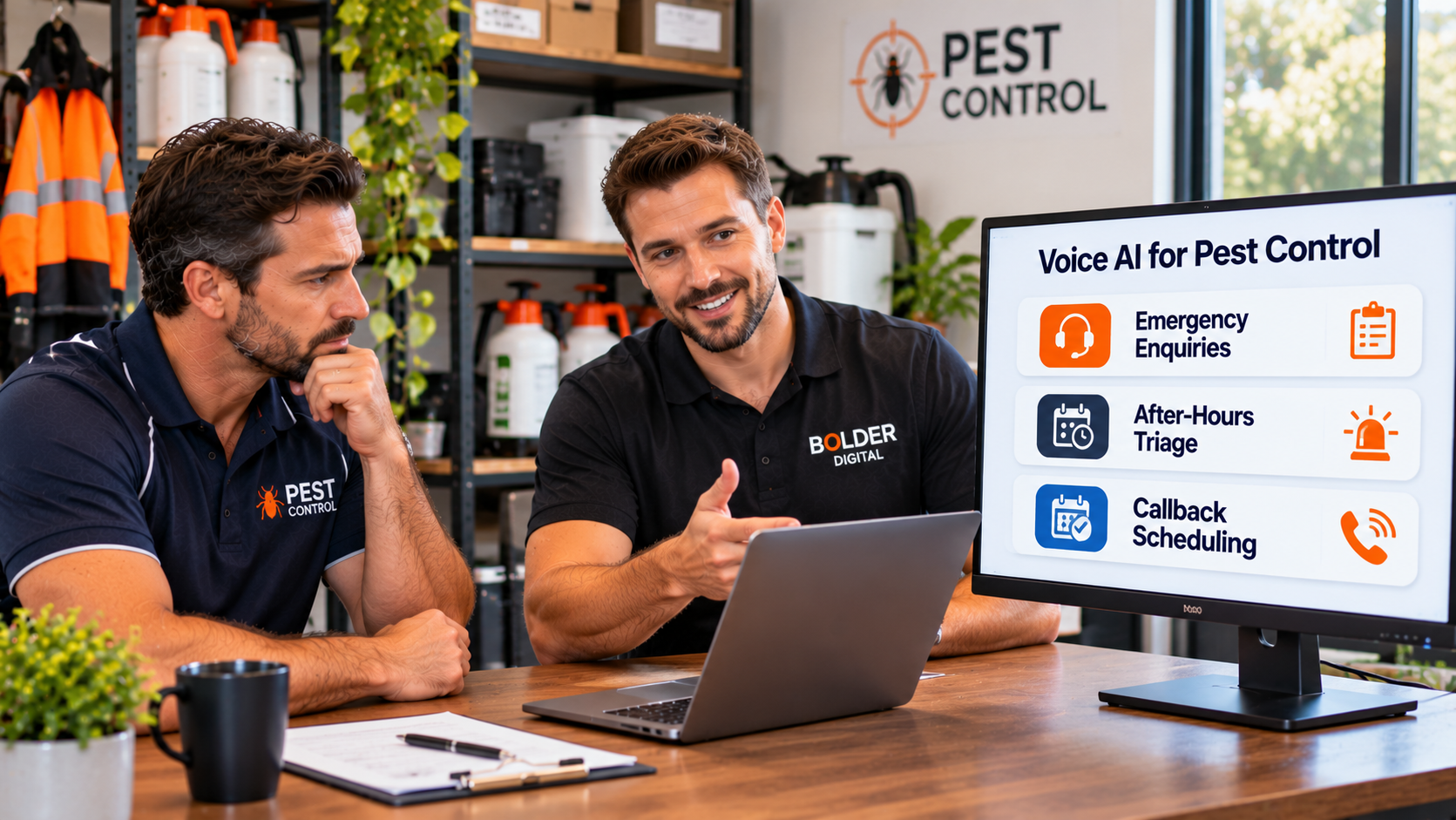
Tier 1: Urgent callout.Not life threatening, but worth waking the on call technician. Examples might include:
aggressive stinging insects at an entry or inside the living space, with children, pets, or someone who is allergic nearby
a nest at a school, childcare centre, or aged care facility
an active rodent problem in a food premises with an inspection coming
bed bugs in accommodation with guests arriving
Tier 2: Priority, next available.Needs attention soon, but nobody is woken. A wasp nest outside above a door, rodents in the roof, a large ant colony, or cockroaches. The agent takes full details and books the earliest slot.
Tier 3: Routine.Quotes, inspections, recurring services, and general questions.
Wildlife, such as possums, needs its own rule, covered below.
The Triage Questions
Keep them short, and ask only what changes the tier.
Where is the problem, and what is it?
Is anyone hurt, or has anyone had a reaction? If so, go to Tier 0 wording.
Who is at risk? Children, someone with allergies, elderly people, or pets.
Is it inside or outside, and can people keep away from it?
What kind of premises is it? A home, rental, business, food premises, childcare, or accommodation.
How long has it been happening, and how bad is it?
Can they text a photo?
Five to seven questions is plenty. Any more, and urgent callers lose patience.
Fixed Safety Wording, Written in Advance
For the moments that matter, the agent should use fixed, approved lines and not improvise. Examples to adapt:
Serious reaction:“If anyone is having trouble breathing, has swelling of the face or throat, or feels faint after a sting or bite, please hang up and call 000 now.”
Snake:“Stay well away from it, and keep children and pets inside. If anyone has been bitten, call 000 immediately.”
Chemical exposure:“If someone has been exposed to a chemical and feels unwell, call the Poisons Information Centre on 13 11 26, or 000 in an emergency.”
The agent should not offer treatment advice, home remedies, or chemical suggestions of any kind.
The Call Out Fee: Say It and Get Agreement
After hours work costs more, and customers should know before the technician heads out. The agent should:
state the call out fee or the after hours charge plainly
ask the caller to confirm they agree before dispatching
record that agreement in the job notes
avoid quoting treatment prices over the phone, unless you have set prices
Prices must be clear and fair under Australian consumer law, so make sure the wording matches your terms. Payment should go through a secure link, never as card details read out in the call.
Handing Over to the On Call Technician
For Tier 1 calls, the agent should connect the caller to the on call technician, with a short private summary first, such as “Wasp nest at the front door, children home, caller waiting.” Plan the fallback in advance:
ring the on call technician, and allow a set time
if there is no answer, try the backup
if there is still no answer, try the owner
if all fail, the agent takes full details, tells the caller honestly when to expect a call back, and sends an alert
Never leave an urgent caller on hold without an answer. And never promise a time of arrival that the technician has not agreed to.
Be Careful About What You Promise
The agent should not guarantee a technician will arrive by a certain time, that a pest will be eliminated, or that a treatment is safe for specific people or pets. Those are matters for your licensed staff.
Licences, Permits, and Protected Wildlife
Pest control in Tasmania is regulated. Technicians treating rodents, ants, wasps, and similar pests in and around buildings need the appropriate certificate of competency, and businesses using agricultural chemicals for a fee need a commercial operator licence. Check current requirements with the state’s natural resources department.
Wildlife needs particular care. Possums, for example, are protected in Tasmania, and trapping or removing them generally requires a permit. The agent should not promise to remove protected wildlife. It should take details, explain that a licensed handler is needed, and route the call to someone who holds the right permits, or refer the caller on.
Capture the Right Details
For every dispatch, the agent should record:
the address and how to get in
who will be on site
pets, particularly dogs that might be aggressive
whether the caller owns, rents, or manages the property, since rentals and strata properties may need the owner’s or manager’s consent
for commercial customers, the type of premises and any deadlines, such as an inspection
a mobile number, and a photo by text if possible
Caller ID alone is not proof of identity or of who owns a property, so treat the address and the details given as the key information.
Recurring Customers and Follow Ups
Existing customers call too, often about a return visit after a treatment. The agent can recognise a returning caller, check the service record, and book a re-inspection or a repeat visit where your policy allows. Warranty and re-treatment promises should follow your written terms, with anything unusual passed to a person.
The Same Approach for Other Emergency Callouts
Pest control is one example. Plumbers, electricians, locksmiths, glaziers, and tree services all face the same split between safety and business emergencies. The principle holds: fixed, approved wording for danger, such as leaving the building and calling emergency services if there is a smell of gas, staying away from exposed wiring, or turning off water at the mains only if it is safe to do so. Everything else goes through your tiers.
Seasonal Peaks
Many pest calls follow the seasons, with stinging insects more common in warmer months and rodents more common when it turns cold. Storms and heavy rain can add to the load for many trades. Prepare for these peaks by updating the agent’s rules and rosters ahead of time, and tell your team what to expect.
Protect Your Technicians
A voice agent that wakes the technician every time wears them out. Test your Tier 1 rules against real calls, and tighten them if too many turn out not to need a night visit. A fair rotation, a clear backup, and sensible rules for who gets woken make the system sustainable.
Test and Review
Before launch, run realistic scenarios:
a caller describing a sting with breathing difficulty
a nest above a front door with children home
a rat in a restaurant kitchen the night before an inspection
a possum in the roof
a caller who changes the story halfway through
the on call technician not answering
Then review every Tier 1 and Tier 0 call weekly. Look for misses, where an urgent call was treated as routine, and false alarms, where a routine call woke someone. Adjust the rules each time.
How Bolder Digital Approaches This
At Bolder Digital, we start with your own rules for what counts as an emergency, who is on call, and what you will and will not do after hours. We build the triage around them, use your approved safety wording, connect the warm transfer and fallback to your roster, and test the awkward cases before launch. You can see how this fits into ourAI Receptionist service.
The Bottom Line
After hours calls for pest control and emergency trades are where a voice agent can add the most value and do the most harm. Separate safety from business urgency, write the safety wording in advance, confirm call out fees before dispatch, keep protected wildlife and chemical advice well out of the agent’s hands, and hand urgent calls to a person with a clear fallback. Done carefully, it means no call goes unanswered, and the right ones reach the right person.
Frequently Asked Questions
Can a voice agent decide which pest calls are urgent?
Yes, using rules you write. It should sort calls into safety emergencies, urgent callouts, priority bookings, and routine requests, based on a few short questions. It should never give medical or chemical advice.
What should it say if someone has been stung or bitten and feels unwell?
Fixed wording that you have approved, telling the caller to hang up and call 000 straight away, without further questions. If in doubt, it treats the call as an emergency.
Should the agent quote after hours prices?
It should state the call out fee and get the caller’s agreement before dispatch, and record it. It should not quote treatment prices unless you have set ones, and it should not promise an arrival time.
What about protected wildlife such as possums?
They are protected in Tasmania, and trapping generally needs a permit. The agent should not promise removal. It should take details and route the call to a licensed handler.
How do I stop it waking my technician too often?
Write clear Tier 1 rules, test them against real calls, review every escalation each week, and tighten the rules where there are false alarms.
Jarryd Holmes, Founder & Owner, Bolder Digital | Prospect Vale, Tasmania |bolderdigital.com.au