

Voice AI for Restaurants: Bookings and Enquiries Without Pulling Staff Off the Floor
Every restaurant owner has seen this happen. It is the middle of Friday dinner service, every table is full, and the phone starts ringing. Someone has to answer it, and that someone is almost always a host or a server who was already mid conversation with a guest standing right in front of them. The call gets answered, but the guest who was physically there just got quietly deprioritised for someone who was not.
Let me walk you through why this specific tension is genuinely costly, and how voice AI actually solves it.
Why the Busiest Moment Is Exactly When the Phone Rings Most
This is the cruel irony of restaurant phone volume. Commonly cited figures suggest somewhere between thirty and forty percent of calls go unanswered during peak service hours, precisely because that is exactly when every staff member is already fully occupied with the guests physically in the room. The moment you have the least capacity to answer the phone is the exact moment it rings the most.
Two Genuinely Different Calls: Booking a Table vs Taking an Order
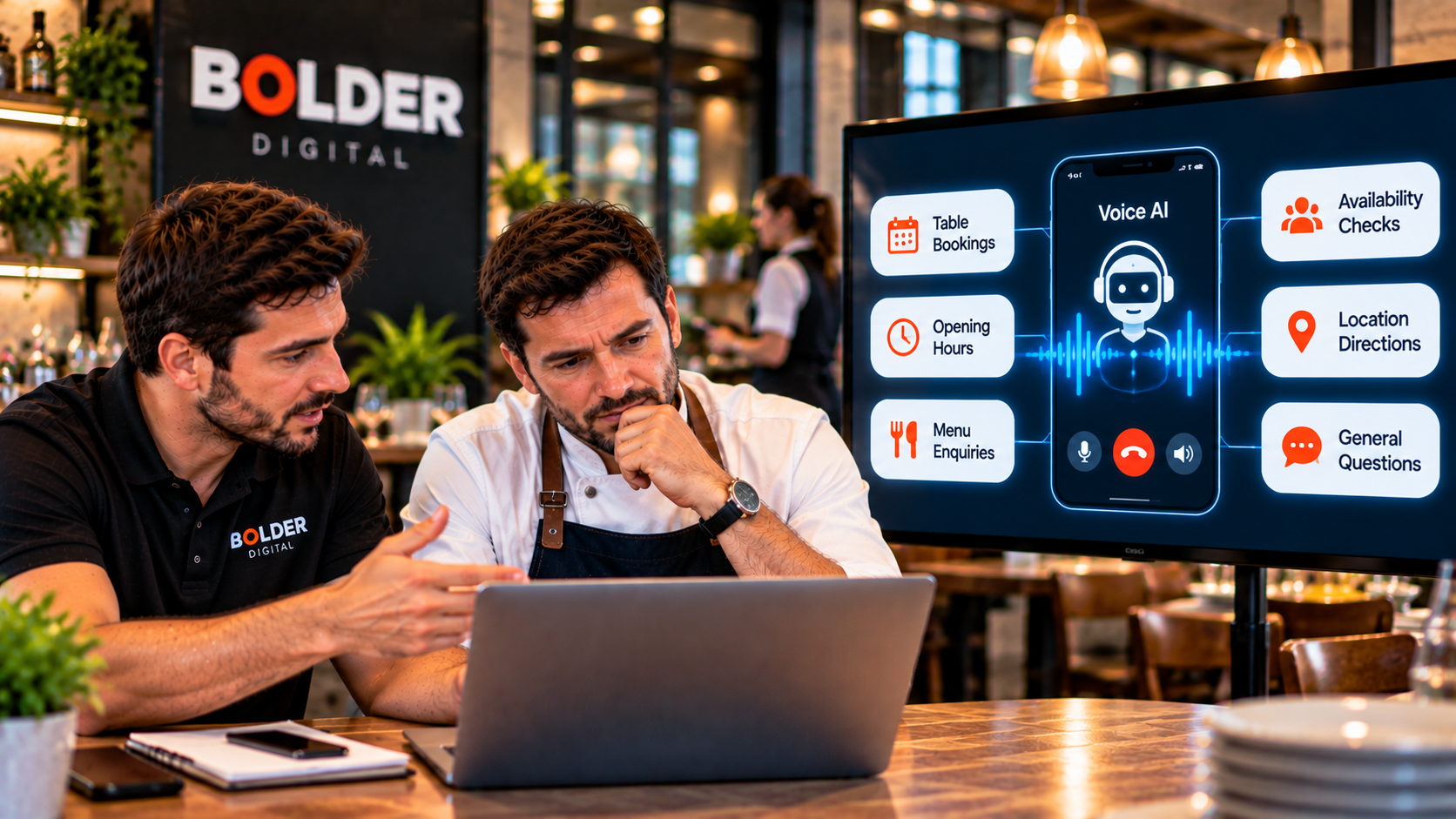
A properly built voice agent for a restaurant needs to handle two genuinely different kinds of calls, and treating them identically is a mistake. A reservation call is about the future, capturing party size, date, time, and any genuine occasion notes, then writing into your actual reservation system, with the real risk being a double booked table if the system does not check genuine live availability. A takeout or phone order call is immediate, capturing specific items, modifiers, and pickup timing, writing directly into your kitchen system, with the real risk being a wrong item or a missed allergy note rather than a scheduling conflict. These need different handling, not one generic conversation flow applied to both.
Why a Human Host Can Only Answer One Call at a Time
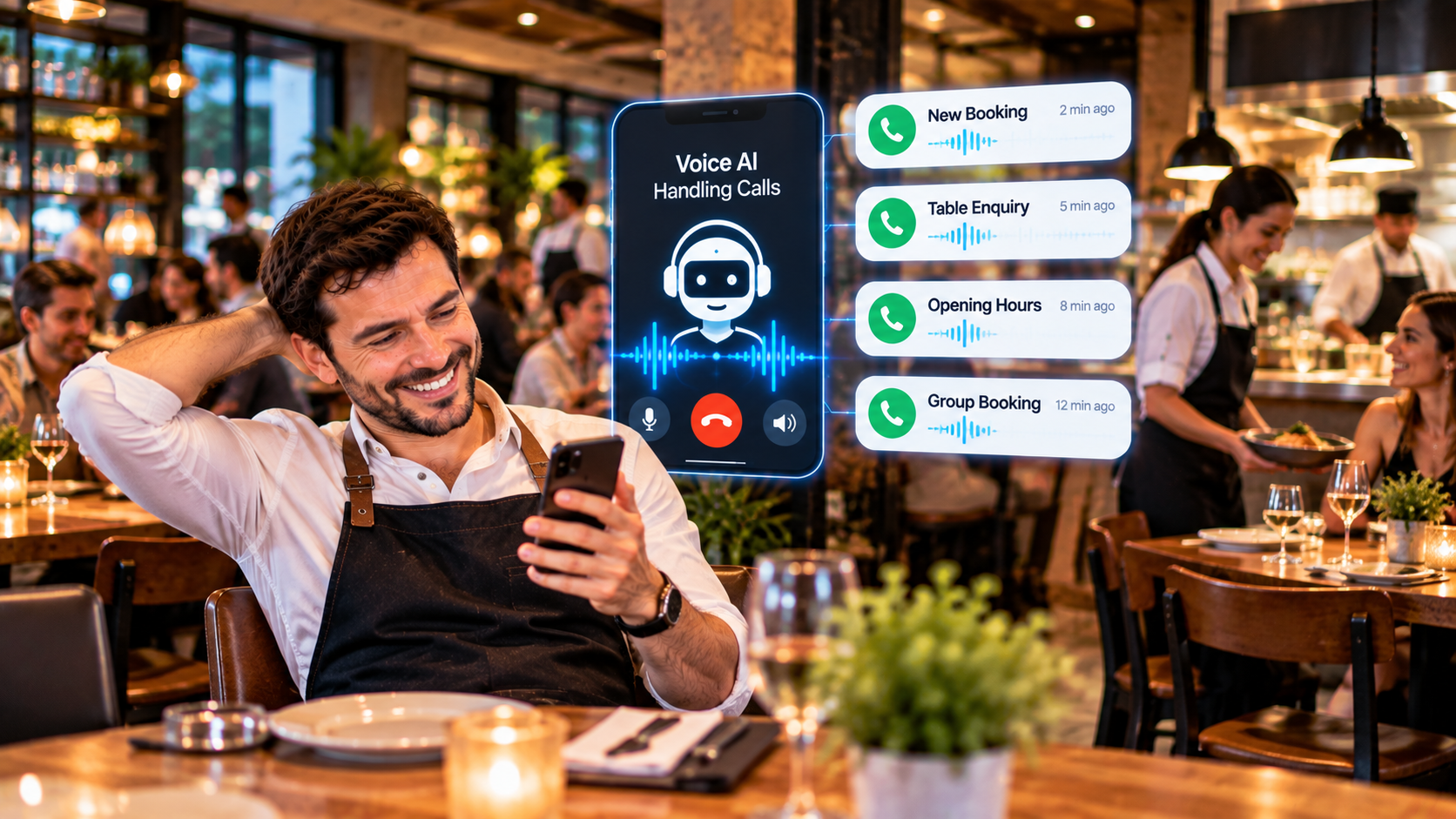
Here is the actual mechanical problem worth understanding clearly. Your host stand can only ever handle one phone call at a time, regardless of how quickly that person tries to answer. During peak service, when several calls can genuinely arrive within moments of each other, a human host is structurally incapable of answering more than one, no matter how good they are at their job. A voice agent does not have this limitation. It can hold several conversations simultaneously without any single caller experiencing a busy signal, which is exactly the specific problem a human host cannot solve purely through speed or effort.
Getting Allergy and Dietary Details Right, Every Single Time
This deserves specific attention, because it matters more than a typical booking detail. A voice agent capturing a dietary requirement or an allergy note needs to record this accurately and pass it through cleanly to whoever is actually preparing the food, every single time, without it getting lost between the phone call and the kitchen. This is not a detail to leave to a generic, loosely configured system. It needs to be treated as a genuinely important piece of information the agent is specifically built to capture reliably.
What Should Always Go to Staff Instead
A properly built restaurant voice agent recognises specific situations that genuinely need a person, a large party or private event enquiry, anything involving a menu item that has been eighty sixed for the day, or a question genuinely outside what the agent was built to answer confidently. Rather than guessing at these, or worse, confidently getting them wrong, the agent hands off cleanly, exactly the same principle worth applying to any voice AI deployment, recognising its own limits rather than pushing through regardless.
Getting This Set Up Properly
Building a voice agent that genuinely handles your specific reservation system, your actual menu, and your real allergy and dietary protocols properly, while knowing exactly when to bring in your team instead, takes real, deliberate setup. This is exactly what our AI Receptionist service is built around for restaurants specifically, so your host stand can actually focus on the floor rather than doubling as an overwhelmed call centre every time service gets busy.
The Bottom Line
The cost of pulling staff off the floor to answer the phone is genuinely invisible until you actually measure it, a distracted host, a guest waiting slightly longer to be seated, a caller who gave up and booked somewhere else entirely. Voice AI solves this specific problem structurally, handling multiple simultaneous calls during exactly the moments your team has the least capacity to, capturing bookings and orders accurately, and knowing precisely when a situation genuinely needs a person instead.
Frequently Asked Questions
Why do restaurants miss so many calls specifically during peak service?
Commonly cited figures suggest thirty to forty percent of calls go unanswered during peak hours, precisely because that is exactly when every staff member is already occupied with guests physically in the restaurant, leaving nobody genuinely free to answer the phone.
Should a restaurant's voice agent handle bookings and takeout orders the same way?
No, they genuinely differ. A reservation call captures future details like party size and date, with the real risk being a double booked table, while a takeout call captures immediate order details, with the real risk being a wrong item or a missed allergy note. Each needs its own properly configured flow.
How does voice AI actually solve the problem of multiple calls arriving at once during a rush?
Unlike a human host who can only answer one call at a time regardless of effort, a voice agent can hold several conversations simultaneously, meaning no caller experiences a busy signal even when several calls genuinely arrive within moments of each other.
What restaurant calls should always be handed off to actual staff?
Large parties or private event enquiries, anything involving a menu item that has been eighty sixed for the day, and any question genuinely outside what the agent was built to answer confidently should all hand off cleanly to a person rather than being guessed at.