
Voice AI for Trades: Booking Jobs Without a Dispatcher
Most trade businesses are genuinely too small to justify a dedicated dispatcher. You are one, two, maybe three people, and none of you can realistically sit by a phone all day deciding what is urgent, checking who is free, and booking a job in properly. And yet the phone still needs someone competent answering it, every single time, doing exactly what a good dispatcher would do. This is precisely the gap voice AI closes for a trade business, without needing to hire anyone new to do it.
Let me walk you through exactly how this works.
Why Trades Face a Constraint Most Other Businesses Don't
A trade genuinely cannot just answer the phone whenever it rings. You are up a ladder, under a house, hands full with a power tool, or elbow deep in a job that genuinely cannot be paused to answer a call. This is a physical constraint most office based businesses simply do not deal with in the same way. Voice AI matters more here precisely because of this, since it is not competing against you being merely busy. It is filling a gap that exists because you are physically unable to answer, full stop, several times a day.
The Emergency Triage Moment
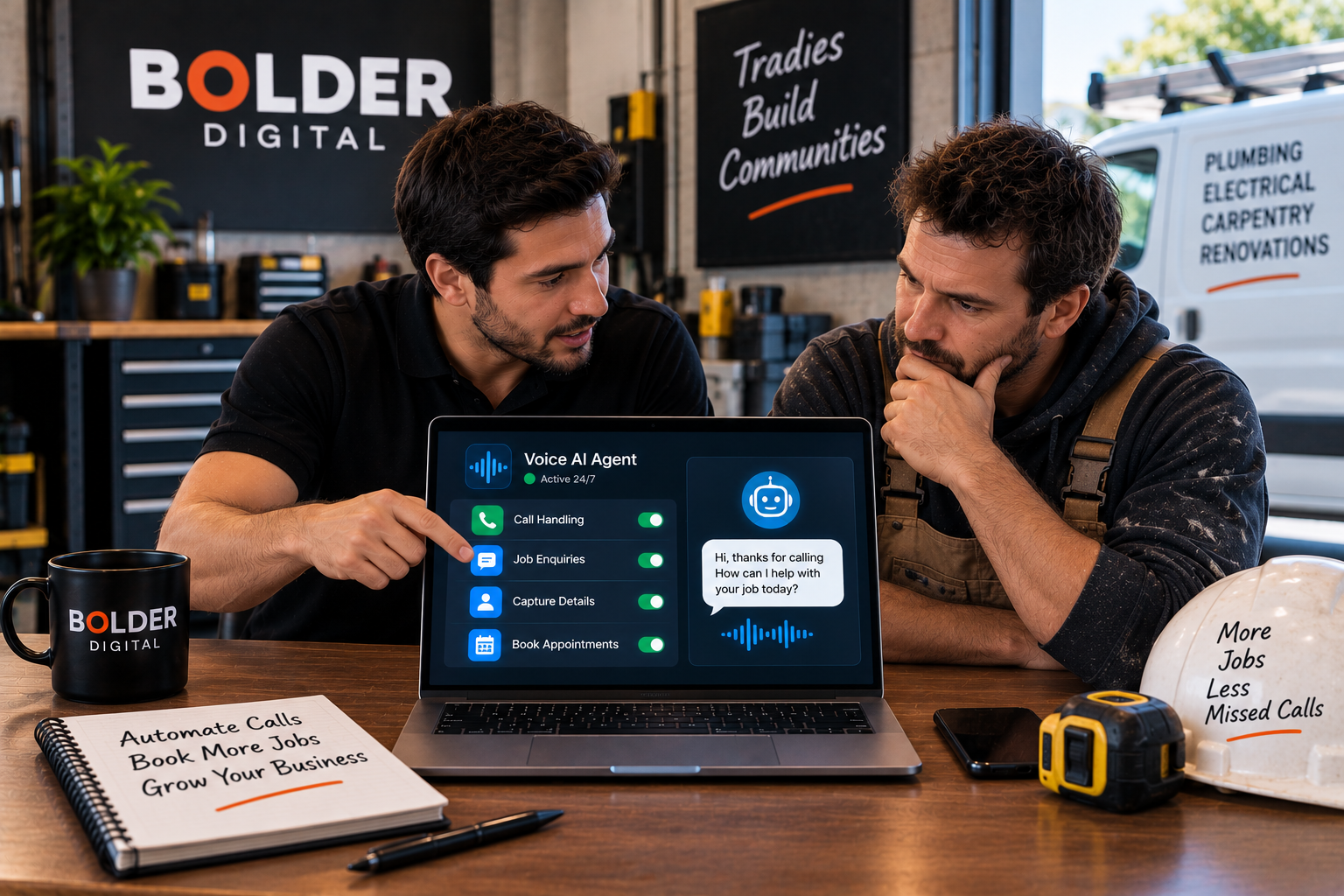
A genuinely well built voice agent for a trade business makes one critical distinction immediately, is this call an emergency or a routine enquiry. A burst pipe flooding a kitchen, no power in the middle of a heatwave, these need to bypass standard booking entirely and route straight through to you or whoever is actually on call, a warm handoff rather than a standard message taken and filed away. A routine enquiry, a scheduled service, a quote for a future job, follows a completely different path, one that does not need to interrupt you at all.
What Genuine Qualifying Questions Actually Look Like
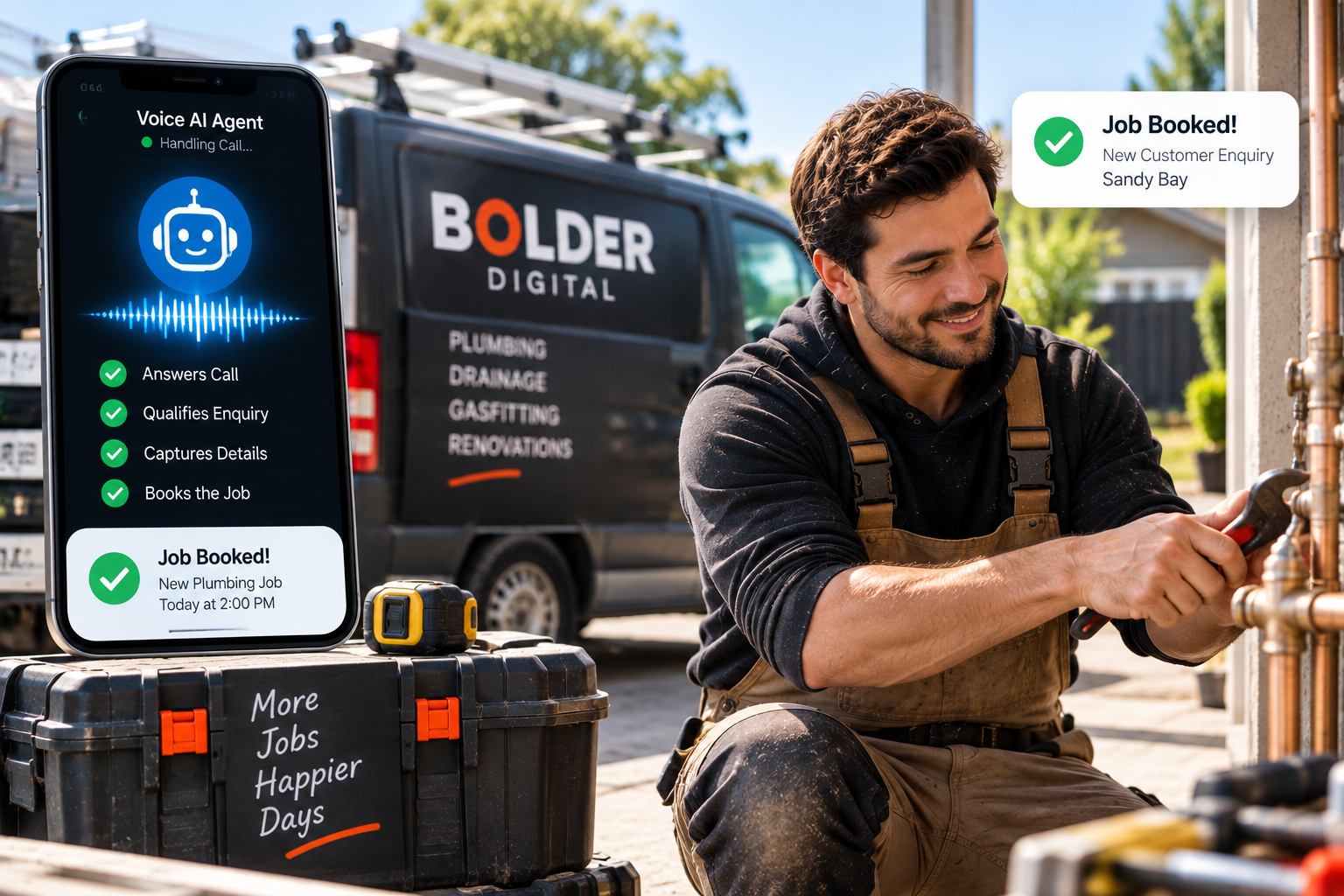
For a routine job, the value comes from capturing the specific detail that actually helps you show up prepared, not a vague message saying someone called about a leak. A well built voice agent asks the kind of specific questions you would genuinely ask yourself, is it one fixture or several, when did it start, has anything like this happened before, then captures the address and confirms a booking directly against your actual calendar. You arrive at the job already knowing roughly what you are dealing with, rather than starting cold the way a generic message would leave you.
Why This Only Works If It Talks to Your Actual Calendar
Here is a genuinely important detail worth being direct about. A voice agent that captures job details but cannot actually check your real, live availability and book directly into it is not much better than an expensive voicemail. The booking needs to reflect what your calendar genuinely looks like right now, not a static list of slots that may already be filled by the time someone checks it manually. This connection between the conversation and your actual schedule is what turns a pleasant sounding phone system into something that genuinely does a dispatcher's job.
The Real Test: Would a Human Dispatcher Have Asked This?
A useful way to judge whether a voice agent is genuinely built well for a trade business is asking whether the questions it asks are the same ones a genuinely good human dispatcher would have asked. If the answer is yes, consistently, across the range of calls your business actually receives, it is doing the job properly. If it is asking generic, obviously scripted questions that do not reflect how your specific trade actually works, that is exactly the sign it was built from a template rather than around your business.
What This Doesn't Replace
I want to be honest here rather than oversell it. Voice AI handles the intake and booking side of a job exceptionally well, but it does not replace your own judgement on a genuinely ambiguous or complex situation, and it obviously does not do the actual work once you arrive. Some calls will always need a genuine, real time conversation with you specifically, particularly anything requiring a judgement call about pricing or scope before a booking makes sense. A properly built system recognises exactly this moment and hands the call to you directly, rather than trying to force every single call through an automated booking flow regardless of how well it actually fits.
Getting This Set Up Properly
Building a voice agent that genuinely functions as a dispatcher for your specific trade, asking the right questions, correctly triaging emergencies, and booking directly into your real calendar, takes proper setup around how your business actually operates. This is exactly what ourAI Receptionist serviceis built around, configured specifically for how your trade genuinely takes and books a job, not a generic script applied without real thought to your industry.
The Bottom Line
A trade business does not need a full time dispatcher to get dispatcher quality phone handling. Voice AI genuinely fills this gap, answering every call regardless of whether your hands are physically free, correctly triaging a genuine emergency from a routine booking, and capturing exactly the kind of detail that lets you show up prepared, all connected directly to your real, live calendar rather than a static form nobody checks in time.
Frequently Asked Questions
How does voice AI know the difference between an emergency and a routine call for a trade business?
A properly built agent is trained to recognise specific emergency indicators, active flooding, no power during extreme weather, and immediately routes these through to you or whoever is on call, rather than following the standard booking flow used for a routine enquiry.
Does voice AI actually check my real availability before booking a job?
It should, and this matters enormously. A properly built system connects directly to your actual live calendar, offering only genuinely available times and booking directly into it, rather than working from a static list that may no longer be accurate.
What kind of questions does a voice agent actually ask for a routine job?
Specific, relevant questions matching what a good dispatcher would genuinely ask, details about the actual issue, when it started, and whether anything similar has happened before, giving you enough context to arrive prepared rather than starting cold.
Will voice AI ever completely replace needing to speak with customers directly?
No, and it should not try to. Some calls genuinely need your direct judgement, particularly anything involving pricing or scope decisions. A properly built system recognises this and hands the call to you rather than forcing every situation through an automated flow.