

What Do SEO Services Actually Include? A Business Owner's Guide
If you have ever searched for SEO services and walked away more confused than when you started, you are not alone. The industry is full of jargon, vague promises, and packages that sound impressive but leave business owners with no idea what they are actually paying for.
This guide cuts through the noise. Whether you are considering SEO for the first time or questioning whether your current provider is delivering real value, here is exactly what SEO services should include and what to watch out for.
You Are Not Buying Rankings. You Are Buying a System
The biggest misconception about SEO is that you are paying for a position on Google. You are not. Rankings are the outcome. What you are actually paying for is a system of ongoing work that makes your website more visible, more trustworthy, and more relevant to the people searching for what you offer.
A legitimate SEO service builds that system methodically over time. Businesses that understand this get far better results than those chasing a number one ranking as if it were a one-time purchase.
The Technical Foundation: What Happens Under the Bonnet
Before any content is written or links are built, a proper SEO service starts with a technical audit of your website. This is the unglamorous but essential work that determines whether Google can actually crawl, understand, and index your site properly.
Technical SEO covers site speed and Core Web Vitals, mobile responsiveness, crawl errors and broken links, duplicate content issues, canonical tags, XML sitemaps, robots.txt configuration, and structured data markup. If your website has technical problems, no amount of content or link building will overcome them. A good SEO provider fixes the foundation before building on top of it.
Keyword Research: Finding What Your Customers Are Actually Searching
Keyword research is where strategy begins. A strong SEO service does not just find keywords with high search volume. It finds the right keywords for your business, ones that match what your customers are searching for at different stages of their buying journey.
This means identifying informational keywords that attract people early in the research phase, commercial keywords that capture people comparing options, and transactional keywords that target people ready to buy or enquire right now.
Good keyword research also considers search intent, competition level, and the realistic opportunity for your website to rank based on its current authority. Without this work done properly upfront, the rest of your SEO effort is built on guesswork.
On-Page Optimisation: Making Every Page Work Harder
Once the right keywords are identified, on-page optimisation ensures your website pages are structured in a way that Google understands and rewards. This includes optimising title tags and meta descriptions, using heading tags correctly, incorporating keywords naturally throughout the content, optimising images with descriptive alt text, improving internal linking between pages, and ensuring every page has a clear purpose and call to action.
On-page optimisation is not a one-time job. As your content grows and search trends shift, pages need to be reviewed and updated regularly to maintain and improve their rankings.
Content Strategy: The Engine That Drives Long-Term Growth
Content is the most visible part of SEO and also the most misunderstood. Many businesses assume that publishing blog posts regularly is enough. It is not. What matters is publishing the right content, targeting the right keywords, answering the right questions, and building topical authority in your niche over time.
A strong SEO content strategy includes a mix of pillar pages that cover broad topics in depth, supporting blog posts that target long-tail keywords, location-specific pages for businesses serving multiple areas, and FAQ content that captures voice search and featured snippet opportunities.
Every piece of content should serve a specific strategic purpose. Content produced without a keyword and intent strategy is little more than digital noise.
Link Building: Earning the Trust of the Internet
Links from other websites pointing to yours are one of the strongest signals Google uses to determine how authoritative and trustworthy your site is. This is called link building, and it remains one of the most impactful and most misused parts of SEO.
Legitimate link building involves earning mentions and links from relevant, high-quality websites through digital PR, guest posting, content partnerships, and industry directories. It is slow, methodical work that builds genuine authority over time.
What it does not involve is buying links in bulk, spamming directories, or using private blog networks. These tactics can deliver short-term gains followed by significant Google penalties that are painful and expensive to recover from. If an SEO provider promises dozens of links per month at a suspiciously low price, that is a serious red flag.
Local SEO: Showing Up Where Your Customers Are Looking
For Australian businesses serving a specific city or region, local SEO is one of the highest-return activities available. It focuses on making your business visible in Google's local search results and Google Maps when people search for services near them.
Local SEO includes optimising your Google Business Profile, building consistent citations across local directories, generating and managing customer reviews, and creating location-specific content that signals relevance to Google for searches in your area.
A business that ranks well locally captures high-intent customers at the exact moment they are ready to buy. For trades, professional services, retail, and hospitality businesses across Australia, local SEO is often the single most valuable investment available.
Reporting and Transparency: Knowing What You Are Getting
A reputable SEO provider gives you clear, regular reporting that shows what work has been done, what results have been achieved, and where the focus is heading next. You should be able to see keyword ranking movements, organic traffic trends, technical improvements made, and content published each month.
If your SEO provider sends you a report full of vanity metrics and no clear explanation of what is actually moving the needle for your business, that is a problem. Good SEO reporting tells a story of progress and connects the work being done to the outcomes your business cares about, more enquiries, more leads, more revenue.
What You Should Not Be Paying For
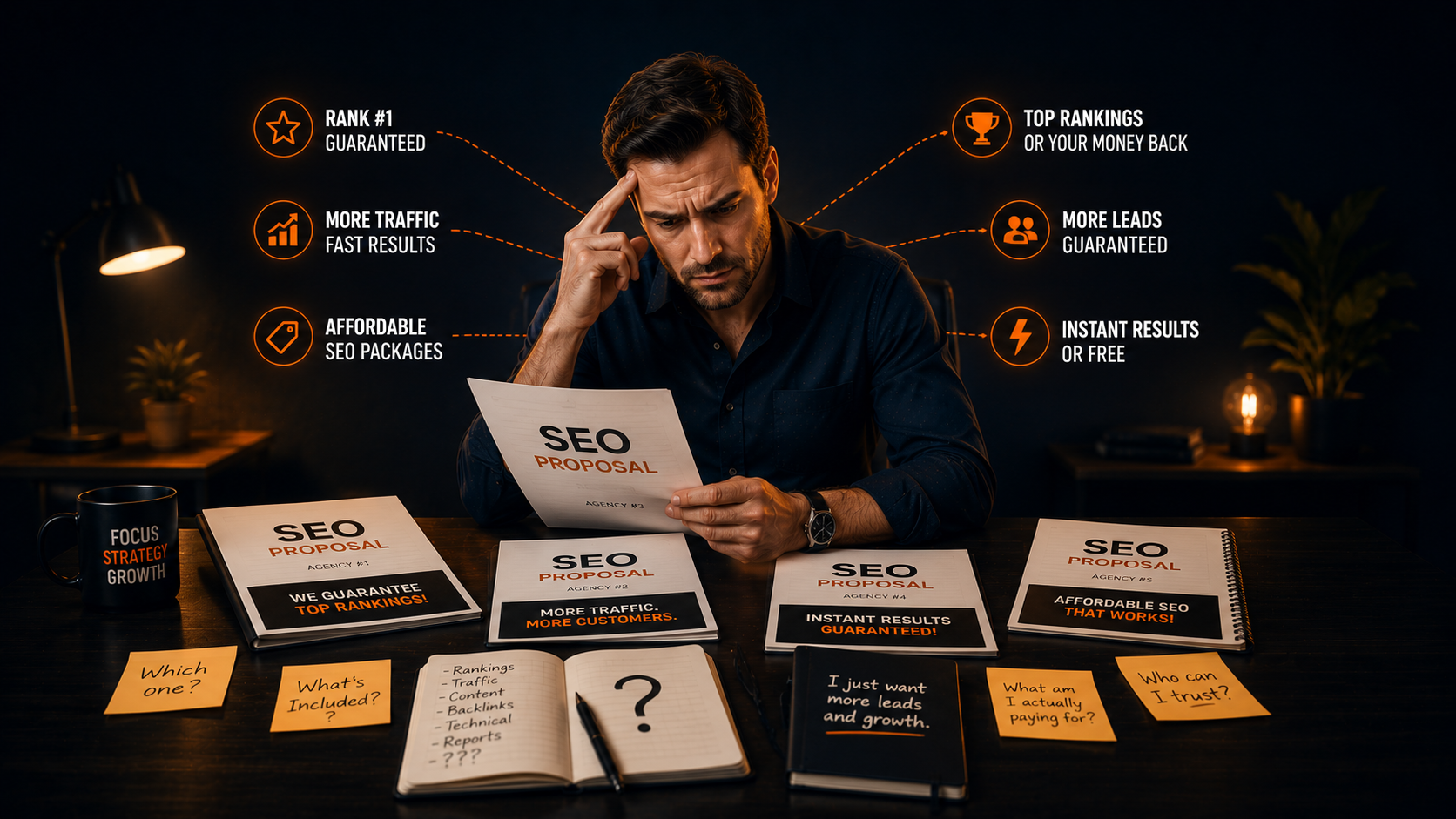
Not everything sold as an SEO service delivers real value. Watch out for providers who guarantee specific rankings within unrealistic timeframes, rely on automated link building tools, produce thin or AI-generated content with no strategic purpose, lock you into long contracts with no performance benchmarks, or disappear after the onboarding call and reappear only to send invoices.
SEO is a long-term investment. Realistic timelines for meaningful results range from three to six months for early wins and six to twelve months for significant organic growth. Anyone promising page one rankings in thirty days is either misleading you or using tactics that will cause more harm than good.
How Bolder Digital Approaches SEO Differently
At Bolder Digital, we build SEO strategies around what actually moves the needle for Australian businesses. That means a proper technical foundation, content that targets real search intent, link building that builds genuine authority, and reporting that shows you exactly where your investment is going.
We work with businesses across Australia to build organic visibility that compounds over time, delivering leads and enquiries that do not disappear the moment you stop paying for ads.
If you are ready to invest in SEO that actually delivers, visit our homepage to learn more about how we work and what we can do for your business.

Frequently Asked Questions
What do SEO services typically include?
A full SEO service includes technical auditing and fixes, keyword research, on-page optimisation, content strategy and creation, link building, local SEO, and monthly reporting. The exact scope varies by provider and package, but these are the core components of any legitimate SEO engagement.
How long does SEO take to show results?
Most businesses see early improvements in rankings and traffic within three to six months. Significant organic growth typically takes six to twelve months of consistent, strategic work. SEO is a long-term investment that compounds over time rather than delivering overnight results.
How much do SEO services cost in Australia?
SEO pricing in Australia ranges from $500 to $5,000 or more per month depending on the scope of work, the competitiveness of your industry, and the experience of the provider. Be cautious of very low-cost packages that promise fast results, as these often rely on tactics that can harm your website long term.