
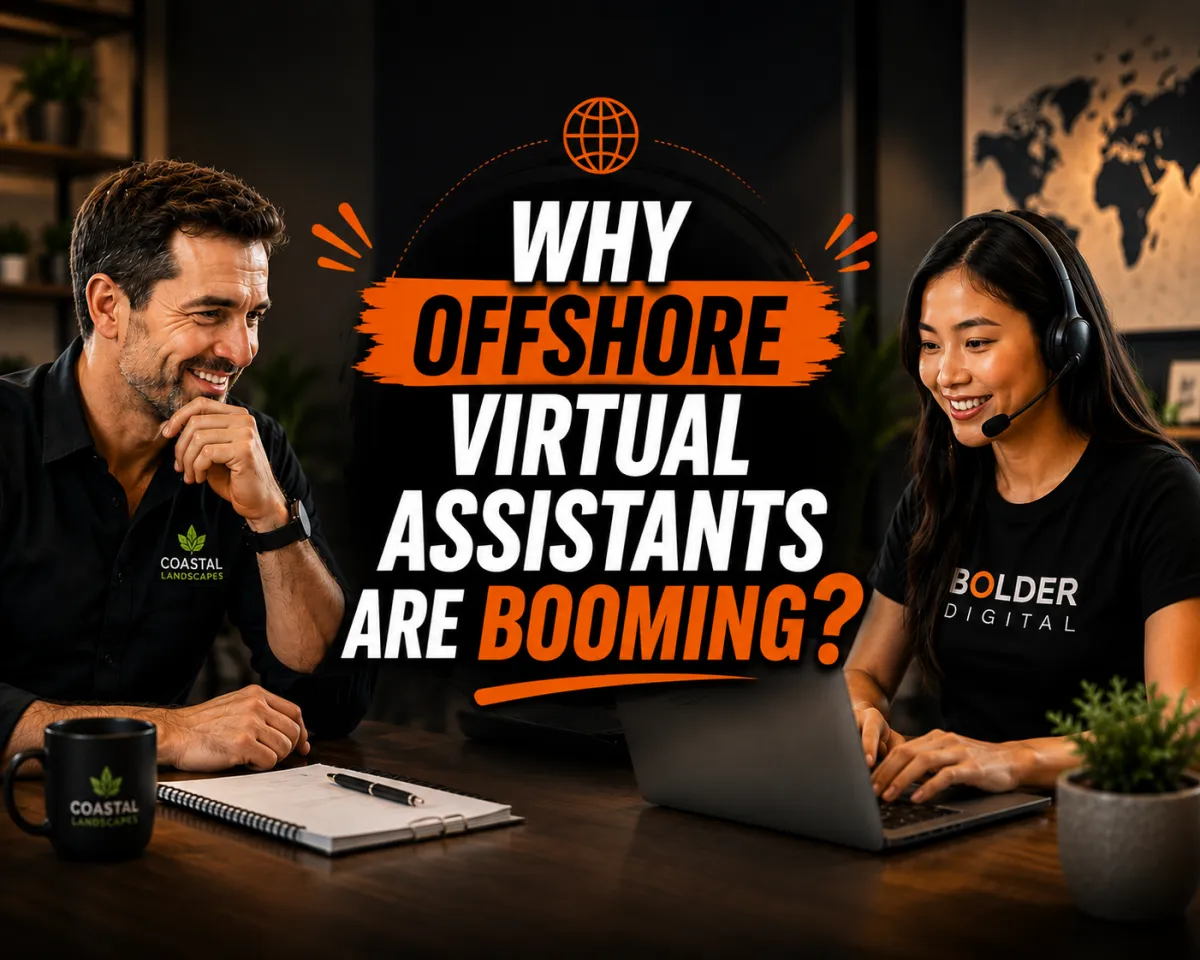
Why Offshore Virtual Assistants Are Becoming the Fastest Growing Hire for Australian SMEs
Something has genuinely shifted in how Australian small and medium businesses think about hiring, and I see it play out in almost every conversation I have with business owners now. A few years ago, offshore virtual assistants were seen as a slightly risky, budget option. Today, they are often the very first hire an Australian SME makes when they are ready to grow, and the businesses that have not caught onto this yet are quietly falling behind competitors who have.
Let me walk you through exactly why this shift has happened and why it is accelerating rather than slowing down.
The Australian Labour Market Reality Driving This
Australia remains one of the most expensive labour markets in the world, and that gap has not closed, it has widened. A full time administrative or executive assistant hire in Australia commonly costs somewhere between one hundred and fifteen and one hundred and thirty thousand dollars a year once superannuation, payroll tax, and leave entitlements are included. A full time bookkeeper or payroll officer sits similarly high, often eighty five to one hundred and twenty five thousand dollars a year all in.
Against that backdrop, an equivalent offshore virtual assistant, particularly one based in the Philippines, typically costs somewhere between thirteen and twenty one thousand dollars a year for a full time professional. That is not a modest saving. It is a difference that fundamentally changes what an Australian SME can afford to delegate, and it explains why offshore hiring has stopped being a cost cutting afterthought and become a genuine growth strategy.

Why the Philippines Specifically
The Philippines has become the clear leader in this space for Australian businesses, and it is not simply about cost. The country ranked highly in Asia for English proficiency in recent assessments, reflecting decades of strong English education and a business process outsourcing industry that now employs close to two million workers, with Australia sitting as the second largest market for Philippine outsourcing services globally, behind only North America.
Time zone alignment is the other major factor most comparisons undersell. The Philippines sits only two to three hours behind Australian Eastern Standard Time, meaning most Filipino virtual assistants can genuinely work Australian business hours without the awkward overnight handoffs that come with hiring from further afield. This is a meaningful practical advantage over other outsourcing destinations that require a virtual assistant to work a heavily shifted schedule just to overlap with Australian hours at all.
The Quality Gap That Used to Exist Has Largely Closed
I want to address something honestly, because plenty of Australian business owners still carry an outdated assumption from a decade ago that offshore hiring means lower quality work. That gap, which was genuinely real in the early 2010s, has largely closed for properly managed offshore services in 2026. The Philippines and similar outsourcing markets now have mature, professional workforces specifically trained to support Western small and medium businesses, often with better systems literacy across tools like CRMs, project management platforms, and cloud software than some local hires bring to the table.
The quality difference that still exists genuinely comes down to how the virtual assistant is sourced and managed, not where they are located. A properly vetted, trained, and managed offshore virtual assistant working through a reputable provider performs at a level entirely comparable to a solid local hire, for a fraction of the cost. A poorly vetted freelance hire from a marketplace, offshore or local, carries risk regardless of location.
Where Offshore Wins and Where It Genuinely Does Not
I would rather give you the honest picture than oversell this to every business. For nearly every back office function, admin support, customer service via chat and email, bookkeeping support, CRM management, social media scheduling, research, and sales support, offshore virtual assistants now win on cost and increasingly on quality and reliability as well. This covers the vast majority of what actually eats up an Australian business owner's week.
Where onshore local hiring still holds a genuine structural advantage is real time, voice based customer facing work where an unmistakably Australian accent and same day cultural context genuinely matters, alongside any role requiring final regulatory sign off or a licensed local presence. For these specific functions, a hybrid model, offshore for the back office grind and onshore for the small slice of client facing work that genuinely needs it, is becoming the increasingly common setup for growing Australian SMEs rather than an all or nothing decision.
Why This Is Accelerating Right Now, Not Just Steady
This trend is not simply continuing at the same pace it has for years, it is accelerating. Offshore outsourcing services are growing significantly year over year, and small and medium businesses now represent one of the fastest growing segments of that growth globally, a shift away from the large enterprise dominated outsourcing model of a decade ago toward SMEs of every size adopting offshore support as a standard part of how they operate, not an exception.
Part of this acceleration comes down to the flexibility offshore hiring now offers that a rigid local employment contract simply cannot match. Rather than committing to a full time thirty eight hour a week local hire, Australian SMEs can start an offshore virtual assistant arrangement at just ten to twenty hours a week and scale up as the business grows, without the same fixed cost commitment or recruitment risk that comes with a full time local role.
What Australian SMEs Are Actually Delegating First
Based on what I see across the Australian businesses adopting this, the first tasks handed to an offshore virtual assistant are almost always the ones consuming the most time relative to how much judgement they actually require. Inbox and calendar management, data entry, CRM updates, basic bookkeeping, and social media scheduling top the list consistently, precisely because these tasks are high volume, rule based, and do not require an Australian specific voice or presence to execute well.
Once that initial delegation proves out, and it almost always does, Australian SMEs tend to expand from there into sales support, research, and more specialised administrative functions, using the time freed up from the first hire to identify what should be delegated next.
Getting This Right From the Start
The businesses that get the most value from offshore virtual assistant hiring are rarely the ones who found someone cheap on a freelance marketplace and hoped for the best. Vetting, training on your specific systems, and ongoing management genuinely make the difference between an offshore hire that transforms your business and one that becomes another disappointing experiment. This is exactly the standard we hold every placement to.
If you are an Australian SME ready to delegate the admin, CRM management, and back office work eating into your week, our virtual assistant service is built to match you with a properly vetted, trained virtual assistant who works inside your existing systems from day one, so you get the full benefit of this shift immediately rather than after months of trial and error.

Frequently Asked Questions
Why are offshore virtual assistants growing faster than local hires for Australian SMEs?
The cost gap is significant, with offshore hires often costing a fraction of an equivalent Australian employee once superannuation, payroll tax, and leave entitlements are included, and the quality gap that used to make offshore hiring risky has largely closed for properly managed services, making it an increasingly easy decision for growing businesses.
Is the quality of offshore virtual assistants as good as a local Australian hire?
For back office and admin work, properly vetted and trained offshore virtual assistants now perform at a level comparable to local hires. The quality difference that remains comes down to how the virtual assistant is sourced and managed rather than their location.
What tasks should Australian SMEs delegate to an offshore virtual assistant first?
Inbox and calendar management, data entry, CRM updates, basic bookkeeping, and social media scheduling are the most common starting points, since these are high volume and rule based tasks that do not require an Australian specific voice or physical presence.
Should every task be delegated offshore, or does some work still need a local hire?
Real time, voice based customer facing work requiring a local accent and cultural context, along with roles needing regulatory sign off or licensed local presence, still benefit from onshore hiring. A hybrid model, offshore for back office work and onshore for select client facing roles, is increasingly common for growing Australian SMEs.