AI Chatbot for Cleaning and Home Services: Instant Quote Requests
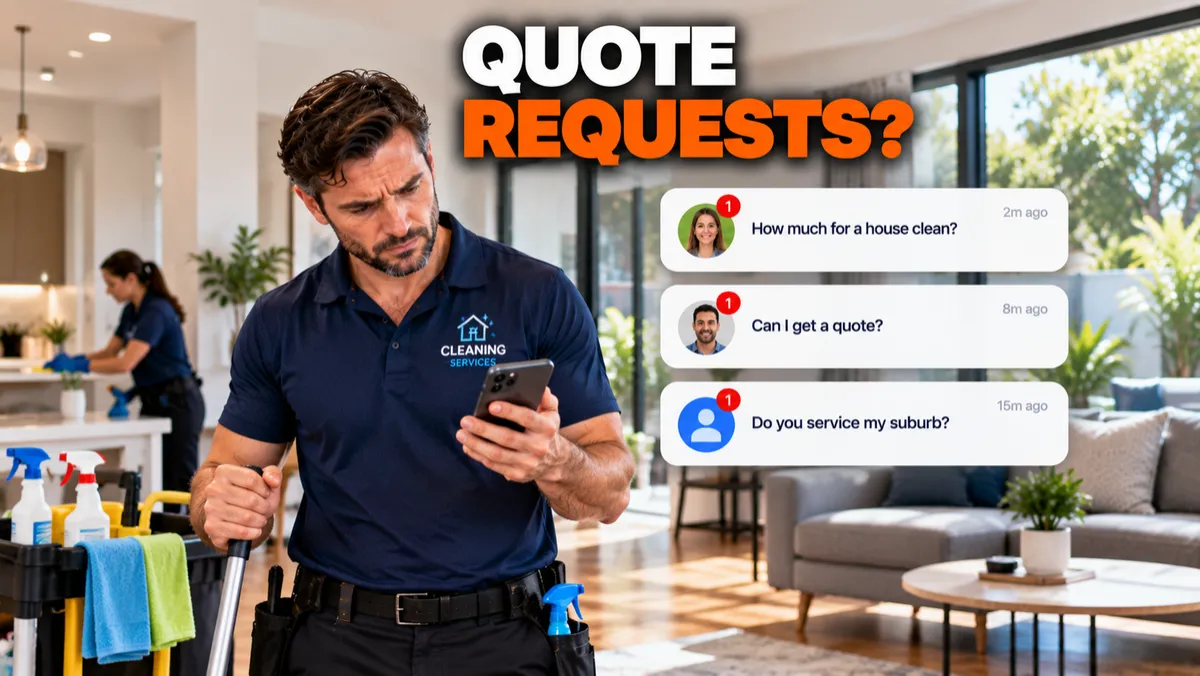
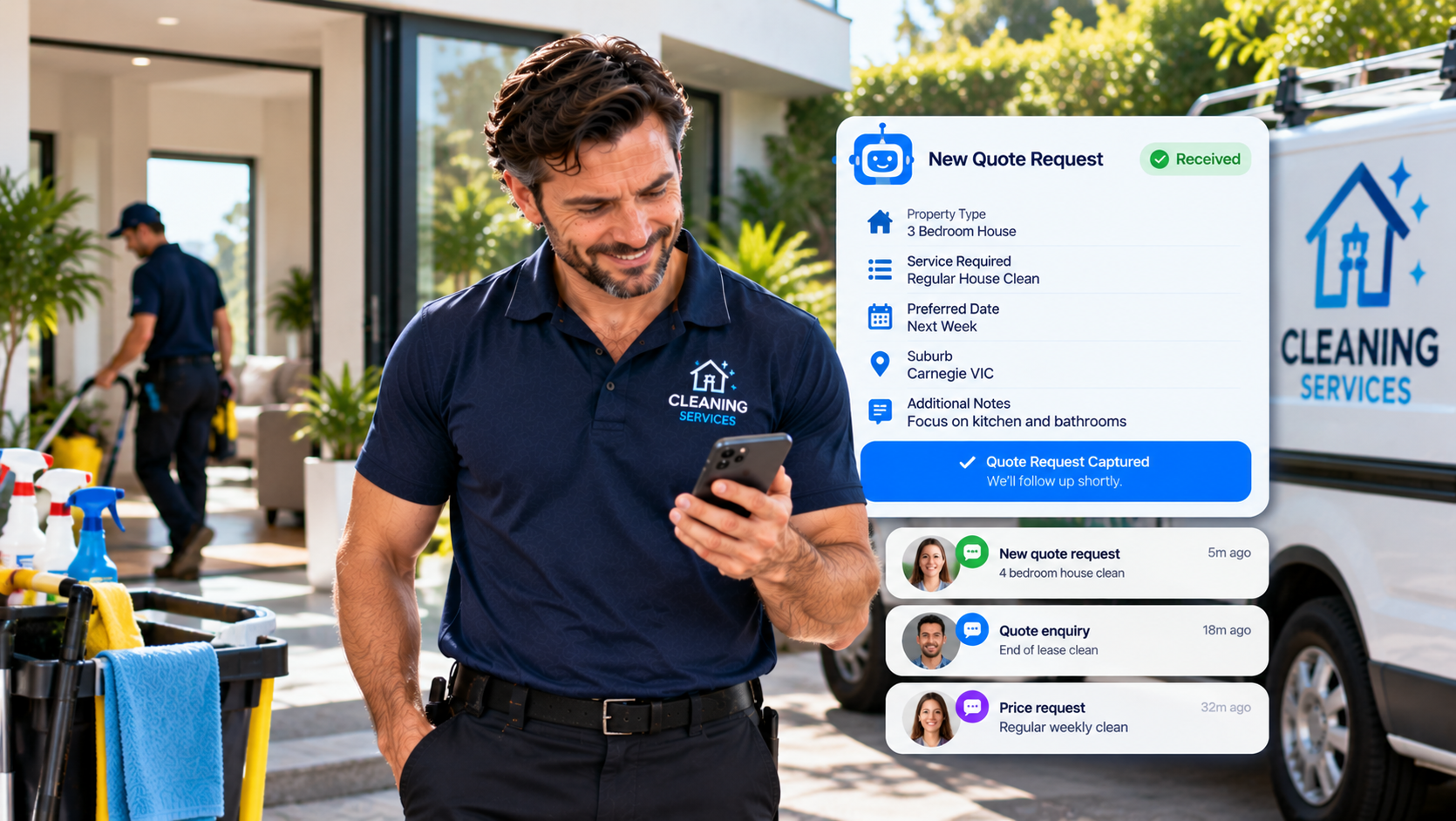
Think about when people ask for a cleaning quote. It is rarely in the middle of your working day. It is on a phone, on the couch, at eight at night, when someone looks around their home and decides it is time. They fill in a form that says “we’ll get back to you”, and then they open the next business on the list. At Bolder Digital, we see this over and over. The business that replies first, with something useful, often wins. An AI chatbot built for instant quote requests is one of the most direct ways to be that business.
What “Instant Quote” Really Means
The word instant is a promise, so be careful with it. For most cleaning and home services, you cannot give a final, binding price in a few seconds. The state of a home, the access, and the extras all change the job. What a chatbot can do is give an instant estimate, a realistic range based on your own pricing rules, and explain what happens next.
A good message sounds like this:
“Based on what you’ve told me, a regular clean for your three bedroom, two bathroom home is usually between these amounts. The team confirms the final price once they’ve seen a few photos, and it only changes if the home is different to how you described it.”
That is honest, useful, and quick, and it keeps you from promising a number you have not checked. One tutorial for building a cleaning chatbot suggests a range of around 15 percent either side to allow for condition. Yours should come from your real jobs.
Chat, Form, or Calculator?
Each has a place.
A contact form collects details but gives nothing back. It is the slowest to convert.
A calculator gives a price, but only for the questions it was built to ask, and it cannot answer a side question.
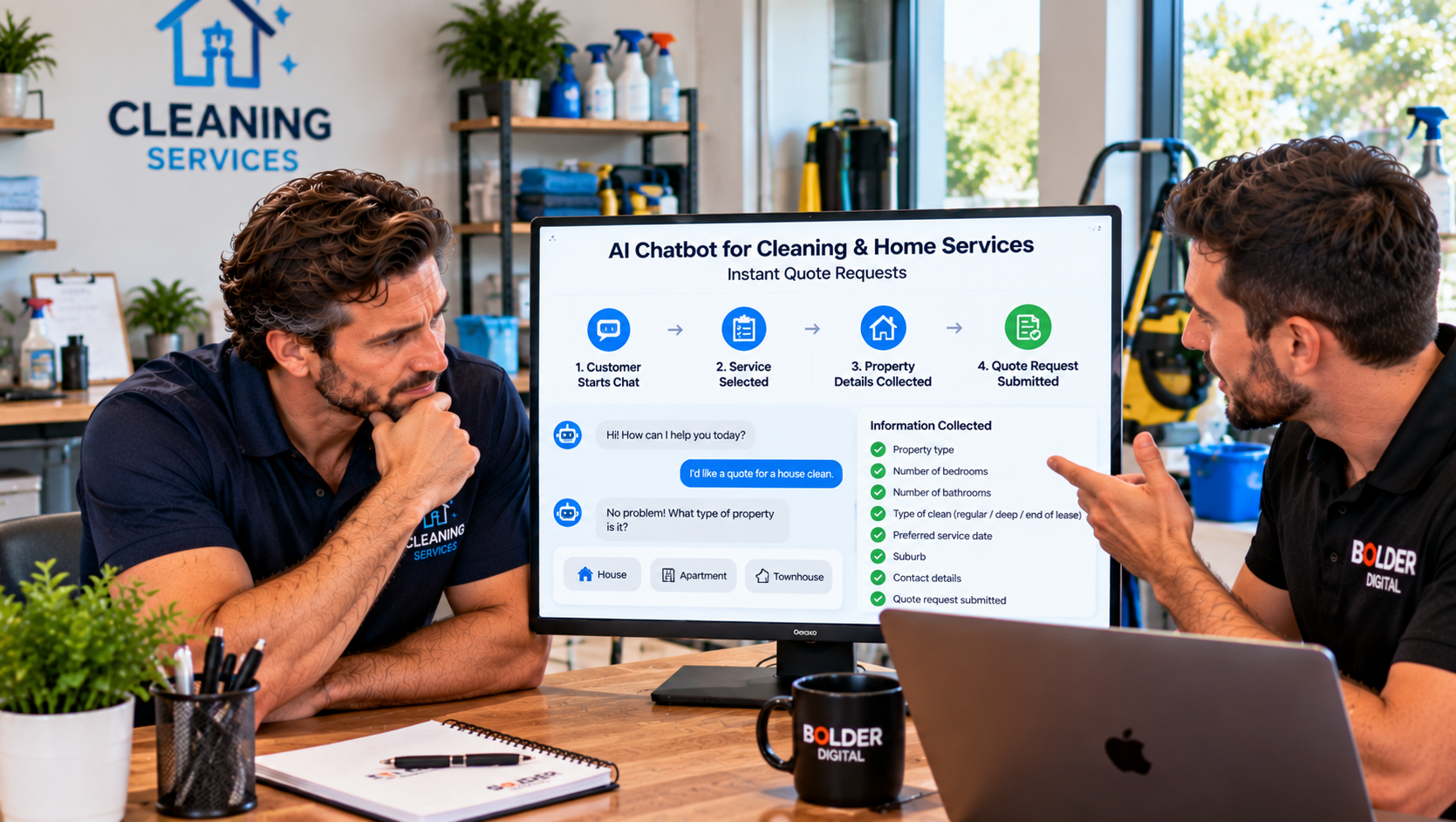
A chatbot can ask one question at a time, answer queries such as “do you bring your own supplies?” mid conversation, handle unusual requests, and still end with a clear estimate and a captured lead.
Many businesses combine them, using the chatbot as the front end that works through a simple set of questions.
The Quote Conversation, Step by Step
A well designed flow keeps each question short, and explains why it matters.
Service. Regular clean, one off deep clean, end of lease, holiday rental turnover, windows, gutters, pressure washing, or something else.
Location. Suburb or postcode, to check it is inside your service area. If it is not, the chatbot should say so politely and offer a waiting list.
Property. Type, bedrooms, bathrooms, storeys, and size. For windows or gutters, the number of windows or the length.
Condition. When it was last cleaned, and whether it is heavily soiled.
Extras. Pets, special surfaces, and anything unusual such as stairs or restricted access.
Frequency. One off, weekly, fortnightly, or monthly.
Add ons. Oven, carpets, windows, and so on.
Timing. When they would like it done.
Photos, if the job needs them.
The estimate, with what is included and what could change it.
Contact details and permission to follow up.
Next step. A booking, an inspection, or a callback.
Whether you ask for contact details before or after showing the estimate is worth testing. Showing a range first builds trust. Asking early protects you from losing the visitor. Try both.
Keep the Prices in Your Rules, Not in the AI’s Head
This is the most important technical choice. The chatbot should calculate from a price list and rules you control, such as base rates, bedroom and bathroom adjustments, minimums, travel, and add ons. It should never invent a number.
Australian Consumer Law expects advertised prices to be accurate and to include GST and any mandatory charges, so show a total that customers will really pay. If a range changes after inspection, explain why. A big gap between the estimate and the final price is the quickest way to lose a customer’s trust, and to attract complaints.
Online estimate tools from established cleaners often say the same thing in plain words: the calculator is for estimation, and the price is confirmed on site before work starts. That honesty works.
Use Photos When They Help
For end of lease cleans, heavy soiling, and larger jobs, photos remove the guesswork. Two cautions:
Not every chat tool accepts photo uploads. If yours does not, send a text link where the customer can upload them.
Photos of someone’s home are sensitive. Ask people to avoid photographing people, documents, or valuables. Store the images securely, use them only for the quote, and delete them after a sensible time.
Beyond Cleaning: Other Home Services
The same approach works for window cleaners, gutter cleaners, pressure washers, lawn and garden services, and handyman work. What changes is the information needed:
Window cleaning: number of windows, storeys, and access.
Gutter cleaning: the length of the roof line, the roof type, and storeys.
Pressure washing: the area and the surface.
Lawns: the size of the block, access, and how often.
Start with the three or four details that most affect your price, and add more as you learn what causes surprises.
Speed Is Half the Game
Research widely cited in sales, including a Harvard Business Review study of lead response, found that businesses contacting a lead within five minutes were far more likely to reach and qualify it than those taking thirty minutes or longer. That research was not specific to cleaning, but the point is hard to dispute. A chatbot replies in seconds, at any hour, including the evening, when many quote requests arrive.
Do Not Stop at the Estimate
Most cleaning businesses do not have a lead problem. They have a follow up problem. Guides for the industry suggest following up every quote at least three times. A chatbot can do the first part for you, with a simple, polite sequence:
Straight away: a text or email summarising the estimate, what is included, and how to book.
A day later: a short check in and an offer to answer questions.
A few days later: a gentle reminder, with any dates that are filling up.
Stop when they reply, book, or say no.
Make sure you have clear consent to message them, and that every message has an easy way to opt out. The Spam Act applies, and heavy handed chasing damages your reputation.
Let Them Book Straight Away
When the customer is happy with the range, the chatbot can offer real times from your calendar, taking crew availability and travel time into account. For recurring cleans, it can lock in the day and the pattern. Deposits or payments should go through a secure link, never as card numbers typed into the chat.
Know When to Hand Over
Some enquiries need a person:
commercial and large jobs
heavy soiling, hoarding, or unusual conditions
special requests or complaints
high value jobs, or customers who ask for a human
The chatbot should pass the conversation to you with a summary and the details already collected, and let the customer know when to expect a reply.
Keep It Honest and Safe
A few rules protect you and your customers:
It says it is an AI assistant.
It never promises availability without checking the calendar.
It does not collect alarm codes, key safe numbers, or other access details in the chat. Get those securely, after the booking.
It stays within your service area and your rules.
It records only what it needs, and keeps transcripts private.
Make Sure People Finish the Conversation
Short, simple conversations convert better. A few habits help:
Open with a clear first message, as we cover in our piece on writing the first line.
Tell people how many questions to expect.
Use quick reply buttons where you can.
Let them skip a question, or call you if they prefer.
Keep it comfortable on a phone.
Measure What Matters
Track these numbers:
how many visitors start the quote conversation, and how many finish it
estimates shown, and contact details captured
quotes that turn into bookings
how close the estimate is to the final price
how fast the first reply goes out, and how often follow ups win jobs
If estimates regularly come in far below the final prices, adjust the ranges. If few finish the conversation, shorten it.
How Bolder Digital Approaches This
At Bolder Digital, we turn how you actually price into a clear set of rules, build the quote conversation around them, connect it to your calendar and CRM, and set up the follow up. We test it with awkward cases, such as heavy jobs, out of area suburbs, and unusual requests, before it goes live. You can see how this fits into our AI Chatbot service.
The Bottom Line
An instant quote chatbot works when it is honest about what it can promise. Give a realistic range from your own rules, explain what could change it, collect the details you need, reply in seconds, follow up politely, and hand over to a person when the job needs one. It turns a form that goes cold overnight into a conversation that starts a booking.
Frequently Asked Questions
Can a chatbot give an exact price for cleaning?
For simple, standard jobs it can give a firm price from your rules. For most jobs it should give a realistic range and say the final price is confirmed after photos or a visit.
How do I stop the chatbot from quoting too low?
Put your prices in a controlled price list with minimums and adjustments, and have the chatbot calculate from it. Compare estimates with final prices regularly, and widen or adjust the ranges where needed.
Can customers send photos in the chat?
Some chat tools allow it and some do not. If yours does not, send a text link for uploads, and treat the photos as sensitive personal information.
How should a chatbot follow up on a quote?
With a short, polite sequence, such as an immediate summary, a check in a day later, and a reminder a few days after that, stopping as soon as the customer replies. Get clear consent and include an opt out.
When should it pass the customer to a person?
For commercial and large jobs, unusual conditions, complaints, special requests, and anyone who asks for a human.
Jarryd Holmes, Founder & Owner, Bolder Digital | Prospect Vale, Tasmania | bolderdigital.com.au