
AI Chatbot for E-commerce: Reducing Support Tickets Without Losing the Personal Touch
The fear I hear most often from e-commerce store owners considering a chatbot is not whether it will actually work. It is whether automating support will make their brand feel cold and corporate, exactly the opposite of the personal touch a smaller store often prides itself on. This is a genuinely reasonable concern, and it is also a solvable one, provided the chatbot is built with this specifically in mind rather than treated as a purely mechanical ticket reduction tool.
Let me walk you through how this actually works.
What Actually Gets Deflected, and What Genuinely Shouldn't
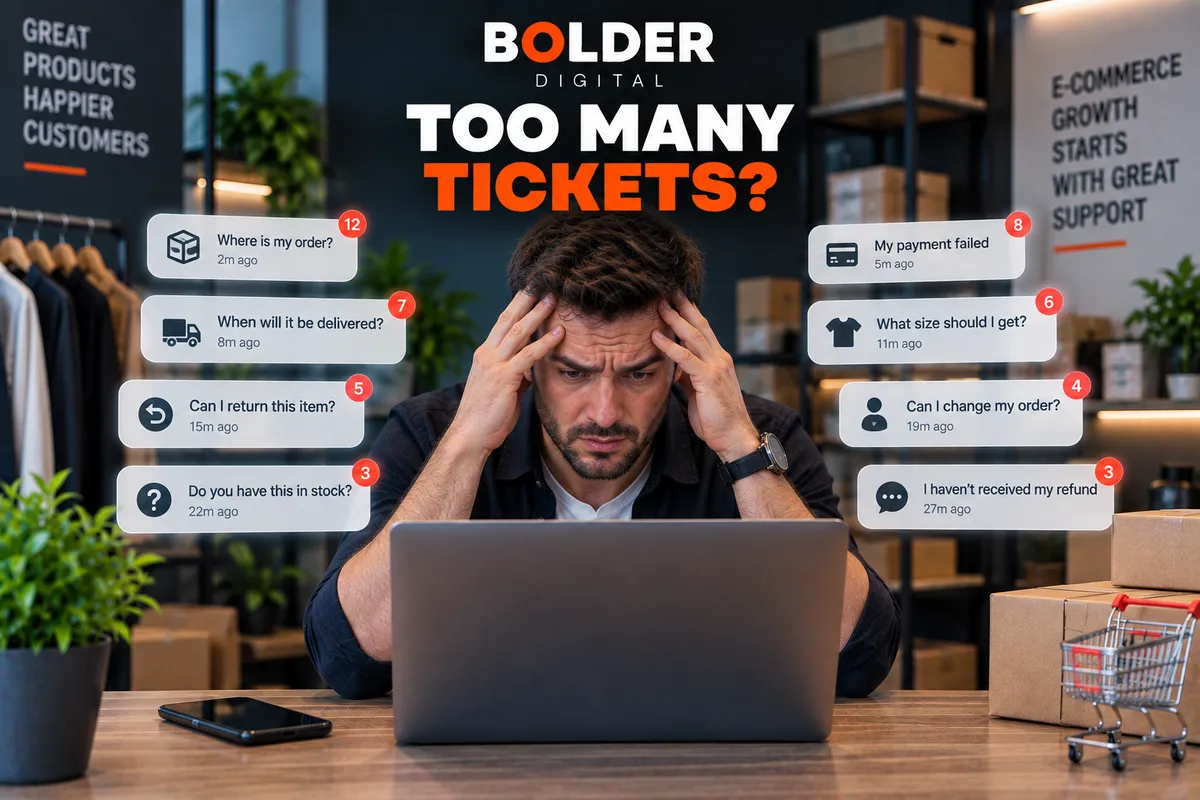
Well configured e-commerce chatbots commonly deflect somewhere in the range of forty to sixty percent of incoming support volume, and the questions genuinely worth automating are the ones your team answers identically dozens of times a week, where's my order, what's your returns policy, does this come in a different size. These questions have a consistent, correct answer that rarely changes, and a customer asking them wants a fast, accurate response, not necessarily a human conversation. Genuinely complex, emotional, or unusual situations should never be forced through automation purely to inflate a deflection number.
Why "Sounds Like Your Brand" Isn't Optional
This is exactly where the personal touch concern actually gets addressed, or lost. A chatbot trained on your actual content and genuinely configured to reflect your specific brand voice, warm and casual, professional and precise, playful, whatever your store's actual tone genuinely is, sounds like a natural extension of your business. A generic, corporate default tone bolted on without this consideration is exactly what makes automation feel cold, and it is entirely avoidable with proper setup rather than an inherent limitation of the technology itself.
Why Live Order Data Beats a Generic Non-Answer
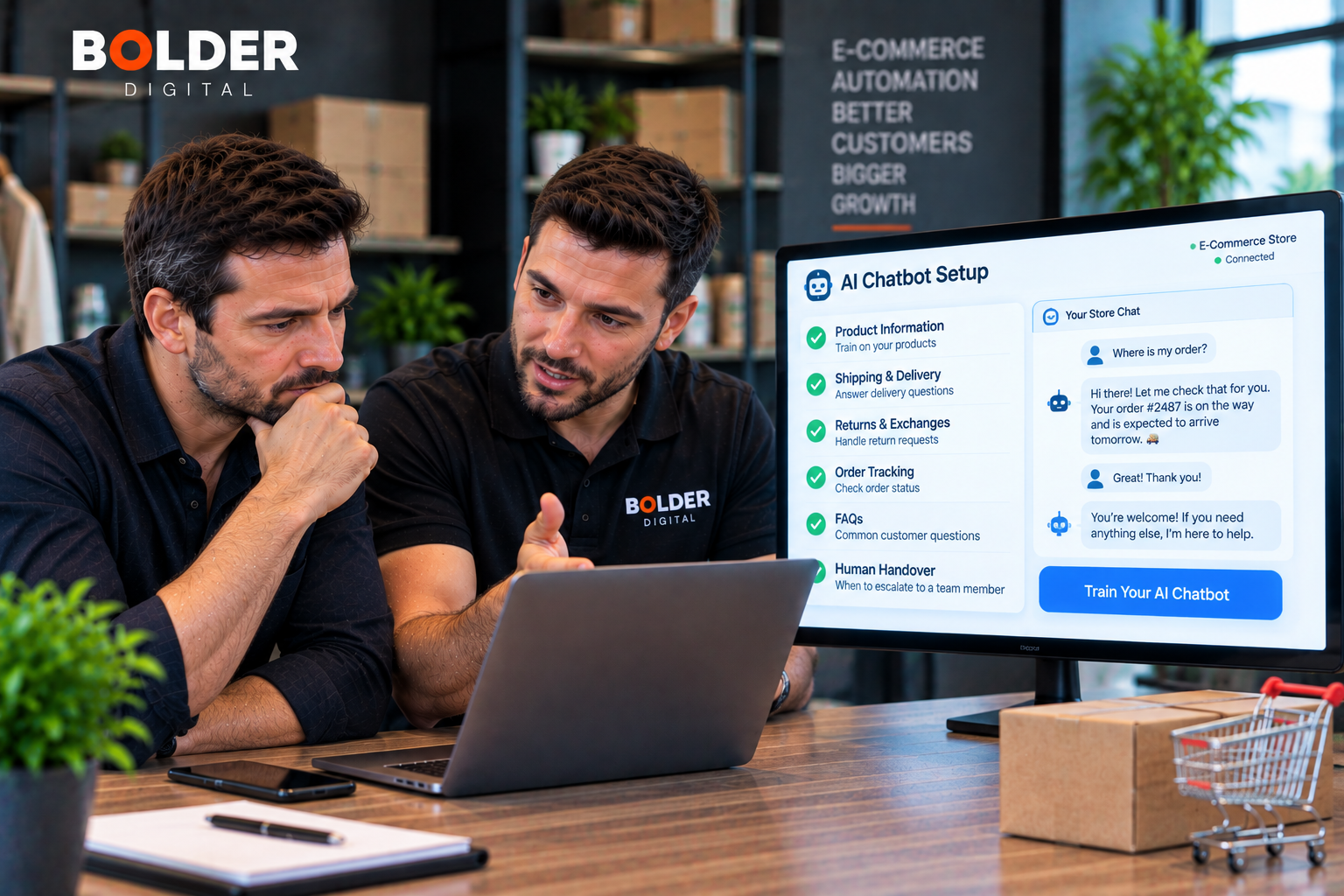
A genuinely useful e-commerce chatbot pulls directly from your real, current order and shipping data, rather than giving a customer a vague, generic message about their order being processed. Someone anxious about a package that seems delayed wants a specific, accurate answer right now, not a placeholder response that sounds like it could apply to literally anyone. This connects to the same underlying principle I have written about regarding chatbot training generally, a system retrieving verified, current information gives a fundamentally more trustworthy answer than one guessing based on generic patterns.
Recognising When a Customer's Tone Signals They Need a Person, Not Just an Answer
A genuinely well built system pays attention to more than just the literal question being asked. A customer asking where's my order in a neutral, patient tone is very different to one asking the same literal question while clearly frustrated after several days of silence. The second situation genuinely benefits from a faster escalation to a real person, even though the underlying question is technically identical, because what that customer actually needs in that moment is reassurance and genuine attention, not just a tracking number.
The Unexpected Bonus: What Repeat Questions Actually Tell You
Here is a genuinely valuable side effect worth knowing about. A properly reviewed chatbot does more than just deflect tickets. Patterns in what customers keep asking repeatedly often point directly to a genuine gap elsewhere, a sizing chart that is confusing, a policy page that is unclear, a product description missing information customers keep having to ask about separately. Reviewing these patterns regularly turns your chatbot into a genuine source of insight about where your actual store copy or product information needs fixing, not just a tool absorbing the same repeated question indefinitely without anyone noticing the underlying cause.
Getting This Set Up Properly
Building a chatbot that genuinely reduces support volume while still sounding like your actual brand, and recognising the moments a customer needs a person rather than an answer, takes real, deliberate configuration. This is exactly what our AI Chatbot service is built around, trained on your specific brand voice and your actual, current order data, not a generic support script that happens to be technically accurate while feeling nothing like your store.
The Bottom Line
Reducing support tickets and keeping a genuine personal touch are not actually in conflict, provided the chatbot handling and the human handling are divided up deliberately rather than automation applied indiscriminately everywhere. The repetitive, predictable questions genuinely suit automation, trained specifically on your brand voice and your real order data. The emotionally charged or genuinely complex ones still deserve a real person, and a properly built system recognises the difference rather than treating every question identically.

Frequently Asked Questions
How many support tickets can an e-commerce chatbot actually deflect?
Well configured systems commonly deflect somewhere in the range of forty to sixty percent of incoming support volume, focused specifically on repetitive, predictable questions like order status and returns policy that have a consistent, accurate answer.
Will using a chatbot make my store's customer service feel less personal?
It does not have to, provided the chatbot is genuinely trained on your specific brand voice rather than a generic default tone. A chatbot sounding like a natural extension of your actual business avoids the cold, corporate feel businesses often worry about.
Can a chatbot actually answer specific questions about where a customer's order is?
Yes, provided it connects to your real, current order and shipping data rather than giving a generic placeholder response. This gives customers an accurate, specific answer rather than a vague message that could apply to any order at all.
Does a chatbot only reduce support tickets, or does it help identify other problems too?
A properly reviewed chatbot often reveals genuine gaps elsewhere in your store, confusing sizing information or an unclear policy page, since patterns in repeated questions frequently point directly to something worth fixing at the source rather than just automating around indefinitely.