AI Chatbot for Gyms and Fitness Studios: Trial to Membership
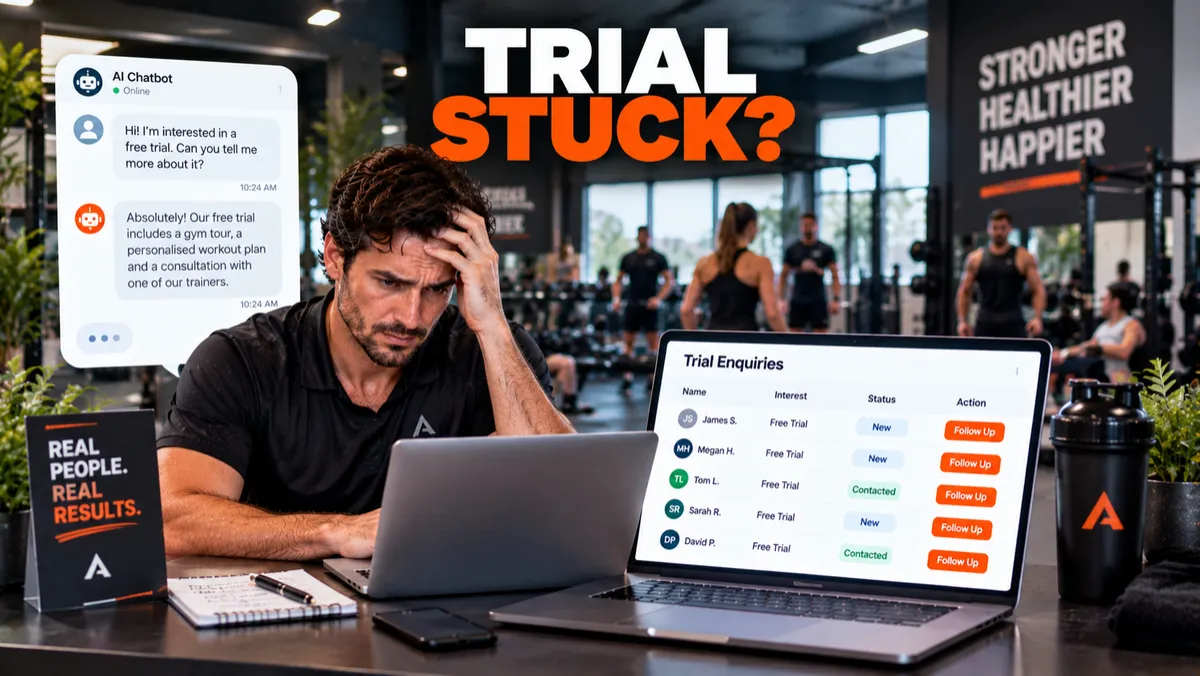
Someone scrolls past a gym's Reel at nine at night, feels motivated, and sends a message asking how much a membership costs. If the reply arrives the next afternoon, the motivation has usually gone. At Bolder Digital, this moment sits at the centre of how we think about an AI chatbot for gyms and fitness studios. The gap between wanting to join and actually walking in is small, emotional, and easy to lose.
A Harvard Business Review study of more than 2,000 firms found average response times to online enquiries were measured in days, not minutes. Vendor surveys put the typical gym at several hours. These figures are not Australian data, but they match what most owners already suspect about their own inbox.
The Real Job of a Gym Chatbot
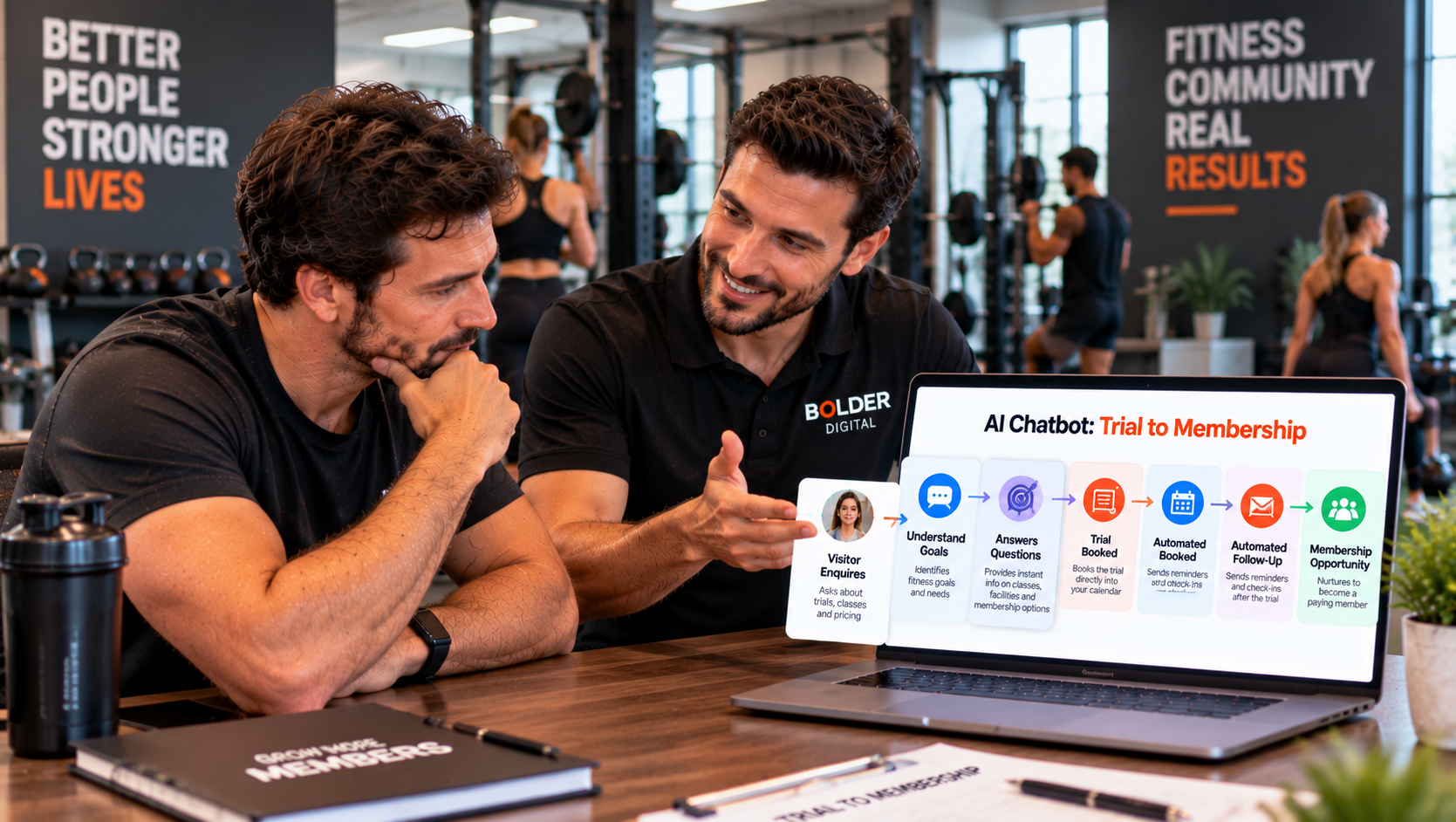
A gym chatbot is not there to sign people up on its own. Its job is to get a hesitant person to the next small step, which is usually a free trial or a tour, and then hand them to a human at the right moment. This is the same idea I wrote about in our friction piece: sell the next step, not the whole relationship.
I covered the automations behind a gym trial funnel, including reminders, at risk members, and win back sequences, in our GoHighLevel gym post. This piece is about the conversation itself.
Answer the Price Question Straight
The most common first message is some version of "how much is it?" Many chatbots hide the answer until the visitor hands over an email address. That is a mistake. People who feel stonewalled on price leave, and we saw the same pattern in our chatbot abandonment piece.
A better approach is to answer plainly, then ask a natural follow up about what the person is hoping to do. The price should include the things that matter, such as the joining fee, the minimum term, and what the price becomes after any introductory offer.
Meet People on Instagram, Not Just Your Website
Many gym enquiries begin in a direct message after someone sees a post or a Reel. A chatbot that lives only on your website misses them. The same conversation can run across Instagram, Facebook Messenger, SMS, and your website, so someone who starts in one place can finish in another.
Calm the First Visit Nerves
Walking into a gym for the first time is uncomfortable for many people. They worry about looking out of place, not knowing what to do, or being judged. A good chatbot treats this as a real barrier and addresses it in the conversation:
what to bring and wear
where to park and where to go on arrival
who will greet them
whether the first session includes an induction
what a beginner friendly class looks like
A message the day before the visit that answers these questions makes people more likely to turn up. Vendor benchmarks suggest the effect on first visit attendance can be large, though your own numbers will differ.
Handle the Objections Honestly
People hesitate for predictable reasons. Price, contract length, distance, time, and "I need to think about it" cover most of them. The chatbot can answer each with real information, such as the trial offer, the flexible options if you have them, and the class times that fit their routine.
It should not pressure. A reply to "I need to think about it" that offers to follow up at a time they choose works better than another sales push.
The Moment to Bring in a Person
The trial visit is where a chatbot should step back. After the visit, it can check in on the same day, ask how it went, answer questions, and offer to book a short conversation with a membership consultant. That is where goals, budget, and the best plan are discussed face to face, and where contract terms are properly explained.
If you run an offer with a deadline, such as a joining fee waived for signing within a set window, the chatbot should state the window and the conditions clearly.
The Compliance Line: Be Careful What the Chatbot Promises
Gym memberships are covered by the Australian Consumer Law, and regulators have shown sustained interest in the industry. Misleading statements about price, promotions, or cancellation can breach the law. Unfair terms in standard consumer contracts have carried penalties since late 2023, and cancellation arrangements that are much harder than joining have drawn particular attention.
For a chatbot, that means a few firm rules:
Quote only current, approved prices, and say what happens when a promotion ends.
State the minimum term and the cancellation process accurately. Never describe a membership as "cancel anytime" unless that is true.
Link to the full terms before anyone commits.
Do not make promises about results, such as weight loss or fitness outcomes.
Do not give medical or injury advice. For injuries, pregnancy, or health conditions, refer the person to a health professional and a trainer.
Because Tasmania is widely reported as requiring consent from all parties to record a call, any voice agent in the mix should announce recording up front. Chat transcripts also contain personal information, so ask any provider where they are stored.
Do Not Turn the Chatbot Into a Cancellation Maze
If a member messages to cancel, the chatbot should point to the proper process clearly and hand the request to a person. Using it to stall, redirect, or obstruct is both bad for the relationship and a risk under consumer law. A smooth exit keeps goodwill, and some of those people come back.
How Bolder Digital Builds This for Gyms
At Bolder Digital, we start with your actual offer: the plans, the joining fees, the trial, the timetable, and the cancellation process. We load those into the chatbot as approved content, set it up across your website and social channels, and write the first visit, objection, and follow up conversations in your voice. We build in a clear handoff to your membership team and test it against awkward questions before it talks to a real prospect.
You can see how this fits into ourAI Chatbot service, built to get a hesitant prospect from the first message to their first visit.
The Bottom Line
A gym chatbot earns its place by answering fast, answering honestly, and getting people to their first visit. It should handle the price question plainly, ease first time nerves, respond to objections without pressure, and pass the relationship to a person at the right moment. Keep its promises accurate and its cancellation path clear, and it will help your team convert interest that would otherwise fade overnight.
Frequently Asked Questions
Can a chatbot sign people up for a gym membership?
It can guide someone through choosing a plan and book a trial or a chat with a consultant. Signing a contract is better handled through your proper join process, with the full terms visible, or by a person who can explain them.
Should a gym chatbot tell people the price straight away?
Generally yes. Hiding the price until someone provides contact details creates friction and drives people away. State the price clearly, including joining fees, minimum terms, and what changes after any promotion.
What should a gym chatbot never say?
It should not promise results, give medical or injury advice, or describe cancellation terms inaccurately. Misleading statements about price or cancellation can breach the Australian Consumer Law.
Does it help to message people before their first visit?
Usually. Many people feel nervous about a first gym visit, and a message covering what to bring, where to go, and who will greet them makes it easier to turn up. Vendor benchmarks suggest the effect on first visit attendance can be significant.
How does Bolder Digital set up a chatbot for a gym?
We load your approved plans, pricing, and timetable, build the first visit, objection, and follow up conversations in your voice, connect it to your channels and CRM, and set a clear handoff to your membership team.
Jarryd Holmes, Founder & Owner, Bolder Digital | Prospect Vale, Tasmania |bolderdigital.com.au