AI Chatbot for Mechanics and Auto Repair: Bookings and “Is My Car Ready?” Updates
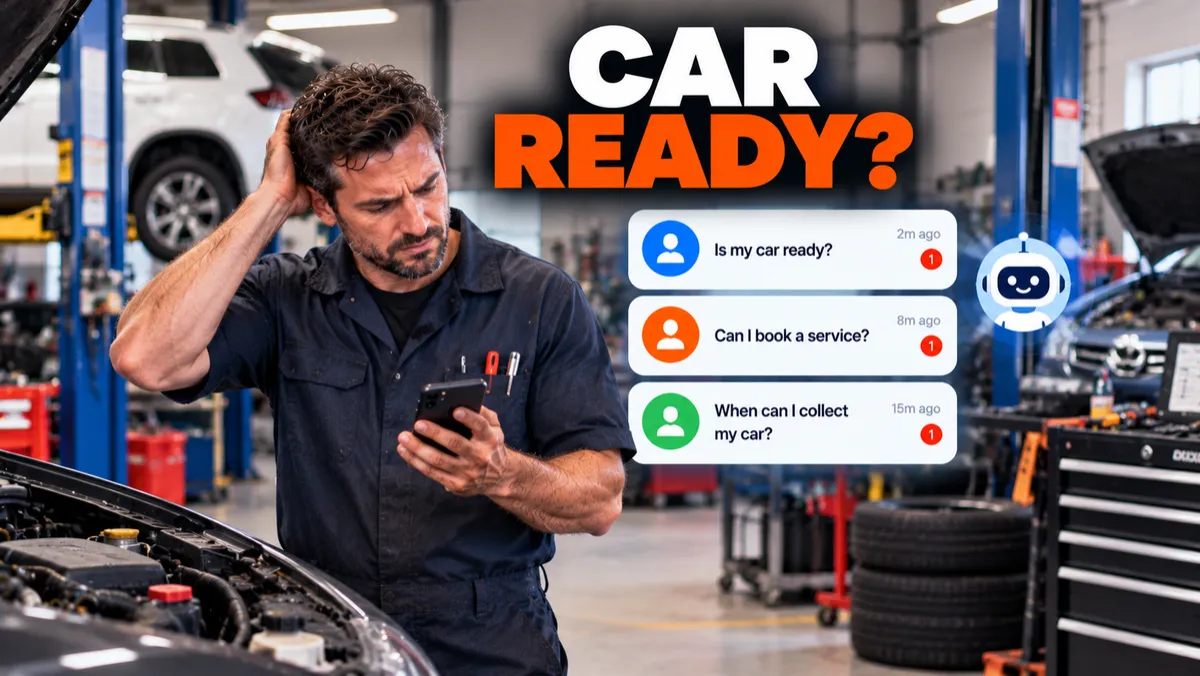
Ask any workshop owner what interrupts the day, and you will hear the same thing. The phone. Customers ringing to book, to ask what a service costs, and above all to ask, “Is my car ready yet?” Each call pulls a mechanic or service advisor away from work that makes money. Meanwhile, after hours, people searching for a workshop find a closed sign and move on. At Bolder Digital, we see mechanics and auto repair shops as a strong fit for an AI chatbot, because so many of these questions repeat, and the answers sit in your systems already.
What Customers Actually Ask
Look at a week of calls and messages, and you will see the same few themes:
Do you work on my make and model?
How much is a logbook service, or a basic service?
Can you fit me in this week?
Do you have a courtesy car, or a lift home?
There is a warning light on. What should I do?
Will servicing with you void my warranty?
Is my car ready yet?
A chatbot can handle most of these directly, and pass the rest to a person with the details already collected.
Bookings: Collect What the Workshop Needs
A good booking chat captures the right details the first time, so nobody has to ring back. The chatbot should ask for:
name and mobile number
registration, plus make, model, and year
the type of service, or the symptoms
the preferred day and drop off time
whether they need a courtesy car, shuttle, or lift
any photos of warning lights or damage, if they have them
It should check your real calendar and bay capacity, offer genuine times, and confirm with a text. A reminder the day before reduces no shows. After hours, it can take the booking and tell the customer when they will receive confirmation.
Quotes: Price What You Can, and Explain the Rest
Routine work lends itself to set prices. For a basic service, a logbook service, or a tyre change, the chatbot can quote from your price list, based on the vehicle. For diagnostic and repair work, it should be honest. A fault described in a chat is not a diagnosis.
A good approach is to say:
what the diagnostic fee covers
that a quote follows once the vehicle has been inspected
that no extra work goes ahead without approval
The chatbot should never guess the cost of a repair from symptoms. It should record the details and hand them to your advisor.
Safety First: Know When to Stop
Some messages are not booking requests. If someone describes failing brakes, steering problems, smoke, or an overheating engine, the chatbot should not keep taking details. It should give a short, fixed, approved message about not driving the vehicle, and offer to put them through to your team or to arrange assistance. Your team should write that wording, and it should not vary.
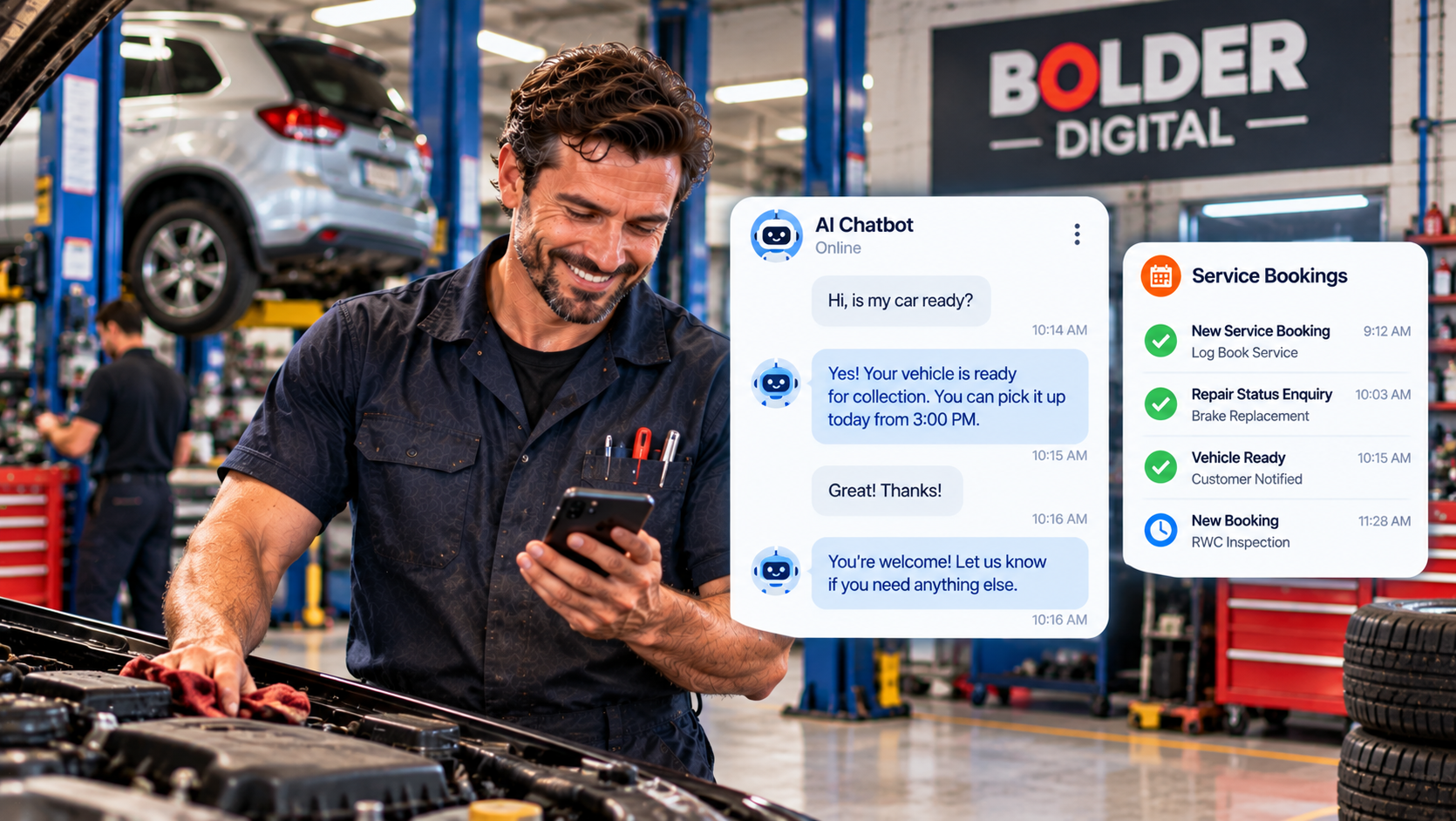
“Is My Car Ready?” Without the Phone Call
This is the question that pays for the chatbot in many shops. Customers want to know the status, and they do not want to wait on hold.
A well built chatbot can:
Ask for the registration and a matching detail, such as the phone number on the booking.
Look up the job in your workshop software.
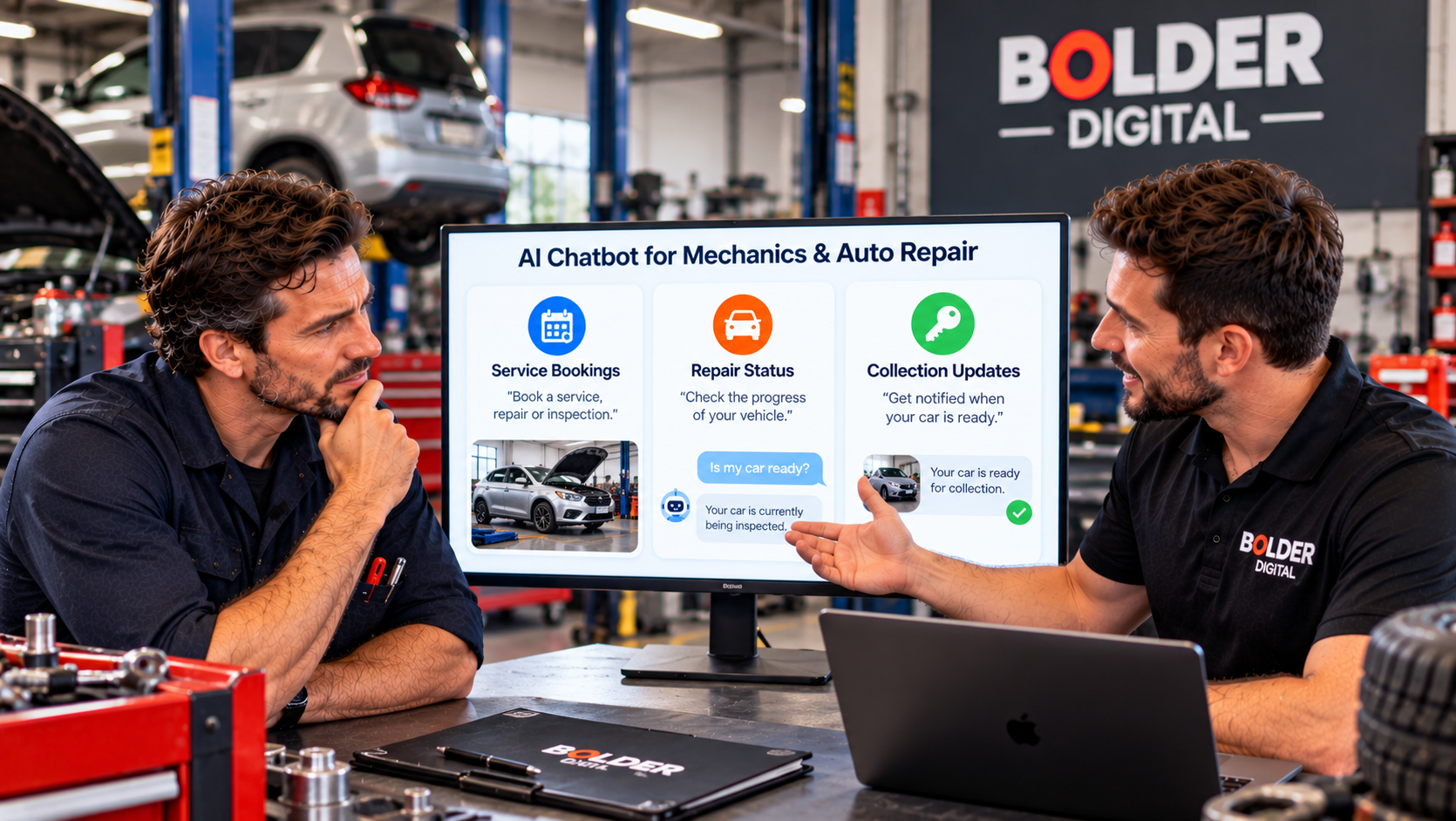
Give the status in plain words, such as booked in, being inspected, waiting for approval, waiting on parts, being repaired, being tested, or ready to collect.
Pass anything unclear to a service advisor.
Three rules keep this safe:
Only report what your system shows. The chatbot must not guess a time or invent progress.
Verify the caller. Do not give vehicle details to someone who cannot match the registration and contact details. Caller details can be wrong or spoofed.
Be careful with promises. “Your car is ready for collection” is fine. “It will be ready by three” is a promise only if you mean it.
The status updates only work if your staff keep the job card up to date. The chatbot is a window into your system, not a substitute for it.
Extra Work: Get Approval, and Keep Proof
A common source of disputes is work added after the car is on the hoist. A good chatbot helps here, but it should never be the only record.
A sensible process is:
the advisor prepares an itemised quote for the additional work
the customer receives it by text or email, with a clear price
the customer approves or declines, and the approval is recorded
nothing extra begins without that approval
Rules about quotes, estimates, and authorisation can differ between states, so check what applies in Tasmania. In every case, clear written approval protects both you and the customer.
Warranty and Logbook Questions
Customers often worry that servicing outside the dealership will void their new car warranty. Under Australian Consumer Law and ACCC guidance, a qualified independent repairer can carry out logbook servicing without voiding the warranty, as long as the work follows the manufacturer’s requirements and uses suitable parts. Keep invoices and records.
That makes a useful approved answer for the chatbot. But it should not advise on a specific warranty claim, a recall, or a manufacturer defect, which usually go through the dealer. For those, it should explain that the dealer handles them, and offer to put the customer through to your advisor.
Delays and Bad News
Parts arrive late. A fault turns out to be bigger than expected. These messages need care. The chatbot can deliver simple, honest updates, such as “We’re waiting on a part, and we expect an update from the supplier tomorrow. We’ll message you as soon as we know more.” Anything involving a price increase, a safety finding, or a customer who is upset should come from a person.
Courtesy Cars and Practical Questions
Set out your rules in advance, so the chatbot answers consistently:
which customers can use a courtesy car, and for which jobs
what licence, insurance, and booking details are needed
drop off and pick up hours, and after hours key arrangements
how you handle payments, and which payment methods you accept
Payments should go through a secure link. Never take card numbers in a chat.
Hand Over Smoothly
Some conversations belong to a person: complaints, safety concerns, major repairs, warranty disputes, and anyone who asks for a human. The chatbot should pass the conversation to your advisor with a summary, so the customer does not repeat everything. Make sure someone is assigned to pick it up, particularly around public holidays, which vary across Tasmania.
Sample Lines
Opening: “Hi, I’m the AI assistant for the workshop. I can book a service, give you a price on a standard job, or check on your car. What do you need?”
Quote: “A logbook service for that vehicle is the listed price. For a fault, we’d need to inspect it first, and we’ll send you a quote before any work starts.”
Status: “Your car is in for its brake repair, and the team is waiting on a part. I’ll pass this to the service desk to confirm a time, and they will message you today.”
What to Measure
bookings taken, including after hours
how many “is my car ready?” calls and messages the chatbot handles
quote approvals and declines
no shows before and after reminders
complaints and handovers
reviews collected after pickup
Asking for a review when the customer collects the car, while they are pleased, is one of the easiest ways to build your Google profile.
How Bolder Digital Approaches This
At Bolder Digital, we start with the questions your front counter hears every day. We connect the chatbot to your calendar and workshop system, write the safety and approval wording with you, and test the awkward cases, such as unclear faults, delays, and unhappy customers. You can see how this fits into our AI Chatbot service.
The Bottom Line
A workshop earns its money under the car, not on the phone. A chatbot can take bookings around the clock, price the routine jobs, give honest status updates, and relay approvals, while your team keeps working. Keep it grounded in your real systems, careful about safety and promises, and quick to hand over to a person when it matters.
Frequently Asked Questions
Can a chatbot give customers a quote for repairs?
For routine work such as services and tyres, yes, from your price list. For repairs, it should explain that a diagnosis and quote come after inspection, and take the details for your advisor.
How does an “is my car ready?” update work?
The chatbot asks for the registration and a matching detail, looks up the job in your workshop software, and gives the status your team has recorded. It does not guess times or progress.
Should the chatbot approve extra work?
It can relay an itemised quote and capture the customer’s approval, but the approval should be recorded properly, and nothing extra should start without it. Check the rules that apply in Tasmania.
Does independent servicing void a new car warranty?
According to ACCC guidance, not if a qualified repairer follows the manufacturer’s requirements and uses suitable parts. The chatbot can share that general answer, but should hand specific warranty claims and recalls to a person.
What should it do if someone describes a safety problem?
Stop taking bookings, give a short approved message about not driving the vehicle, and put the customer through to your team.
Jarryd Holmes, Founder & Owner, Bolder Digital | Prospect Vale, Tasmania | bolderdigital.com.au