AI Chatbot for Professional Services: Lawyers, Accountants, and Consultants
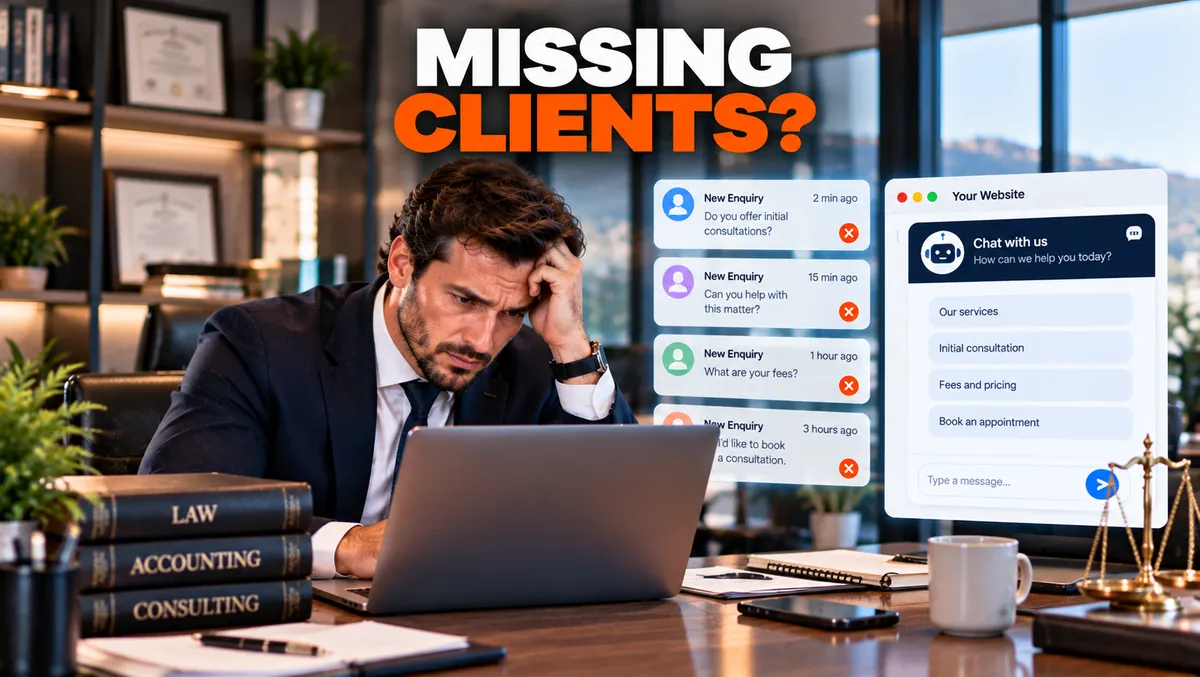
It is nine at night. Someone has just received a letter from the tax office, or been served with court papers, or lost a parent and been named executor. They are worried, they want to know what to do, and they open a chat box on a firm's website. At Bolder Digital, this is the moment that makes an AI chatbot for professional services different from one for almost any other industry. The visitor is often stressed, the stakes are high, and the person on the other end must not say the wrong thing.
Done carefully, a chatbot can help. Done carelessly, it can create real risk. Here is where the line sits.
What a Professional Services Chatbot Is For
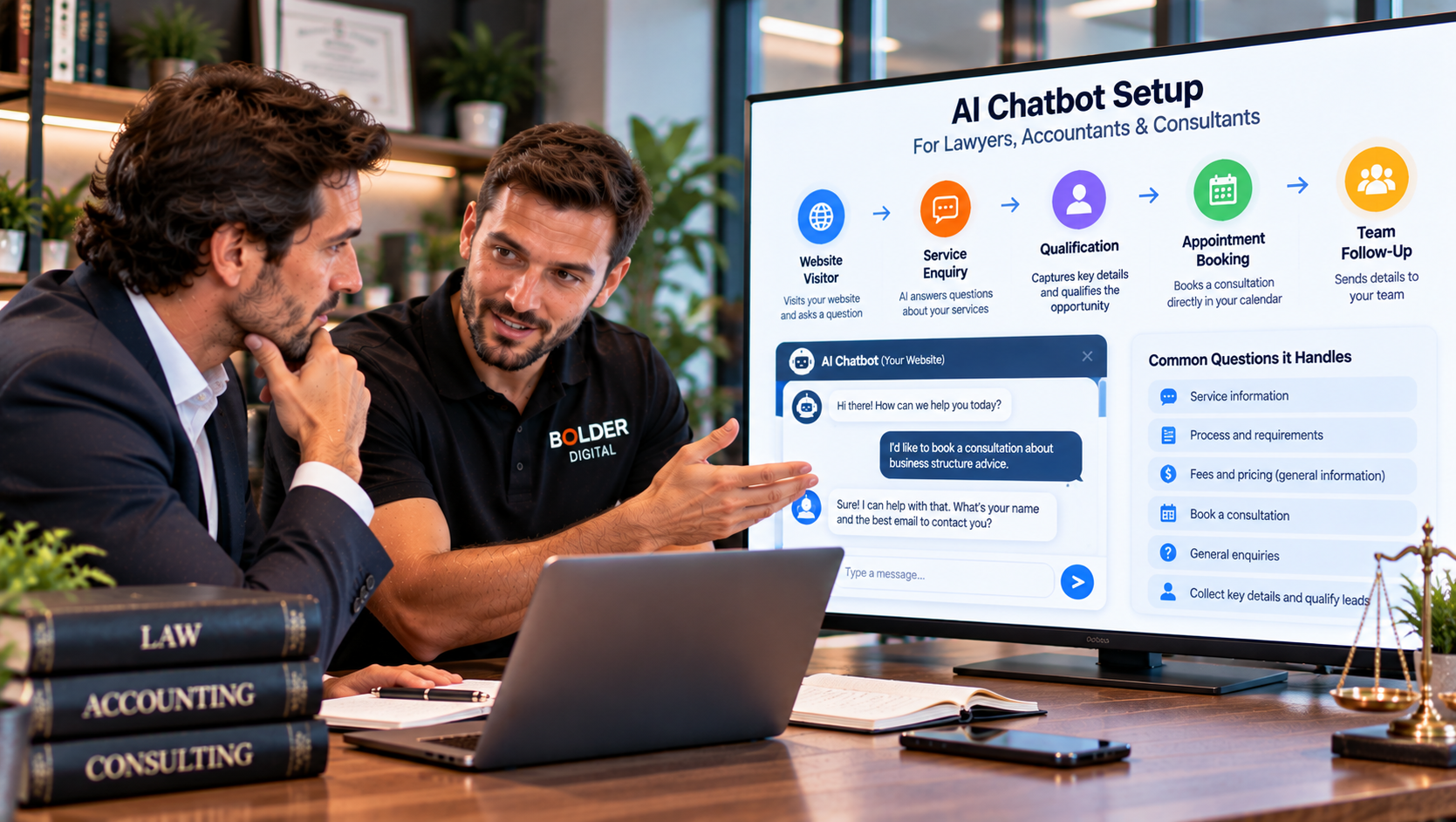
The best use is not giving advice. It is making sure the right enquiry reaches the right person quickly and in good order. A well built chatbot can:
answer practical questions about opening hours, location, how the firm works, and what to bring to a first meeting
gather the minimum details needed to route the enquiry, such as the type of matter, the state, and how urgent it is
book an initial consultation into the right person's calendar
share an approved checklist of documents to prepare
respond outside business hours, when many enquiries arrive
For many firms, the gain is simply that no enquiry sits unanswered overnight.
The Line It Must Not Cross: Advice
Advice from a lawyer, tax agent, or financial adviser is regulated, and a chatbot is none of those things.
For law, Australian regulators have said that AI chatbots cannot reason, understand, or advise, and that lawyers remain responsible for the advice they give. Tasmania's Legal Profession Act also prohibits representing that someone is entitled to engage in legal practice when they are not. A chatbot should never present itself as a lawyer or suggest it is giving legal advice.
For accounting, providing tax agent services for a fee requires registration with the Tax Practitioners Board, and a chatbot holds no registration. The TPB's AI guidance, published in July 2026, covers chatbots that give tailored advice in response to specific input, and confirms that registered practitioners remain accountable for anything AI produces on their behalf. Advice about financial products is regulated separately again, by ASIC.
So the rule is simple. The chatbot explains how the firm works and routes the enquiry. It does not tell anyone what the law says about their situation, how much tax they owe, or what they should do.
Confidentiality Comes First
Professional services run on trust, and confidentiality is the foundation. A few principles follow:
Discourage detailed fact telling.The chatbot should invite a short description of the matter, then suggest the conversation continue with a person. Long accounts of someone's circumstances do not belong in a chat window.
Collect only what is needed.Name, contact details, matter type, and urgency are usually enough to route an enquiry. If names of other parties are needed for a conflict check, say why.
Never use public tools for client information.The legal regulators' joint statement says lawyers cannot safely enter confidential or privileged information into public AI tools, and commentators have warned that doing so risks waiving privilege.
Get permission before sharing client information with a third party.The TPB indicates tax practitioners must obtain client permission before disclosing client information to a third party, which can include an AI provider.
Do not discuss existing client matters.The chatbot cannot reliably verify who someone is. Questions about an open matter should go to the team through a secure channel.
Professional confidentiality duties apply regardless of whether the Privacy Act covers a small firm, so ask any provider where transcripts are stored and who can access them. A short notice at the start of the chat, telling visitors they are speaking with an AI assistant and that chatting does not create a client relationship, is good practice. Have your own professional body confirm the wording.
Urgent Matters Need a Different Path
Some enquiries cannot wait. Someone with a court date tomorrow, a tax deadline passing, or a family crisis needs a person quickly. The chatbot should recognise urgent language, flag the enquiry for immediate attention, and give approved referral details, such as emergency services or a legal aid line, if the firm cannot respond straight away. The firm decides those details and keeps them current.
Be Careful With Fees
People often ask what it will cost. For lawyers, costs disclosure rules apply, so a chatbot should not give firm fee estimates that the firm has not approved. A safe approach is to share the firm's approved fee structure or ranges, say clearly that a quote follows once the matter is understood, and never imply a fixed price unless it is genuinely fixed. The same discipline suits accountants and consultants.
Tone Matters More Than Speed
A visitor facing a tax debt, a separation, or an estate is rarely at their best. The chatbot should be calm, plain, and kind, and it should not crack jokes or push a sale. It should offer a person quickly and make it easy to ask for one. A cold, over cheerful reply at that moment does more harm than no reply.
What Consultants Can Do Differently
Consultants face fewer formal restrictions on advice, but the same trust principles apply. A chatbot can qualify enquiries by asking about the problem, the timeframe, the budget range, and who is involved, then book a discovery call. It can share approved case studies, with client consent, and explain how engagements work. It should not reveal anything about current or past clients, and it should not promise outcomes.
How Bolder Digital Builds This
At Bolder Digital, we start with what your profession allows. We load approved content only, such as your services, process, hours, and fee approach. We design the intake to collect the minimum, set clear escalation for urgent and sensitive matters, add the AI notice, and connect booking to your calendar. We test it against the awkward cases, including a visitor asking for advice, sharing too much, or asking about an existing matter, before it speaks to a real person.
You can see how this fits into ourAI Chatbot service, built to catch enquiries without crossing the lines your profession draws.
The Bottom Line
An AI chatbot for professional services earns its place by being careful. Let it answer practical questions, gather a minimum of detail, book consultations, and respond after hours. Keep it away from advice, protect confidentiality, treat urgent matters properly, speak with care, and keep fees honest. Built that way, it takes pressure off the front desk and gives worried people a faster path to a human who can actually help.

Frequently Asked Questions
Can a law firm chatbot give legal advice?
No. Regulators have said AI chatbots cannot reason, understand, or advise, and lawyers remain responsible for the advice they give. A chatbot should explain how the firm works and route enquiries, not tell visitors what the law means for them.
Can an accounting firm chatbot answer tax questions?
It can share general, approved information, such as what documents to bring. Tailored tax advice requires a registered tax agent, and the TPB's AI guidance says practitioners remain accountable for anything AI produces. The chatbot should route specific questions to a person.
Is it safe for visitors to share their circumstances in a chat?
It is best to discourage detailed accounts. The chatbot should collect the minimum needed to route the enquiry, say it is an AI assistant, and move the conversation to a person. Professional confidentiality duties apply, so check where transcripts are stored.
What should a chatbot do when someone has an urgent matter?
Recognise urgent wording, flag it for immediate attention, and provide approved referral details if no one is available. The firm decides which details to include and keeps them current.
How does Bolder Digital set up a chatbot for a professional firm?
We load approved content, design a minimal intake, set escalation rules for urgent and sensitive matters, add a clear AI notice, and connect booking to your calendar. We then test difficult scenarios before it goes live.
Jarryd Holmes, Founder & Owner, Bolder Digital | Prospect Vale, Tasmania |bolderdigital.com.au