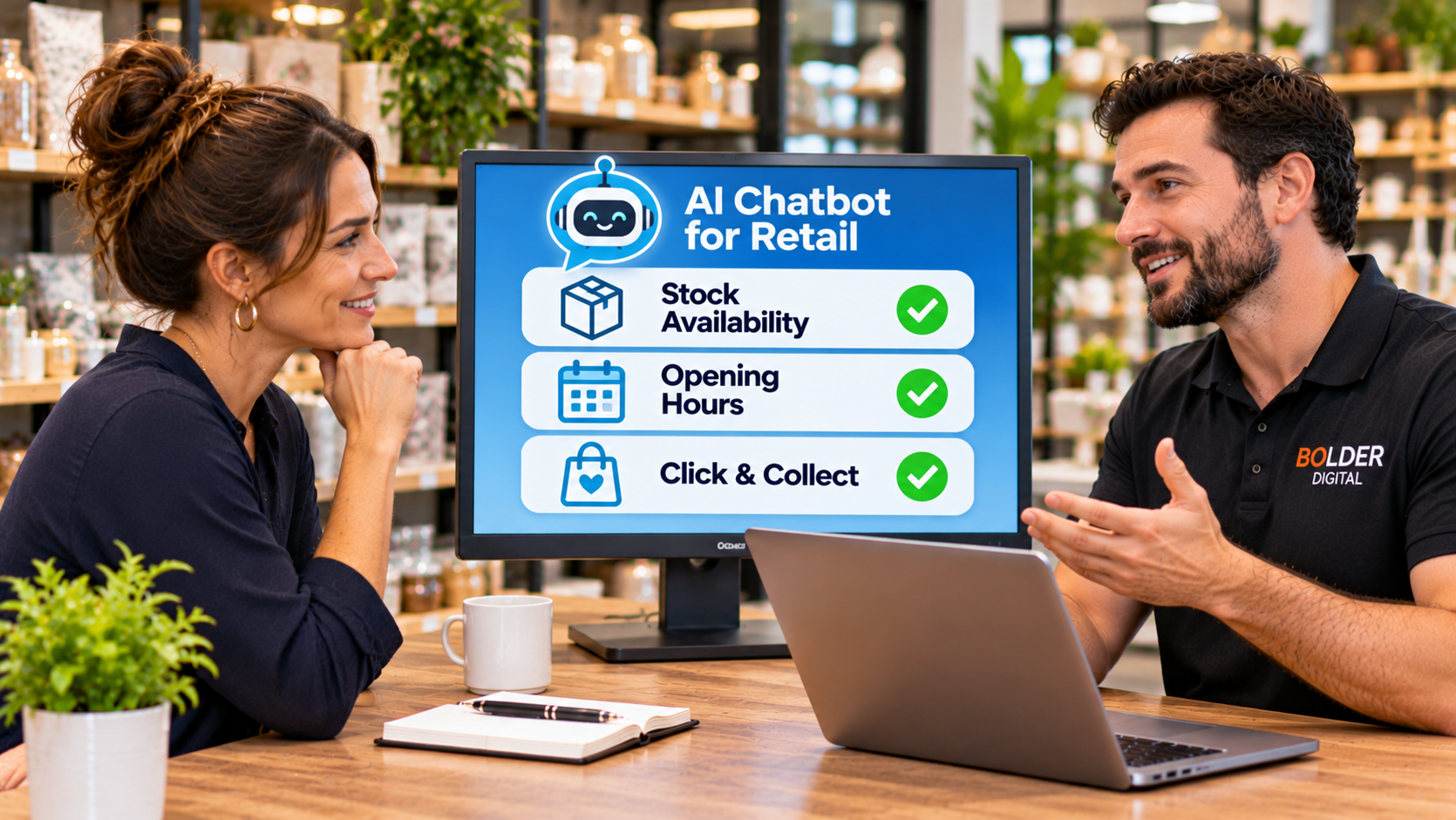
AI Chatbot for Retail Shops: Stock, Opening Hours, and Click and Collect
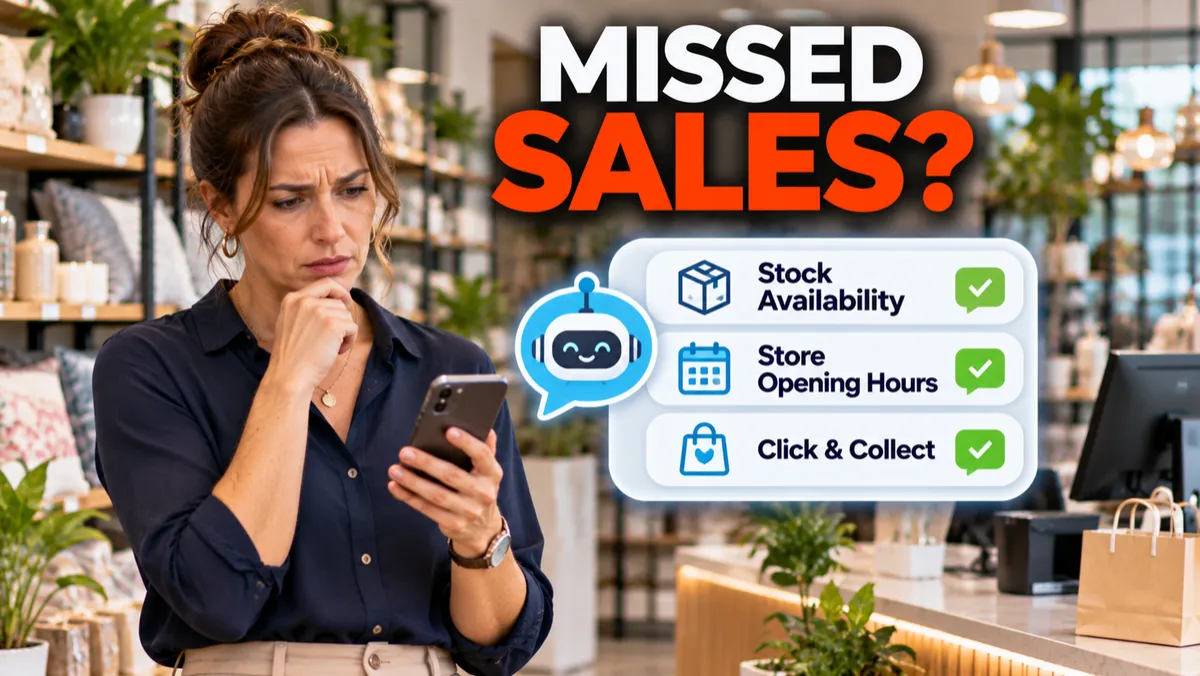
The three questions every shop hears all day are “Have you got it in stock?”, “What time do you close?”, and “Can I pick it up?” Staff answer them dozens of times, usually while serving someone else. Outside opening hours, they go unanswered. And with Christmas about to hit, the volume is about to climb. At Bolder Digital, we see these three questions as the sweet spot for a retail chatbot. They are repetitive, they matter to a sale, and the answers can be kept accurate. The catch is that accuracy is everything. A chatbot that confidently says “yes, we have it” when you don’t is worse than no chatbot at all.
The Principle: Don’t Confuse Information With Inventory
One guide for retail chatbots puts it neatly. An answer about published opening hours is not the same as a live stock lookup, and a captured collection preference is not a reserved product. That is the design rule for everything that follows.
A chatbot can reliably answer from information you maintain, such as hours, policies, and product details. It should not guess physical stock from a web page, and it should not promise that an item is waiting for someone unless your system confirms it.
Stock Questions: Three Honest Levels
How the chatbot answers depends on what your systems know.
Level 1: No live stock data.The chatbot says so plainly, and handles the request properly.
“I can’t see live stock from here, but I can ask the team to check and let you know. What’s the best number or email to reach you?”
Level 2: Online stock only.If you sell through an online platform, the chatbot can check what is available online. It should make clear that this is online availability, and not what is on the shelf in the shop.
Level 3: Stock synced from your point of sale.The chatbot can answer “is it in stock at the shop?” from live data. Guides for retail chatbots describe this as the ideal, but it depends on your inventory being accurate. Even then, wording matters.
“Our system shows two in stock at the shop right now. Stock can change, so if you’d like, I can ask the team to hold one for you.”
Never present stock as a guarantee. Only a person who has seen the item can promise it is there.
Holding an Item
Customers love to know something will be waiting. Decide your hold policy first.
How long do you hold items, such as 24 hours?
Is a hold free, or does it need a deposit or payment?
What happens when the hold expires?
Who confirms the item is physically set aside?
The chatbot can take the request and tell the customer what to expect, but a person should confirm the hold. Otherwise, you risk telling a customer something is reserved when it isn’t.
Opening Hours: One Source of Truth
Hours look simple, and they cause more small disappointments than almost anything else. Wrong hours on a public holiday cost you a visit and a customer’s goodwill.
The solution is a single source of truth that feeds your website, your Google Business Profile, and the chatbot. When you change the hours for a holiday, change them in one place.
Right now is the time to set Christmas and summer trading hours. Check that the chatbot knows:
opening hours on every day from now to the new year, including late nights and public holidays
regional holidays that affect your area, which vary across Tasmania
special event days, such as local shows and markets
There is a useful local wrinkle this month. Black Friday falls on Friday 27 November, and the same day is the Devonport Show Day public holiday in the Devonport, Kentish, and Latrobe areas. A retailer in that region needs to decide its hours carefully, and tell customers clearly.
Click and Collect: A Process, Not Just a Feature
Click and collect works when everyone knows what happens next. Guides for small shops describe a simple sequence, and the chatbot can support each step.
The order is placed,online or through a link the chatbot sends.
Confirmation.The customer receives an order confirmation with the expected preparation time.
Ready.When the order is physically on the shelf, staff mark it ready, and the customer is notified.
Collection.The customer comes in during collection hours and shows their order number or confirmation.
Reminder.If it is not collected, a reminder goes out before the hold ends.
Release.If it is still not collected, the order is released, with a clear message.
A written policy helps. Common practice is a hold of several days for uncollected orders, with reminders along the way. Whatever you choose, state it at checkout.
What the chatbot can do:
explain how click and collect works, and what to bring
tell customers your preparation time and collection hours
answer “is my order ready?” from your order system
handle changes and cancellations, within your rules
pass anything unusual to staff
It should never mark an order as ready or promise a time that staff have not confirmed.
If an Item Turns Out Not to Be Available
Inventory is never perfect. Plan for the moment a paid order cannot be filled. The chatbot should not improvise. It should tell the customer the team will be in touch, and your staff should offer a refund or a sensible alternative, as the customer prefers.
Returns and Refunds: Get the Wording Right
This is where retailers most often get into trouble, and a chatbot that repeats the wrong line can make it worse. Under the Australian Consumer Law, consumer guarantees cannot be excluded or limited. In practice, that means:
“No refunds” signs and policies are unlawful.
If a product is faulty, the customer is entitled to a remedy, such as a repair, replacement, or refund, depending on the type of fault.
Returns for a change of mind are not required by law, so you can set your own policy, but you cannot mislead customers about their rights.
Prices and claims such as “was” and “now” must be accurate.
So the chatbot should state your change of mind policy accurately, never tell anyone they cannot return a faulty product, and pass any complaint about faulty goods to a person.
Prices: Quote Only From the List
The chatbot should only quote prices from your approved price list or product data, and it should say prices may change. If a price is wrong, because of an error in your listing, your staff should decide how to handle it. The chatbot should never negotiate or promise a price.
Product Questions
Customers ask about sizes, materials, dimensions, and care. The chatbot can answer these from your product information and supplier details. It should not invent specifications, and when it does not know, it should say so and offer to ask the team. Anything that touches safety, allergies, or suitability for children should go to a person.
Instagram and Facebook Messages
For many independent shops, the most common question arrives as a message under a post: “Is this still available?” A chatbot can answer these quickly, including after hours, using the same rules. Be careful about sold items. If a post is old, the chatbot should check before saying it is available, and should not take payment for an item that may be gone.
Gift Cards and Christmas Questions
Expect plenty at this time of year:
delivery cut off dates, and the last day for click and collect orders
gift cards, including how they work and their terms, since gift cards generally must be valid for at least three years under Australian rules
gift receipts and returns for gifts
gift wrapping, if you offer it
late night shopping and extended hours
Update the chatbot’s information now, and test it before the rush.
Privacy and Messages
A click and collect order involves names, phone numbers, and sometimes addresses. Collect only what you need, use secure links for payments, and never take card numbers in the chat. Keep order notifications about the order, and do not slip promotions into them. For marketing messages, you need proper consent, with an easy way to opt out.
Local Search and Stock
If your point of sale can feed product data into Google, the shop’s profile and local listings can show what is in stock nearby. That is a separate technical project, but it fits well with a chatbot, as both depend on accurate stock and hours. Our local SEO work covers how to keep your Google Business Profile accurate.
Hand Over to a Person
Pass these to your team, with a summary:
faulty goods and complaints
special orders and bulk orders
anything involving a refund or a price dispute
stock discrepancies
accessibility requests
anyone who asks for a person
Test Before the Rush
Run these before Christmas:
ask for an item you do not stock
ask about an item where the system shows one left
ask for hours on Christmas Eve and the day after
place a click and collect order, then ask if it is ready
return a faulty item, and a change of mind item
ask for a gift card refund
ask a question in the middle of the night
Measure What Matters
enquiries answered, including after hours
visits or orders that follow a chat
click and collect orders, and how many are collected
times a customer was told something the shop could not deliver
questions the chatbot could not answer, so you can add them
How Bolder Digital Approaches This
At Bolder Digital, we start by working out what your systems can actually tell the chatbot. We then set up honest answers for each level of stock data, put your hours in one source of truth, build the click and collect messages, and write your returns wording to match consumer law. We test the awkward cases before the Christmas rush. You can see how this fits into ourAI Chatbot service.
The Bottom Line
A shop chatbot earns its keep by answering the same three questions at any hour, and by being honest about what it knows. Keep hours in one place, be clear about the difference between information and stock, run click and collect as a defined process, state your returns policy accurately, and hand anything uncertain to a person. Do that before Christmas, and the chatbot takes pressure off your counter, and sends more people through your door.

Frequently Asked Questions
Can a chatbot tell customers if an item is in stock?
Only if your systems give it live stock data, and even then it should avoid promising. If it has no live data, it should say so and take a request for the team to check.
How should a chatbot handle click and collect?
It should explain the process, preparation time, and collection hours, answer “is my order ready?” from your order system, and pass changes and problems to staff. It should never mark an order as ready itself.
What should it say about returns?
Your actual policy, stated accurately. It must never tell someone they cannot return a faulty product, since consumer guarantees cannot be excluded, and it should pass complaints about faulty goods to a person.
Can it keep my opening hours right over Christmas?
Yes, if the hours come from a single source that also feeds your website and Google profile. Update that source now for Christmas, summer, and any regional holidays.
Is it worth connecting it to my point of sale?
If your stock data is reliable, yes, because it lets the chatbot answer stock questions properly. If your stock is not tracked accurately, start with hours, policies, and requests the team confirms.
Jarryd Holmes, Founder & Owner, Bolder Digital | Prospect Vale, Tasmania |bolderdigital.com.au