AI Chatbot Mistakes: Why Small Business Chatbots Fail
Most small business chatbots do not fail because the technology is bad. They fail because of a handful of avoidable decisions made before and after launch. A chatbot with no way to reach a human. One that confidently says something untrue. One that was set up in an afternoon and never looked at again. I am Jarryd Holmes from Bolder Digital, and full disclosure, we build AI chatbots, so I have a stake. We have also seen what goes wrong, and it is remarkably consistent. This guide lists the ten mistakes we see most, what each one costs you, and how to fix it.
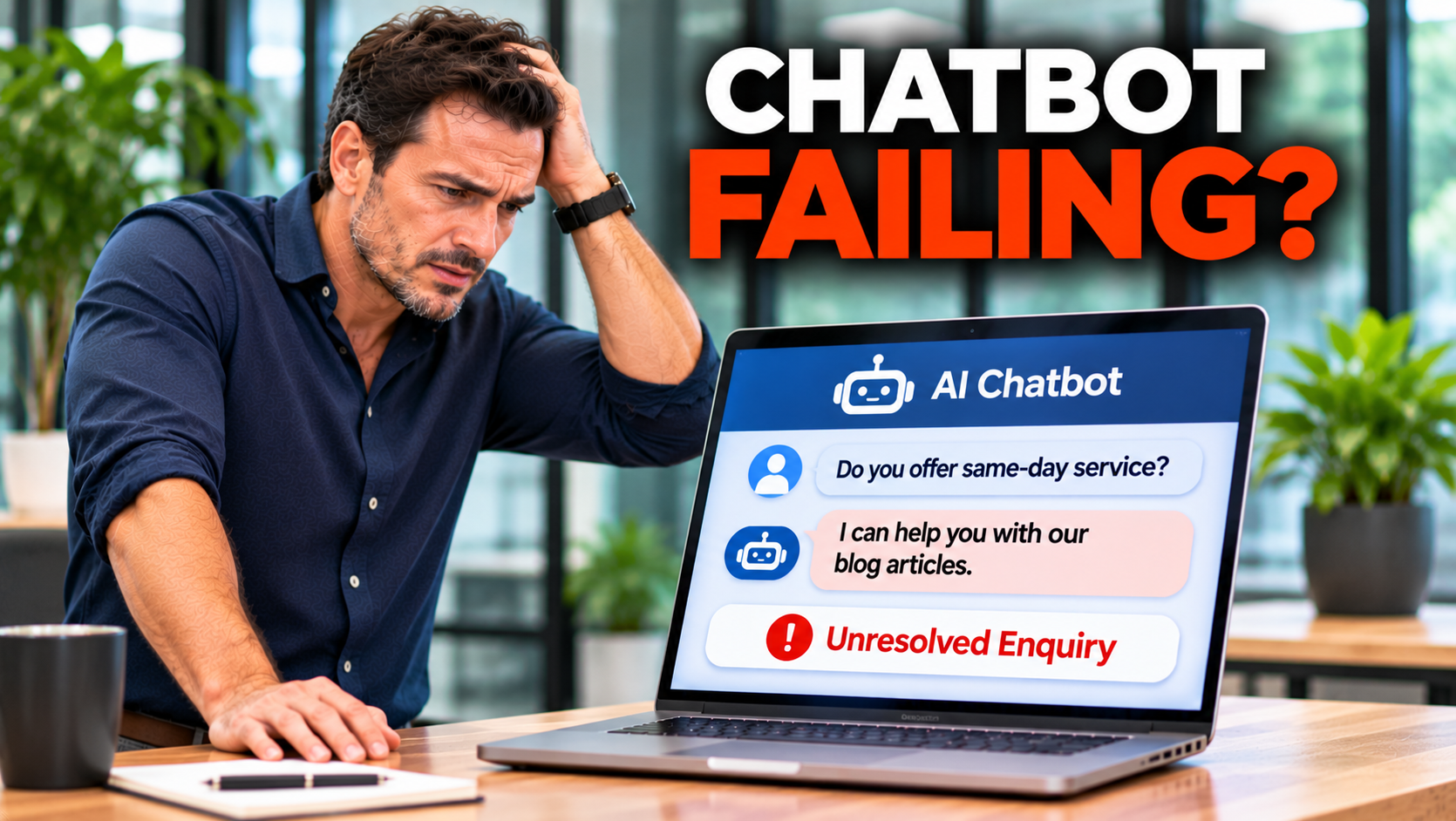
Why It Matters More Here Than Elsewhere
Australian customers are cautious about AI in customer service. Research from Twilio, Sinch, and others suggests that many Australians try to avoid bots, that a minority are comfortable with AI support, and that most expect a bot to pass them to a person when it cannot help, though far fewer say that happens in practice. These are vendor commissioned surveys, so treat the exact figures with care, but the message is consistent. People will use a chatbot that is quick and useful, and they punish one that wastes their time. One 2026 consumer report found that nearly one in five people who had used AI customer support saw no benefit from it.
Mistake 1: No Clear Job
What goes wrong: The chatbot is installed because everyone has one, with no clear purpose. It tries to answer everything, does nothing particularly well, and nobody can say whether it is working.
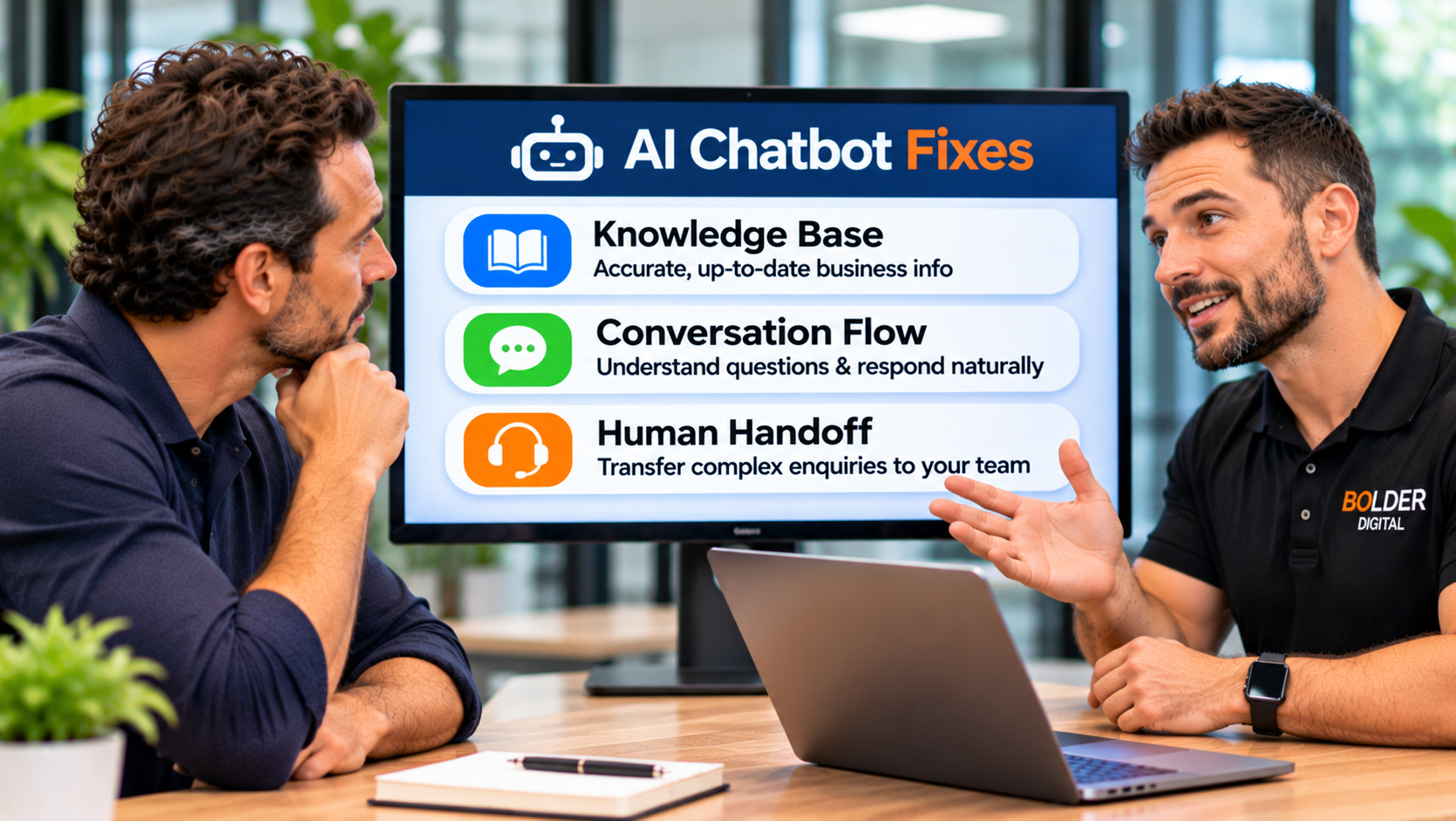
The fix: Pick one or two jobs to start with, such as answering common questions and capturing enquiries. Decide what success looks like, such as more enquiries captured after hours. Expand only when those jobs work.
Mistake 2: No Way Out to a Human
What goes wrong: A customer has a complaint, an unusual question, or an urgent problem, and the chatbot keeps saying “I didn’t understand that”. They give up, and tell people why.
The fix: Make “talk to a person” obvious and available at any point. Define the triggers that hand over, such as the customer asking, the chatbot being unsure, or an upset customer. Send your team a summary, so the customer never repeats themselves. Our guide on human handover covers the details, and our comparison of AI chatbot and live chat explains how the two fit together.
Mistake 3: Stale or Thin Information
What goes wrong: The chatbot was loaded with your prices, hours, and policies once, and nothing has been updated since. It happily quotes last year’s price, an expired offer, or the wrong opening hours. Some setups even hold several versions of the same policy, and the bot picks the wrong one.
The fix: Treat your chatbot’s information as a living document with an owner. Update it whenever prices, hours, or policies change, and review it every month. Remove old versions rather than leaving them to confuse it.
Mistake 4: Letting It Guess
What goes wrong: When the chatbot does not know the answer, it makes one up, in a confident tone. In 2024, a Canadian tribunal ordered Air Canada to pay a customer C$812.02 after its chatbot gave wrong information about a refund rule. The airline argued the chatbot was responsible for its own words. The tribunal disagreed, saying the chatbot was just a part of the airline’s website, and the company was responsible for everything on it.
Why it matters here: That was a Canadian ruling, not Australian law. But Australian consumer law on misleading statements is likely to be relevant to what your chatbot tells customers, so assume you are responsible. Take advice on your own situation.
The fix: Ground the chatbot in your approved information, and tell it to say “I’m not sure, let me ask the team” when the answer is not there. Forbid it from guessing on prices, availability, guarantees, and anything with legal or health consequences. Our guide on chatbot accuracy explains how.
Mistake 5: A Poor First Impression
What goes wrong: The first message is vague (“How can I help?”), long, or robotic, or it hides the fact that it is a bot. Customers either ignore it or feel tricked.
The fix: Open with a short, friendly line that says it is an AI assistant, what it can help with, and that a person is available. Give two or three clear options. Write it in the voice of your business, not a call centre.
Mistake 6: Being Where Customers Are Not
What goes wrong: The chatbot sits on the website, while most of your customers message you on Facebook or Instagram, or ring you. Or the chat window is hidden on mobile, or takes ages to load.
The fix: Look at where enquiries actually arrive. If it is social media, set up a chatbot there within Meta’s rules, as we explain in our guide to Facebook Messenger and Instagram chatbots. Test the website chat on a phone. If calls dominate, consider a voice agent.
Mistake 7: Collecting Too Much, Too Carelessly
What goes wrong: The chatbot asks for sensitive details it does not need, such as health information, dates of birth, or card numbers, and stores transcripts indefinitely. A data breach or a privacy complaint follows.
The fix: Collect only what you need to help, such as a name, contact details, and what they want. Keep sensitive matters out of chat, and move them to secure forms or a phone call. Tell people they are speaking to an AI, set a retention period, and limit who can read transcripts. Health, legal, and financial businesses need extra care.
Mistake 8: Launching Without Testing
What goes wrong: The chatbot goes live after a quick look, and real customers find the gaps. In late 2023, a US car dealership’s chatbot was manipulated by a user into “agreeing” to sell a vehicle for one dollar. No car changed hands, but the dealership took the chatbot down. Delivery firm DPD disabled part of its chatbot after a customer coaxed it into swearing and criticising the company. Both stories were widely reported, and both are the kind of thing a few hours of testing would have caught.
The fix: Before launch, try to break it. Ask awkward questions, try to get it to promise discounts, test unusual phrasing, and ask for things it should refuse. Have a colleague who did not build it try too. Our chatbot testing checklist gives you twenty questions to start with.
Mistake 9: Launch and Forget
What goes wrong: Nobody reads the conversations. The chatbot keeps giving the same wrong answer for months, questions it cannot answer pile up, and customers drift away.
The fix: Set a recurring fifteen minute review each week. Read a sample of conversations, note questions it could not answer, and fix or add them. Track a few simple numbers, such as conversations handled, handovers, leads captured, and complaints.
Mistake 10: Not Connecting It to Your Business
What goes wrong: The chatbot answers questions, but it cannot book anything, check availability, or put a lead into your customer system. Enquiries are taken, then sit in an inbox that nobody watches, or get lost entirely. And some businesses make the opposite error, cutting staff before the chatbot has proved itself.
The fix: Connect the chatbot to your calendar, your customer database, and your notifications, so a captured lead reaches the right person quickly. Treat the chatbot as a first responder that supports your team, not a replacement for it.
A Quick Chatbot Health Check
Answer yes or no.
Can a customer reach a person at any time?
Does the chatbot say it is an AI in its first message?
Is its information correct today, and does someone own keeping it that way?
Does it admit when it does not know, and avoid guessing on prices and promises?
Has someone tried hard to break it, and fixed what they found?
Does it avoid collecting sensitive information?
Is it where your customers actually message you?
Does a real person read a sample of conversations every week?
Does it connect to your calendar, customer system, and alerts?
Do you know the numbers that show whether it is working?
Any “no” is worth fixing before anything else.
What a Good Chatbot Looks Like
A good small business chatbot is humble and useful. It has a short, clear job. It answers from approved information, and says so when it does not know. It tells people it is an AI, makes a human easy to reach, keeps sensitive matters out of the chat, and passes leads to your team quickly. And someone looks at it regularly. It is not impressive, and it does not need to be. It just needs to be dependable.
How Bolder Digital Helps
At Bolder Digital, we build AI chatbots that avoid these mistakes from the start. We define the job, load your approved information, set the limits, design the handover, test the awkward cases, connect your calendar and customer system, and review conversations with you. You can read more about our AI Chatbot service, and our complete guide to AI chatbots for small business.

The Bottom Line
Small business chatbots fail for ordinary reasons: no clear job, no human option, stale information, guessing, a poor first message, the wrong channel, careless data handling, no testing, no review, and no connection to the business. Every one of them is fixable, and most are fixable cheaply. Get the basics right, and a chatbot becomes a quiet, reliable member of your team, not an embarrassment waiting to happen.
Frequently Asked Questions
Why do small business chatbots fail?
Mostly because of design and maintenance, not the technology. Common causes are no clear purpose, no way to reach a human, outdated information, letting the bot guess, skipping testing, and never reviewing conversations.
Am I responsible for what my chatbot says?
Assume so. In a 2024 Canadian case, a tribunal held an airline responsible for its chatbot’s wrong refund advice, treating the chatbot as part of its website. Australian law differs, but consumer law on misleading statements is likely to be relevant, so take advice.
How do I stop my chatbot making things up?
Ground it in your approved information, tell it to say it is not sure when it does not know, forbid it from guessing on prices and promises, and test it with awkward questions before launch.
How often should I review my chatbot?
Read a sample of conversations every week, and review its information every month, or whenever prices, hours, or policies change.
Should a chatbot replace my staff?
No. Use it as a first responder that handles routine questions and captures enquiries, with a person ready for anything that needs judgement.
Jarryd Holmes, Founder & Owner, Bolder Digital | Prospect Vale, Tasmania | bolderdigital.com.au