AI Chatbot Personas: Should It Have a Name and a Personality
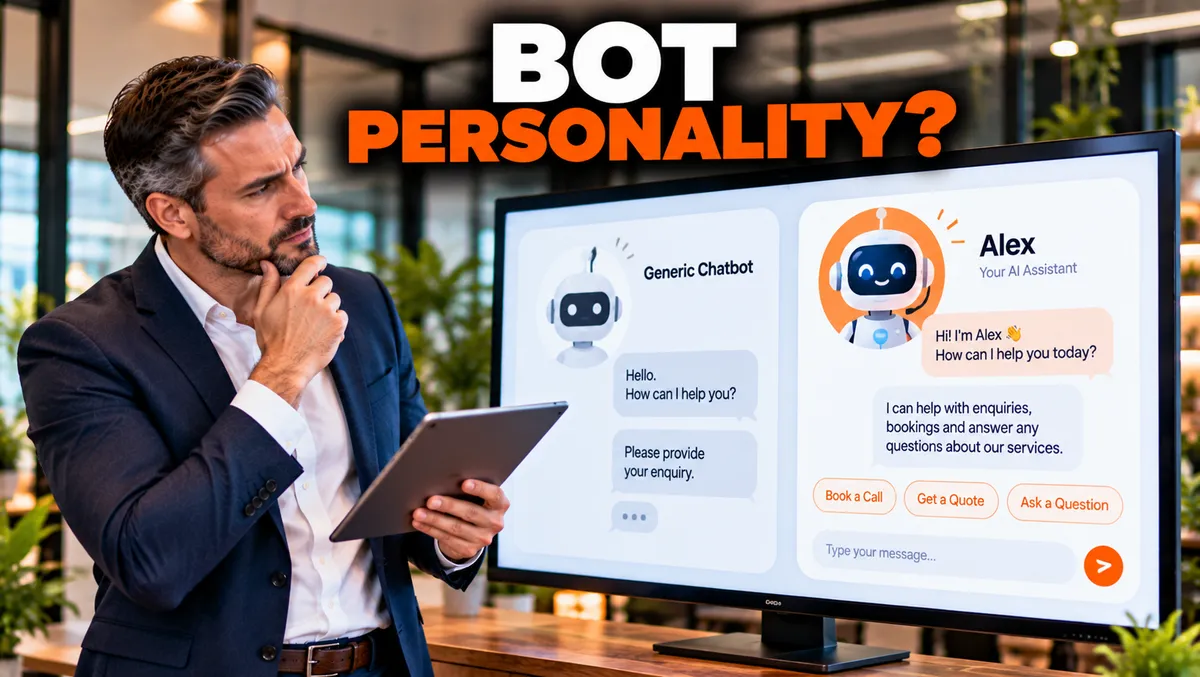
Every chatbot build reaches the same moment. Someone asks, "What are we going to call it?" Behind that question sit bigger ones. Should it sound like a person? Should it have a face? Should it joke? At Bolder Digital, our answer is that a chatbot should have a clear, consistent voice, a simple name that does not pretend to be human, and a personality that serves the customer instead of showing off.
What the Research Actually Says
The evidence on human like chatbots is genuinely mixed. Several studies find that human touches, such as a name, informal language, and a friendly style, make a chatbot feel warmer and can lift enjoyment, trust, and satisfaction. Others find that going too far backfires.
One widely cited study, published in the Journal of Marketing, found that angry customers were less satisfied with a human like chatbot than with a plain one. The reason was inflated expectations. A bot with a name and a friendly face suggests it will behave like a capable person, and when it fails, the gap is bigger. Calm customers, by contrast, showed no meaningful penalty and slightly preferred the human touch.
Other research points to a similar pattern, where a moderate amount of personality works best and an overly human presentation can feel uncomfortable. The practical takeaway is balance. Give the chatbot a personality that helps, and do not oversell what it can do.
Be Honest That It Is an AI
This is the line we do not cross. A chatbot should make clear it is an AI assistant. The OAIC's guidance on commercially available AI products says public facing tools such as chatbots should be clearly identified as AI. Presenting a bot as a human staff member also invites misleading conduct concerns under the Australian Consumer Law, quite apart from the trust you lose when people realise.
In practice, that rules out a stock photo of a smiling person with a human first name and no label. A name is fine. A fake human identity is not.
The Naming Options
There is a spectrum, and most local businesses sit comfortably near the middle.
No persona. A label such as "Chat with our assistant." It is clear and safe, but a little flat.
A branded helper. Your business name plus a role, such as "Smith Plumbing Assistant" or "Booking Assistant." It is clear, brand consistent, and hard to misread.
A named character. A first name, perhaps an avatar, and a defined personality. It can add warmth, but carries the expectation and honesty risks above, so it needs a clear AI label.
A mascot or non human character. An animal, an object, or an invented figure. It signals playfulness and avoids pretending to be a person.
For most trades, clinics, and professional firms, the branded helper is the sensible choice. A hospitality or retail brand with a lighter tone has more room to play.
Match the Personality to the Job
Personality is mostly tone. A useful way to define it is to pick three traits and three things to avoid.
A law firm or accountant might choose calm, clear, and respectful, and avoid jokes and exclamation marks.
A tradie might choose friendly, practical, and quick, and avoid corporate waffle.
A cafe or salon might choose warm, relaxed, and a little playful, and avoid anything pushy.
Tone matters most when something goes wrong. A cheerful, joking reply to a frustrated customer feels worse than a plain, helpful one. Keep humour light and rare, and drop it the moment someone sounds stressed or upset.
For an Australian audience, a natural, friendly register works well. Forced slang does not. If a customer would find it odd from your front desk, they will find it odd from your chatbot.
Think About Gender Deliberately
Most chatbots and voice assistants have defaulted to female names, voices, and caring personalities. UNESCO's report on the topic argued that this reinforces stereotypes of women as helpful and subservient. Businesses can choose to avoid it. Many do, with neutral names or role based names such as "Booking Assistant."
If you do choose a gendered name, be deliberate about it, and avoid pairing it with a script that sounds eager to please at any cost. For voice AI, the same question applies to the voice itself.
Competence First, Personality Second
A friendly name does not make up for wrong answers. The expectation research makes this plain. The more human the persona, the more it needs to work, and the harder a failure lands. That is why we build the knowledge, the handoffs, and the testing before we choose the name.
A few habits keep a persona honest:
Introduce itself plainly, for example, "Hi, I'm the Smith Plumbing AI assistant. I can help with bookings and common questions, and I'll connect you with the team if you'd rather."
Say what it cannot do, and hand over quickly.
Own mistakes simply, without elaborate apologies or jokes.
Never claim feelings or experiences it does not have.
Write a One Page Persona Brief
Before launch, put the persona on a single page:
the name and the role line
three tone traits and three things to avoid
how it introduces itself, including that it is an AI
how it handles not knowing something
how and when it hands over to a person
two or three example replies in your voice
Then test it with real customers or staff, and revisit it after a few weeks of real conversations.
How Bolder Digital Approaches This
At Bolder Digital, we start with your business and your customers, not a character. We write a short persona brief, choose a name that fits and is clearly an AI, build the knowledge and handoffs first, and test the tone against difficult conversations, including upset customers, before it goes live. You can see how this fits into our AI Chatbot service.
The Bottom Line
A chatbot should have a name and a voice, but not a disguise. Choose a simple, brand fitting name, label it as an AI, keep the tone suited to your customers, avoid gender defaults without thought, and put competence ahead of charm. A modest persona that works beats a charming one that overpromises.
Frequently Asked Questions
Should my chatbot have a human name?
It can, but be careful. A human first name can add warmth, but it also raises expectations and, without a clear AI label, risks misleading people. A branded helper name or role name, such as a booking assistant, is usually safer.
Do I have to tell customers it is an AI?
It is strongly recommended. OAIC guidance says public facing chatbots should be clearly identified as AI, and presenting a bot as a person risks misleading conduct concerns. Confirm the wording with a lawyer if you work in a regulated field.
Does a friendly personality improve results?
Sometimes. Several studies find human like touches improve satisfaction and trust, but research also shows angry customers can be less satisfied with a very human like bot when it falls short. A moderate personality backed by a bot that works is the safer approach.
Should a chatbot be male, female, or neutral?
There is no single right answer. Most chatbots have defaulted to female names and voices, which critics say reinforces stereotypes. Many businesses choose neutral or role based names. Whatever you choose, make it a deliberate decision.
How should a chatbot behave when it cannot help?
Plainly. It should say what it cannot do, avoid guessing, and hand the conversation to a person quickly, without jokes or elaborate apologies.
Jarryd Holmes, Founder & Owner, Bolder Digital | Prospect Vale, Tasmania | bolderdigital.com.au