AI Chatbot ROI: The Real Numbers Behind Adding One to Your Website
If Voice AI ROI content runs hot, chatbot content runs hotter. Search this topic and you will find claims of conversion boosts in the hundreds of percent and case studies tripling revenue in months. At Bolder Digital, we treat every one of those numbers with real scepticism before we ever put a figure in front of a client, and I want to walk you through why, along with a genuine, conservative calculation you can actually trust.
The Honest Warning Most of This Content Skips
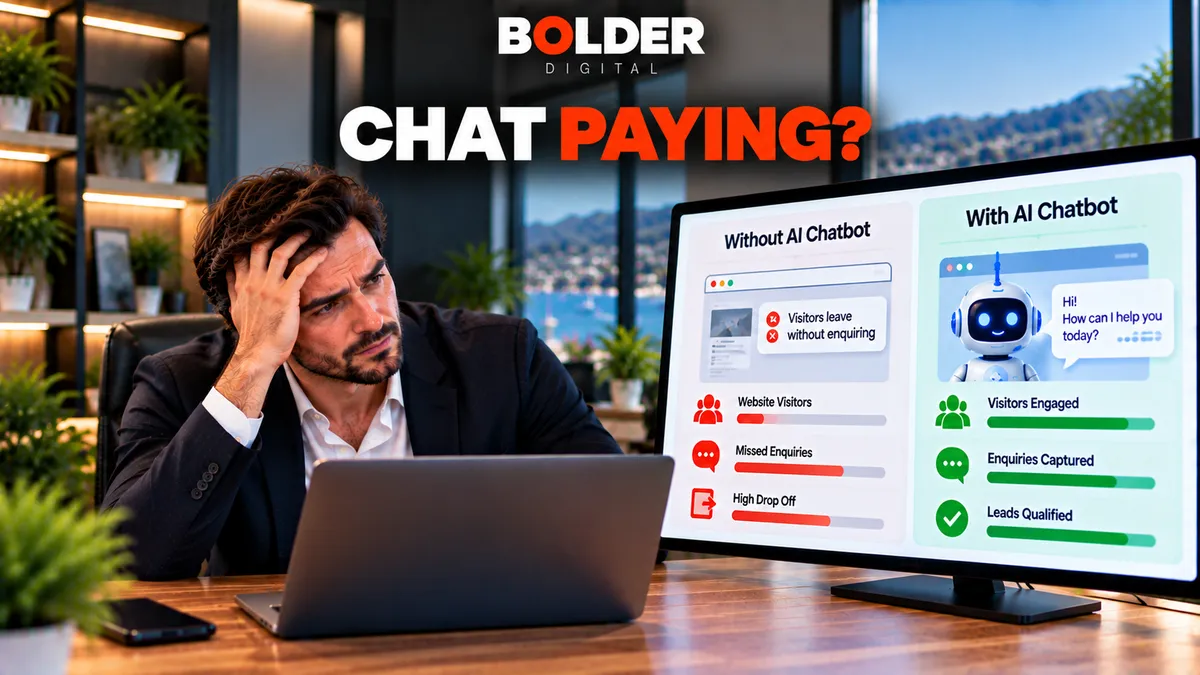
Before getting to the numbers, one genuinely important caution deserves to be said plainly. Industry research on B2B chatbot performance points to a real risk sitting underneath all the enthusiasm. If a meaningful share of visitors who engage with your chatbot bounce away afterward, the chatbot is not neutral. It can be actively net negative for conversion, because a poor automated interaction trains visitors to distrust the next one they encounter, on your site or anywhere else. Deploying a chatbot is not automatically the same thing as improving your conversion rate. A badly built one can genuinely make things worse.

Why "Chat Converts Higher" Doesn't Mean What It Sounds Like
You will see figures suggesting engaged chat visitors convert at somewhere around ten to twenty percent, considerably higher than a typical site wide baseline sitting around two to three percent. This is genuinely true and also genuinely easy to misread. Someone who chooses to open a chat window is already showing higher intent than the average visitor, which means a meaningful share of these conversions would likely have happened anyway, through a contact form or a phone call. The real ROI question is not how many people who chat go on to convert. It is how many of those conversions are genuinely incremental, people who would otherwise have left without converting at all.
Three Value Streams Worth Counting Separately
A genuine chatbot ROI calculation is built from a few distinct streams, not one vague number.
Incremental conversion lift.Genuinely new conversions from visitors who would otherwise have left, not ones who would have found another way to convert regardless.
After hours capture.Visitors browsing outside business hours who get a real answer instead of finding nothing and simply leaving.
Support cost avoided.Repetitive questions your team no longer needs to personally answer one by one.
Treating these separately, and being honest about overlap between them, is what separates a defensible number from a marketing claim.
A Conservative, Small Business Worked Example
Take a business getting a genuinely modest two thousand website visitors a month, converting at roughly two and a half percent currently, fifty leads a month. A properly built chatbot engages a share of that traffic, and after accounting honestly for visitors who would have converted through your contact form anyway, assume a conservative net lift of just three genuinely new leads a month, people who would otherwise have left without converting at all. At an average customer value of two hundred dollars, that is roughly seven hundred and twenty dollars a month, or around eighty six hundred dollars annually, from incremental conversion alone.
Add a modest, separate estimate for after hours enquiries genuinely captured that would otherwise have simply left the site, say two extra leads a month at the same value, another forty eight hundred dollars annually. Against a genuinely built chatbot costing a few thousand dollars in setup and a modest ongoing monthly fee, you land at a real, defensible first year return well above the cost of the platform, without needing to claim anything close to a three hundred percent lift to make a solid case.
Why Nobody's Actually Measuring This Properly
Here is a detail worth knowing honestly. A significant share of businesses running a chatbot are not actually tracking its performance against real conversion goals at all, which is exactly why the internet is full of dramatic, unverifiable claims rather than consistent, modest, believable ones. If your own business cannot currently say with confidence how many genuinely incremental conversions your chatbot produced last month, that is the first thing worth fixing before trusting any ROI number at all, including one I have just given you.
How Bolder Digital Approaches This
Before we recommend a chatbot, we work through this exact calculation with the client, their real traffic, their real baseline conversion rate, and a genuinely conservative estimate of net new leads rather than an inflated figure borrowed from someone else's case study. Once it is live, we track actual conversion data rather than just conversation volume, since a chatbot that talks to a lot of people and converts none of them incrementally is not delivering the return the volume alone might suggest.
You can see how this fits into ourAI Chatbot service, built around a genuine, measurable return for your specific traffic and business, not a number borrowed from a case study built for an entirely different business.
The Bottom Line
Genuine chatbot ROI is considerably more modest, and considerably more believable, than most of what gets published about it. Built from a conservative estimate of truly incremental conversions, counted separately from after hours capture and support time saved, and checked honestly against the risk that a poorly built chatbot can hurt conversion rather than help it, a real calculation regularly still lands well above the cost of the platform. It just does not need a three hundred percent headline to get there.

Frequently Asked Questions
Why do chatbot ROI claims online vary so wildly?
Partly because a significant share of businesses running a chatbot are not tracking its actual conversion impact at all, leaving the loudest, most dramatic case studies to dominate what gets published, rather than the more common, modest, genuinely typical outcome.
Does every visitor who converts after chatting count as chatbot ROI?
No, and this is the most common mistake. A meaningful share of people who use chat would likely have converted anyway through a contact form or phone call. The real return comes from genuinely incremental conversions, visitors who would otherwise have left without converting at all.
Can a chatbot actually hurt conversion rather than help it?
Yes, genuinely. If a significant share of visitors who engage with it bounce away afterward, a poorly built chatbot can be net negative, since a bad automated interaction damages trust in future automated engagement, not just that single conversation.
What is a realistic first year ROI to expect from a small business chatbot?
A conservative, honestly built calculation, counting genuinely incremental conversions, after hours capture, and support time saved separately, regularly produces a real return well above the platform's cost, without needing to rely on the more dramatic, unverifiable figures often quoted online.
Jarryd Holmes, Founder & Owner, Bolder Digital | Prospect Vale, Tasmania |bolderdigital.com.au