
AI Chatbot Training: What Actually Goes Into Teaching It Your Business
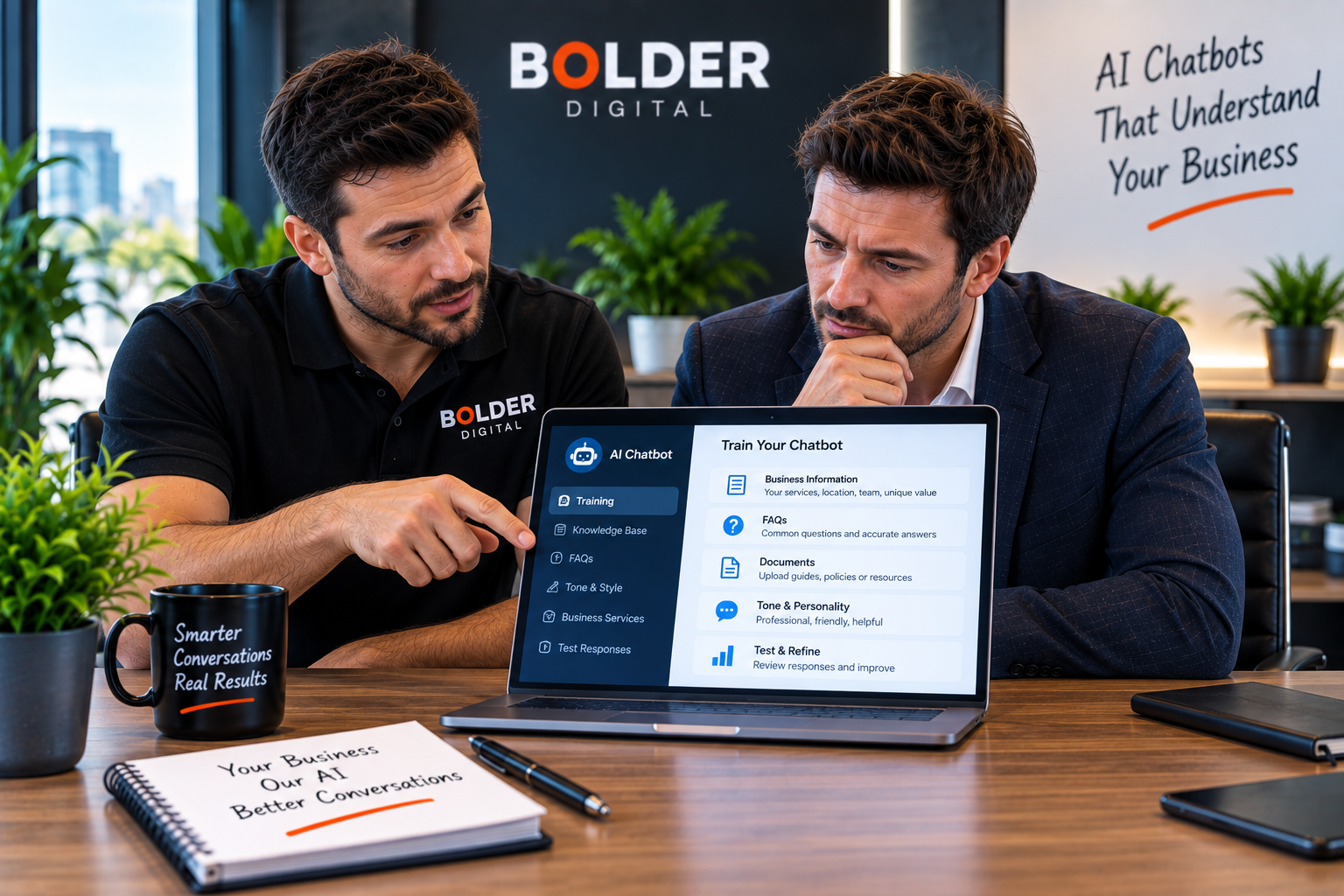
Training a chatbot means something genuinely specific, and it is worth understanding properly before you assume it works the way people often imagine. It does not mean teaching a raw system to somehow absorb everything about your business in one go. It means feeding it your actual content, your FAQs, your policies, your product or service details, and configuring it to answer strictly from that content, rather than filling gaps with whatever sounds statistically plausible.
Let me walk you through exactly how this works, and where it genuinely goes wrong when done carelessly.
How This Actually Works: Retrieval, Then Response
The underlying mechanism behind almost every properly built chatbot today works in two distinct steps. First, it searches through your actual uploaded content, your website pages, your documents, your policy pages, to find the specific information genuinely relevant to what someone just asked. Second, it uses that retrieved information to generate a natural sounding response, rather than answering purely from whatever general knowledge the underlying AI model happened to be trained on originally. This process is commonly called retrieval augmented generation, and understanding this two step process matters because it directly explains both what makes a chatbot genuinely reliable and exactly where it can go wrong.
Why a Chatbot Confidently Makes Things Up
A chatbot without properly grounded content, or one relying purely on its own general training rather than your actual current information, will genuinely fill gaps with whatever sounds plausible, and it does this confidently, without any obvious sign it is guessing. This matters enormously for a business, since your policies, your pricing, and your promotions all change constantly, and an ungrounded chatbot has no way of knowing your current reality has shifted from whatever it was trained on originally.
The Uncomfortable Truth: It's Usually Your Documents' Fault, Not the AI's
Here is something genuinely worth understanding, because it reframes where the actual responsibility sits. Most chatbot hallucinations are not really caused by the underlying AI model being unreliable. They are caused by poor business knowledge hygiene, outdated pages still sitting in the content the bot was trained on, genuine contradictions between an old policy page and a newer one, or informal, loosely worded content that was never actually meant to be read by an automated system in the first place.
The Cleanup That Actually Prevents This
Before a chatbot ever gets trained properly, the source content itself needs genuine attention. This means removing outdated pages and duplicate information entirely, resolving any genuine contradictions between different documents, adding explicit, clearly worded policy language with effective dates rather than vague, informal phrasing, and being deliberate about what the bot should treat as confidently answerable versus what genuinely needs a human. This is not a minor administrative step. It is the actual foundation everything else depends on.
Marking the Topics That Always Need a Human
A genuinely well trained chatbot has an explicit list of topics it should never attempt to answer confidently on its own, billing disputes, refund decisions, cancellations, and anything with real legal or compliance weight. These are marked deliberately as requiring a human handoff regardless of whether the knowledge base technically contains something resembling an answer, since the actual risk of getting these specific topics wrong is considerably higher than the risk with a general product question.
Why Updates Don't Require Starting Over
One genuinely useful property of a properly built chatbot is that updating your actual content, a new policy, a changed price, an updated service offering, does not require retraining the underlying system from scratch. You update the source document, and the chatbot has access to the current version essentially immediately, since it is always retrieving from your live, current content rather than a static snapshot taken once and frozen in time. This is exactly why ongoing content maintenance matters so much. A chatbot is only ever as current as the documents it is actually drawing from.
Getting This Set Up Properly
Properly training a chatbot means genuinely cleaning and structuring your actual business content first, deliberately marking which topics require human handoff, and setting this up as an ongoing discipline rather than a one time upload. This is exactly what our AI Chatbot service is built around, grounded in your actual, current business information rather than a generic script that quietly drifts out of date the moment something in your business changes.
The Bottom Line
Training a chatbot properly is genuinely a content discipline as much as a technical setup task. A chatbot answering confidently from clean, current, well structured business content is a genuine asset. One answering from outdated, contradictory, or poorly organised source material will eventually give a customer a confidently wrong answer, and the fix is rarely the AI itself. It is almost always the quality of the actual information it was given to work from.

Frequently Asked Questions
What does it actually mean to train an AI chatbot on a business?
It means feeding the chatbot your actual content, FAQs, policies, and product or service details, and configuring it to answer strictly from that material rather than its own general knowledge, so answers reflect your current, real business rather than a generic guess.
Why do chatbots sometimes give confidently wrong answers?
This typically happens when the chatbot relies on outdated or poorly structured source content, or when it fills a genuine gap in its knowledge with something that merely sounds plausible. Most of these errors trace back to the quality of the underlying content rather than the AI itself.
Does updating a chatbot's information require rebuilding it from scratch?
No, not with a properly built system. Updating the actual source document, a policy, a price, a service detail, gives the chatbot access to the current version essentially immediately, since it retrieves from your live content rather than a fixed, frozen snapshot.
Should a chatbot ever be allowed to answer questions about billing or refunds on its own?
Generally no. These topics, along with cancellations and anything with real legal weight, should be explicitly marked for human handoff regardless of whether the knowledge base technically contains an answer, since the cost of a genuine mistake here is considerably higher than with a general product question.