Voice AI and Your Business Number: Why Caller ID Still Matters
When people think about voice AI, they think about the voice, the script, and the booking. The humble phone number gets forgotten. Yet caller ID decides two things that matter a great deal: whether your agent knows who is calling, and whether customers answer when you call them back. At Bolder Digital, we treat the phone number as part of the system design, not an afterthought, because a lot of quiet problems begin there.
Caller ID Works in Two Directions
There are two sides to it, and they fail in different ways.
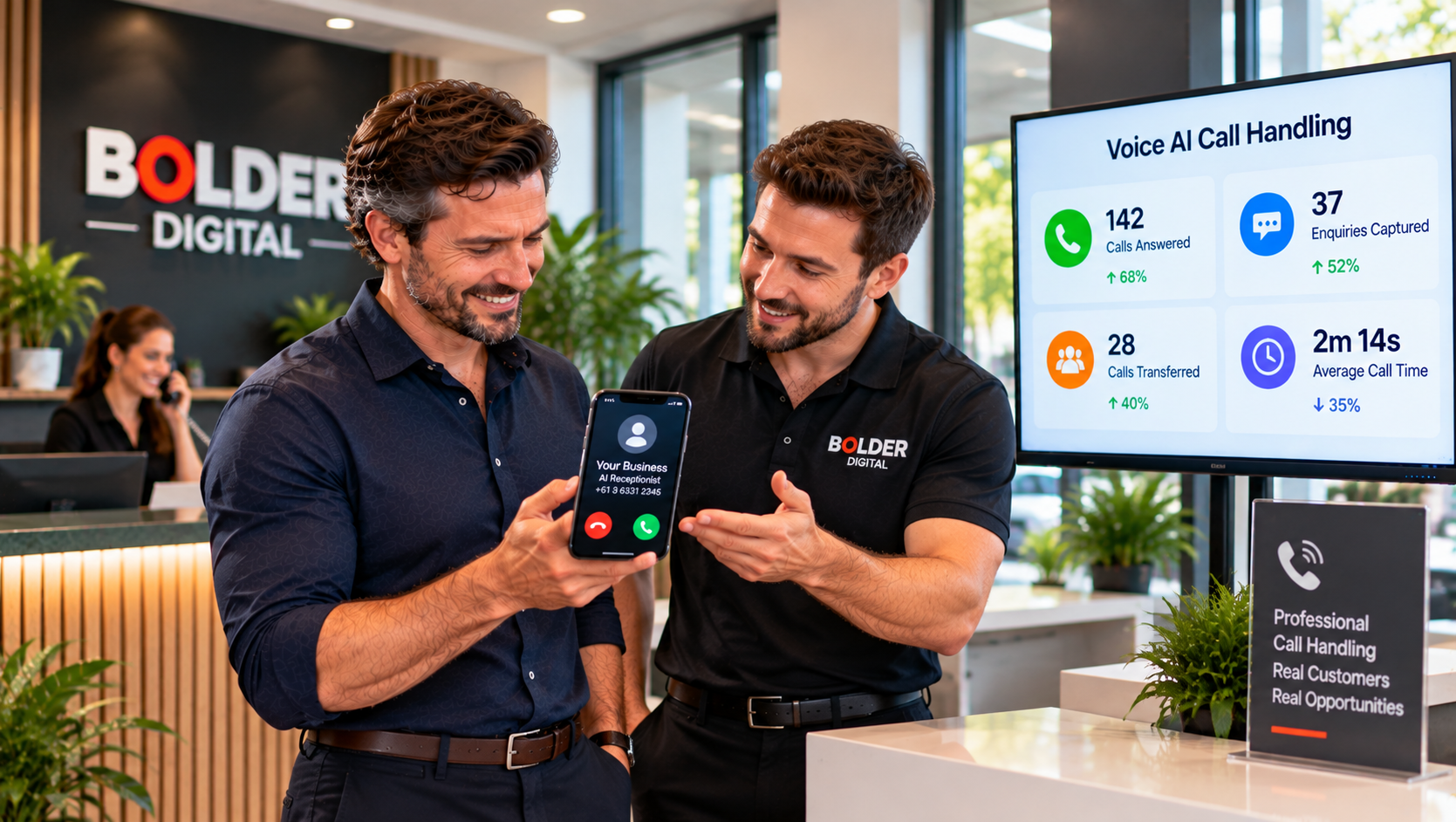
Inbound: the number the caller shows when they ring you. Your agent can use it to recognise returning callers, look up their record, and send follow ups.
Outbound: the number you show when you ring or text them. It decides whether they pick up, ignore you, or report you as spam.
Voice AI affects both, so it is worth getting each one right.
Inbound: Does the Original Caller’s Number Get Through?
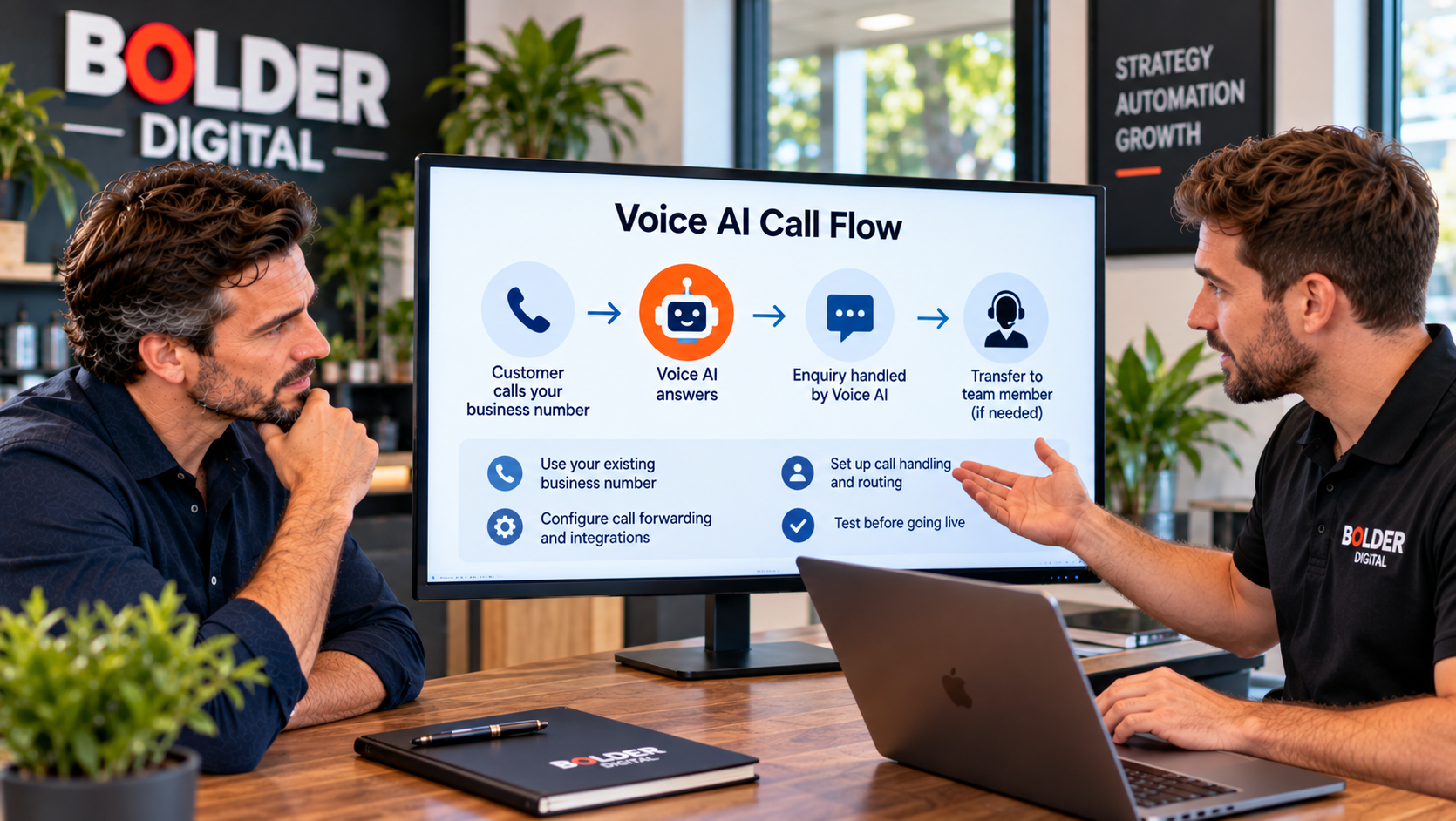
Most small businesses keep their existing number and forward calls to the AI, either all the time or only when nobody answers. That is quick, reversible, and sensible. But forwarding can change what the AI sees.
When a call is forwarded, some setups pass on the original caller’s number, and some replace it with your own number or a generic one. If the original number does not come through, the agent loses a lot:
it cannot recognise returning callers
it cannot match the caller to a record, so your CRM fills up with duplicates
it cannot send a text follow up to the right person
every call looks like it came from your own line
Guides on connecting AI agents to existing numbers all make the same point. Make sure your forwarding passes the caller’s number through, and test it before you trust it.
Conditional Forwarding Is Often the Gentlest Start
With conditional forwarding, your phone rings first, and the call goes to the AI only if you are busy or do not answer. It lets a human try first, and it keeps the AI as a safety net. Two traps to avoid:
Loops. Do not forward calls to the AI’s texting number, since that can send calls round in circles. Use the specific forwarding number your provider gives you.
Ring time. Set it so the call is not forwarded too early, or abandoned by the caller before the AI answers.
What the AI Can Do With the Number
When caller ID comes through properly, it makes the experience much smoother.
Recognise a returning caller. It can pick up the context from earlier contact. Do this carefully. Use it to help, such as “welcome back”, and be cautious about reading out details.
Avoid duplicate records. It can match the number to an existing contact instead of creating a new one.
Send a text. Confirmations, links, and directions can go straight to the caller.
Offer a callback. It can confirm “is this the best number to reach you on?” instead of assuming.
Always confirm rather than assume. The number someone rings from is not always the one they want you to use. It may be a work phone, a shared line, or a landline that cannot receive texts.
Withheld and Private Numbers
Some callers hide their number. A good agent copes with that gracefully. It should ask for a callback number, read it back, and carry on. Interestingly, calls to 13, 1300, and 1800 numbers generally still capture the caller’s number for billing, so a withheld caller to one of those lines may still be identifiable to your business, depending on your provider.
Caller ID Is Not Proof of Identity
This is the part many businesses miss. A number on the screen is not proof of who is calling. Caller ID can be faked, and the ACMA warns that people should not rely on the displayed number. Australian telcos block large numbers of scam calls, but spoofing has not disappeared.
So design your agent in tiers:
Low risk questions, such as opening hours or general information, need no identity check.
Higher risk actions, such as changing a booking, cancelling something, or sharing personal details, should not rely on caller ID alone. Ask for something only the real customer would know, or send a confirmation to the number on file.
Never let the displayed number be the only gate to something sensitive.
Outbound: Why Customers Ignore Unknown Numbers
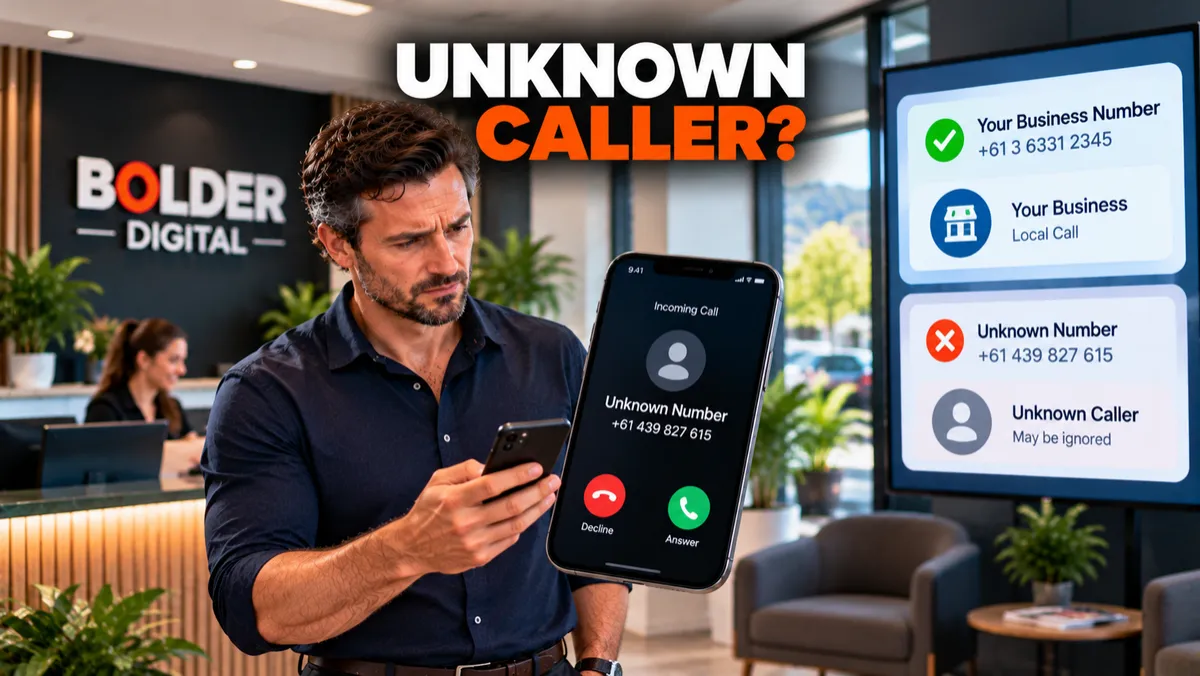
Now the other side. When your system calls or texts someone back, such as after a missed call, a form submission, or a quote, they see a number. If it is unfamiliar, many people will not answer. Some phones label it spam, and some networks may block it.
Australia’s anti scam framework matters here. An industry code registered with the ACMA requires telcos to identify, trace, and block scam calls and scam texts. Provider guides say this includes blocking calls that present invalid or non conforming caller ID, such as unallocated or impossible numbers. For a business, the practical rules are:
Present a valid Australian number that you are entitled to use and that people can call back.
13, 1300, and 1800 numbers are generally inbound only, so they usually cannot be used as your outbound caller ID.
Use your recognised business number, the one customers see on your website and Google profile, where your setup allows.
Do not rotate through random numbers to dodge flagging. Consistency builds recognition, and the point of caller ID is that people know it is you.
Warm Up the Call
A call from an unknown number lands better when the customer expects it. Send a text or email first, such as “Thanks for your enquiry, we will call from this number in the next few minutes.” Call back quickly, while the enquiry is fresh, and do not call repeatedly. Outbound calling rules also limit calling times and require callers to show a number that can be reached, and some calls are covered by the Do Not Call Register, so check the rules for your use.
Branded Calling and Sender IDs
Some phones and networks are starting to show verified business names and reasons for calls, and the national effort includes an SMS sender ID register. Availability in Australia is still developing and varies by network and phone, so ask your provider what is available and do not rely on it yet.
Keep, Port, or Add a Number?
Keep your number and forward. Quickest and easiest to undo. The risk is caller ID not passing through, so test it.
Port your number to the voice platform. More control, but it takes longer and is harder to reverse.
Add a separate number just for the AI. Fine for testing or for outbound use, but avoid scattering your public identity across several numbers.
For most Tasmanian businesses, a local number also signals that you are local. All landlines across the state share the 03 area code, so it will not identify your region, but a familiar number still builds trust.
Privacy and Compliance Still Apply
A caller’s number is personal information, and so are call logs. Keep access limited, decide how long you will store them, and make sure the AI disclosure and recording announcement play at the start of every call, as we covered in our compliance guide.
A Number Test Checklist
Ring from a mobile, a landline, and with your number withheld, and check what the agent sees.
Check that the original caller’s number reaches the agent and your CRM.
Make sure there are no forwarding loops, and the ring time is sensible.
Confirm texts arrive from a number customers recognise.
Look at how your outbound calls display on both an iPhone and an Android.
Check that withheld callers are asked for a callback number and it is read back.
Monitor answer rates on callbacks, and watch for any flagged numbers.
Make sure sensitive actions do not depend on caller ID alone.
How Bolder Digital Approaches This
At Bolder Digital, we plan the number setup before we build the agent. We choose forwarding or porting to suit your situation, test that caller ID passes through from different phones, set up record matching in your CRM, and make sure your callbacks and texts come from a number customers recognise. You can see how this fits into our AI Receptionist service.
The Bottom Line
Caller ID is a small detail with big consequences. Pass the caller’s number through to the agent so it can recognise and follow up. Treat it as a helpful clue, never as proof of identity. And when you call back, show a valid, familiar number and warm the customer up first. Get the number right, and the rest of the voice AI works better.
Frequently Asked Questions
Will my voice AI see the caller’s number if I forward calls?
It depends on your phone system and carrier. Some forwarding passes the original caller’s number and some replaces it, so test it from different phones before relying on it.
Can I use caller ID to verify who is calling?
Not on its own. Caller ID can be faked, so for anything sensitive, such as changing a booking or sharing personal information, use a second check as well.
Why do customers ignore callbacks from my AI?
Many people do not answer unknown numbers, and phones or networks may label them as spam. Use a valid number customers recognise, send a text first so the call is expected, and call back quickly.
Can I use my 1300 number for outbound calls?
Generally no. 13, 1300, and 1800 numbers are usually inbound only, so outbound calls need a valid number you are entitled to use.
Should I keep my number or port it?
Keeping it and forwarding is the quickest and easiest to undo, as long as caller ID passes through. Porting gives more control but takes longer. Choose based on your phone setup and test either way.
Jarryd Holmes, Founder & Owner, Bolder Digital | Prospect Vale, Tasmania | bolderdigital.com.au