
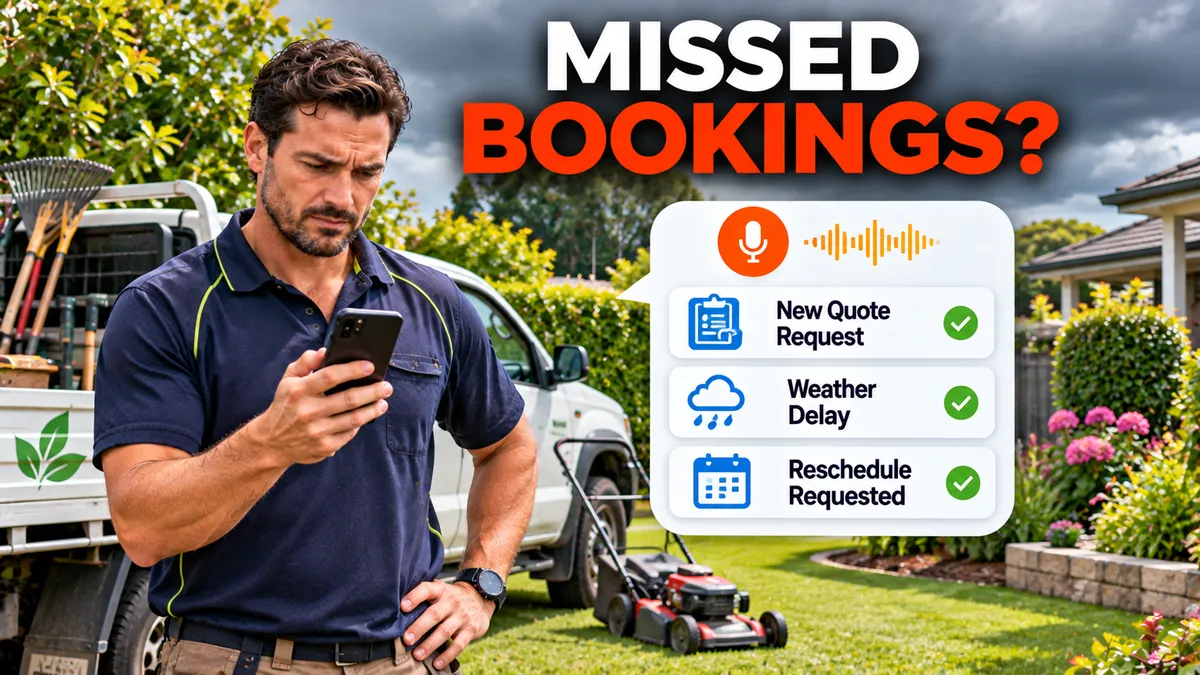
Voice AI for Landscapers and Garden Services: Seasonal Quotes and Weather Delays
It is early November in Tasmania, which means the phones of every garden business in the state are ringing. Spring has arrived, lawns have exploded, and everyone wants a quote, a clean up, or a mowing round started yesterday. Meanwhile, you are on a mower, a ride on, or a trailer, with a phone buzzing in your pocket that you cannot answer. At Bolder Digital, we see landscaping and garden services as one of the best fits for voice AI. Calls cluster in seasonal rushes, they come while you are working, and weather keeps rearranging the plan. But it only works if the agent understands what a garden business actually promises, and what it must never promise.
What Garden Business Calls Look Like
A garden business gets several very different calls on the same number.
Lawn and garden maintenance enquiries,such as a weekly or fortnightly mow, a first cut on an overgrown yard, or a spring clean up.
Landscaping and design enquiries,such as paving, retaining walls, new beds, turf, irrigation, and planting.
Tree, hedge, and green waste work.
Existing customers,asking “Are you coming today?”, wanting to skip a visit, or reporting a problem.
Material orders and deliveries,such as soil, mulch, and gravel.
Urgent calls,such as storm damage or a dangerous tree.
Each needs a different response, so the agent has to recognise the type of call early.
Seasonal Quotes: Different Jobs Need Different Answers
Not every job can be priced on the phone, and a good agent knows which can.
Maintenance workcan often be quoted from a few details:
the suburb, to check it is on a route you serve
the size of the block, and how much is lawn and garden
how often they want it done
the condition, such as regularly maintained or overgrown
access, including gates, steps, slopes, and dogs
any extras, such as edging, hedges, or green waste removal
From those answers the agent can give a “from” price or range, and mention that a first cut on an overgrown yard usually costs more than regular visits. It should say the price is confirmed once the team has seen the property or photos.
Landscaping and design workusually needs a site visit. Costs depend on levels, soil, access, drainage, materials, and what the client really wants. For these calls the agent should collect the basics, such as the type of project, the rough scale, the timing, and a budget range if the caller offers one, and then book a site visit or a design consultation. It should never invent a price for a project it has not seen.

Say What the Estimate Means
A line like this keeps expectations honest:
“Based on what you’ve told me, this kind of job usually starts from around this amount. The team will confirm the final price after they’ve seen the yard, and it only changes if things are different to how you described them.”
Digging Needs a Pause for Safety
Any job that involves digging, such as post holes, trenches, retaining walls, or irrigation, raises the question of what is underground. Before You Dig Australia is a free national referral service that sends plans of underground gas, electricity, water, and telecommunications assets to people planning to excavate, and it can take up to two working days. Its guidance is clear that the plans are not approval to proceed.
So the agent should:
ask whether the job involves digging
explain that the team checks for underground services before starting, which can add a short delay
not promise a start date for excavation before that check is done
It sounds minor, and it is the difference between a job and an incident.
Trees, Power Lines, and Dangerous Work
Tree work and anything near power lines needs qualified people and care. The agent should not quote or promise tree removal on the phone. It should take the details, ask about height, access, and nearby power lines, and pass the call to a qualified person. For storm damaged trees that are leaning, hanging, or on a building or power line, it should use fixed safety wording, such as keeping people away and calling emergency services for a dangerous situation or a power line down, then hand over immediately.
Herbicides, Burning, and Other Regulated Work
Some garden jobs carry rules. Commercial weed spraying generally needs the right licences, and in Tasmania the state’s natural resources department administers certificates and licences for chemical use. Burning green waste is subject to fire permits, and Tasmania’s Fire Permit Period began statewide on 29 October. The agent should:
never promise a spraying or burning service you are not licensed or permitted to provide
never give advice about chemicals or burning
refer those enquiries to someone who can answer properly
Weather Delays: Where the Calls Pile Up
A wet week creates a flood of calls. Rain, wind, wet ground, frost, and heat all disrupt a day, and the customers who call are worried about whether you are coming. Voice AI can take much of that pressure off, but it has to work from your schedule.
Here is how it works in practice:
The office, or the crew leader, updates the plan when weather changes it.
The agent reads that plan, and tells callers the truth: “The team has moved today’s visits because of the rain. Your visit is now on Thursday morning.”
If a customer’s visit has not been re-planned yet, it says so, and takes a message.
It never invents a new time that is not in the system.
Be honest about which work depends on the weather. A design consultation can go ahead in light rain, while mowing a sodden lawn can damage it and laying turf may be impossible. Your rules decide.
Telling Customers Before They Ask
Outbound messages help a lot. A short text or call to affected customers, such as “Rain has pushed today’s mowing to tomorrow”, prevents a wave of inbound calls and protects your reputation for reliability. Use text for routine notices, and reserve calls for customers who prefer them or for bigger changes. Make sure you are contacting existing customers about their service, with an easy way to opt out.
Recurring Rounds and the Spring Rush
Recurring work is the backbone of a maintenance business, and it is where a missed call costs most. A single new customer can mean a season of regular visits. A voice agent can:
book new recurring customers into the right day and area, based on your routes
handle skip and reschedule requests, according to your rules
explain what happens when a round is full, with an honest estimate of the wait, and add people to a list
offer a first clean up or a one off visit for those who are not ready for a regular service
When your books are full, an honest “we’re booked for the next few weeks, but I can put you on the list and the team will call as soon as there is space” is much better than silence.
Capture the Details Crews Need
For every booking, the agent should record:
the address and which gate or side to use
dogs and other animals, and whether the dog is loose
whether someone will be home
where green waste should go, and any bin arrangements
photos, sent by text where possible
any special instructions, such as plants not to touch
Do not take alarm codes or gate codes casually over the phone, where they end up in recordings. Collect them securely, after the booking.
Hand Over to a Person When It Matters
Pass these to your team with a summary:
landscape design and larger projects
commercial grounds and strata contracts
tree work and anything near power lines
complaints or damage to property
disputes about prices or missed visits
anyone who asks for a person
Sample Lines
New caller: “Thanks for calling. I’m the AI assistant for the garden team. Are you after regular mowing, a clean up, or a landscaping project?”
Quote: “For a regular mow on a block that size, it usually starts from around this price. The first cut on an overgrown lawn is a bit more, and the team confirms the final price from photos or a visit.”
Weather: “The rain has pushed today’s visits back. Yours is now moved to tomorrow morning, and the team will message you if that changes.”
Out of scope: “Tree work needs a qualified person to look at it, so I’ll take your details and have someone call you.”
Test the Awkward Cases
Before launch, try:
a caller wanting a quote for a retaining wall
an enquiry about removing a large tree near power lines
three weeks of rain and a wave of rescheduling calls
a caller who wants a spraying service you do not offer
a first cut on a very overgrown block
an angry customer whose visit was missed
Measure What Matters
calls answered during peak season, including on the mower
enquiries that became quotes, site visits, and recurring customers
weather related calls handled without staff
missed visits and complaints
how many people are waiting for a round, and how long
How Bolder Digital Approaches This
At Bolder Digital, we start by writing down how you really quote, schedule, and handle weather. We build the agent around your service areas, routes, pricing rules, and safety limits, connect it to your calendar, and test it against the awkward calls before launch. You can see how this fits into ourAI Receptionist service.
The Bottom Line
For a garden business, the phone peaks exactly when your hands are busiest. A voice agent can answer every enquiry, quote the routine work honestly, book recurring rounds, and handle the flood of weather calls, while you stay on the job. Give it firm limits on digging, trees, chemicals, and burning, keep its information tied to your real schedule, and hand over quickly to a person when it matters. It keeps the work coming in, and the customers informed.

Frequently Asked Questions
Can a voice agent quote a lawn mowing job?
Yes, for routine work, using details such as the block size, frequency, condition, and access, with a “from” price and a note that the team confirms it from photos or a visit. For landscaping projects, it should book a site visit instead.
How does it handle weather delays?
By reading the schedule your office has updated, and telling customers the truth about their visit. It should not invent new times, and it should take a message if a visit has not been re-planned yet.
What should it say about digging jobs?
That the team checks for underground services before starting, which can add a short delay, and that it cannot promise an excavation date until that is done.
Should it quote tree work?
No. Tree work and anything near power lines needs a qualified person. The agent should take the details and hand over, using fixed safety wording for dangerous situations.
Can it manage a waiting list in the spring rush?
Yes. When your rounds are full, it can be honest about the wait, take the caller’s details, and add them to a list for the team to call.
Jarryd Holmes, Founder & Owner, Bolder Digital | Prospect Vale, Tasmania |bolderdigital.com.au