Voice AI for Multi-Location Businesses: One Number, Several Sites
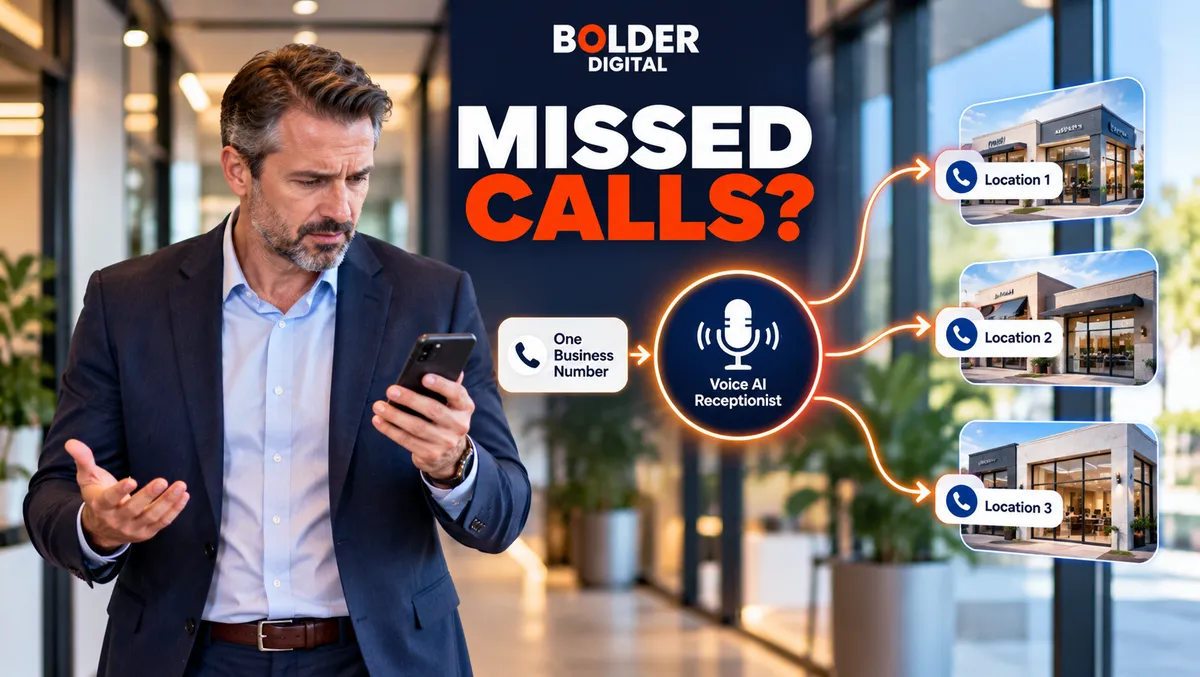
A business with two or more sites has a phone problem that a single site never meets. Every location has its own hours, staff, services, and calendar. A customer ringing “the business” does not care about any of that. They want the right answer for the place they plan to visit. At Bolder Digital, we see this as the central design question for voice AI across several locations: how do you answer one brand with many different truths?
A Tasmanian Example That Shows the Problem
Tasmania’s public holidays are regional. This month alone, the Royal Hobart Show falls on Thursday 22 October and is observed in southern Tasmania. Recreation Day falls on Monday 2 November and is observed in northern Tasmania, but not in the Hobart area, which has the Royal Hobart Regatta in February instead. The Royal Launceston Show was just held on Thursday 8 October across Launceston, West Tamar, Meander Valley, and several other northern council areas. The north west has its own show days.
So a business with a Hobart site and a Launceston site can be closed in one place and open in the other on the same day. A voice agent that quotes a single set of hours will tell somebody the wrong thing, confidently, on exactly the days it matters most. That is the whole challenge in miniature.
Three Ways to Set Up the Numbers
There are three common approaches, each with trade offs.
One number per location. Each site keeps its own number, and each number routes to the agent with that site’s details loaded. It is the simplest and most accurate approach. A caller who dials the Launceston number is clearly asking about Launceston. It also suits local search, since each Google Business Profile should show its own local number.
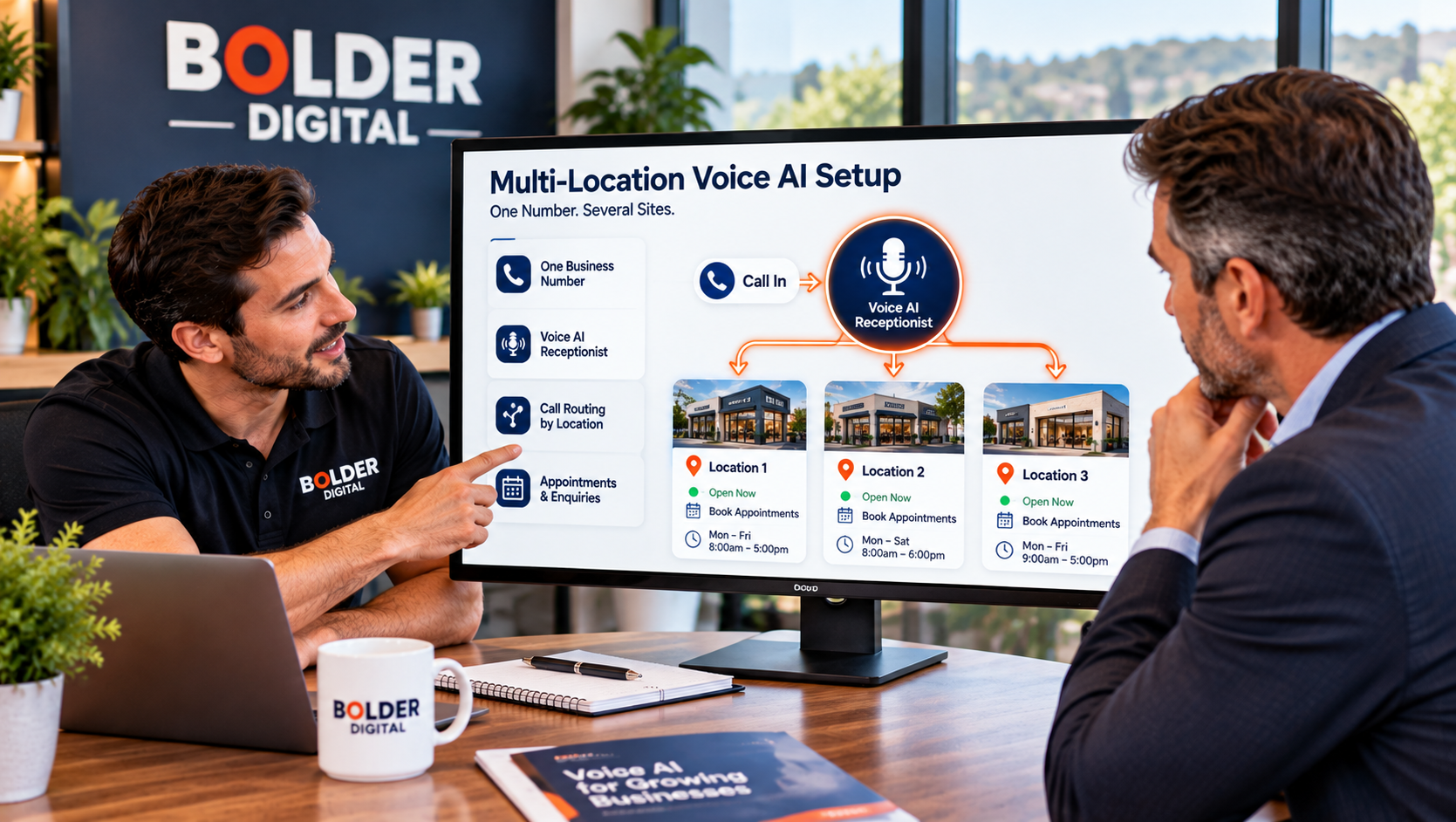
One main number. Callers ring a single brand number, and the agent works out which site they mean. It is tidy for advertising, but the agent has to find the location, which adds a step and a risk of error.
A hybrid. Each site keeps its local number, which forwards to a shared agent that knows which number was dialled. Callers still reach the right place, and you keep one agent to manage.
For most Tasmanian multi site businesses, we lean towards keeping local numbers, since they carry through to local search and avoid guessing.
Why Caller ID Is a Weak Clue Here
Overseas guides often suggest routing by the caller’s area code or zip code. That works poorly in Tasmania. Landline numbers across the whole state share the 03 area code, and many people ring from mobiles, which carry no location at all. If a single main number is used, the agent usually needs to ask what suburb or which site the caller means, or recognise them from an existing record.
What to Share and What to Keep Separate
A good multi location setup has one core and local overrides.
Shared across all sites:
brand voice and greeting style
general policies and frequently asked questions
compliance wording, such as the AI disclosure and recording announcement
escalation rules and the principles for handing over
Specific to each site:
opening hours, including regional public holidays
address, parking, and directions
services and prices, where they differ
staff, practitioners, and who handles what
the calendar the agent books into
the person or number to hand a call to
Update the hours for one site and only that site’s answers change.
Four Failures to Expect in Week One
Engineering write ups on multi location voice agents describe the same few problems, and we plan for each.
Wrong hours. One shared hours setting quotes the busiest site’s times for everybody.
The wrong calendar. A booking lands at the wrong location because the agent was not tied to a site before it started booking.
Shared staff double booked. Someone who works mornings at one site and afternoons at another appears free in two places at once.
Duplicate customer records. A customer seen at two sites ends up with two records.
The fixes are straightforward. Settle which location a call is about before the agent does anything else. Give each site its own tools and calendar. Handle shared staff through a busy and free check instead of sharing full calendars. Match customers on phone number or email before creating a new record.
What Happens When Someone Calls the Wrong Site
This happens constantly. A caller rings the Hobart number and wants Launceston, or asks whether there is a site closer to where they live. A well built agent recognises this, gives the right location’s address and hours, and either transfers the call or takes the booking for the correct site. If a site is closed, it can offer the nearest open one. A caller should never be left stranded because they dialled the wrong number.
Handoffs Need to Reach the Right Site
When a call needs a person, it has to go to someone at the correct location, with a summary. That means every site needs a current handoff contact, and a fallback if nobody answers there. Public holidays matter here too. On Recreation Day, the Launceston team is off, so the agent should route to someone who is working, or take a message for the next business day.
Reporting by Location
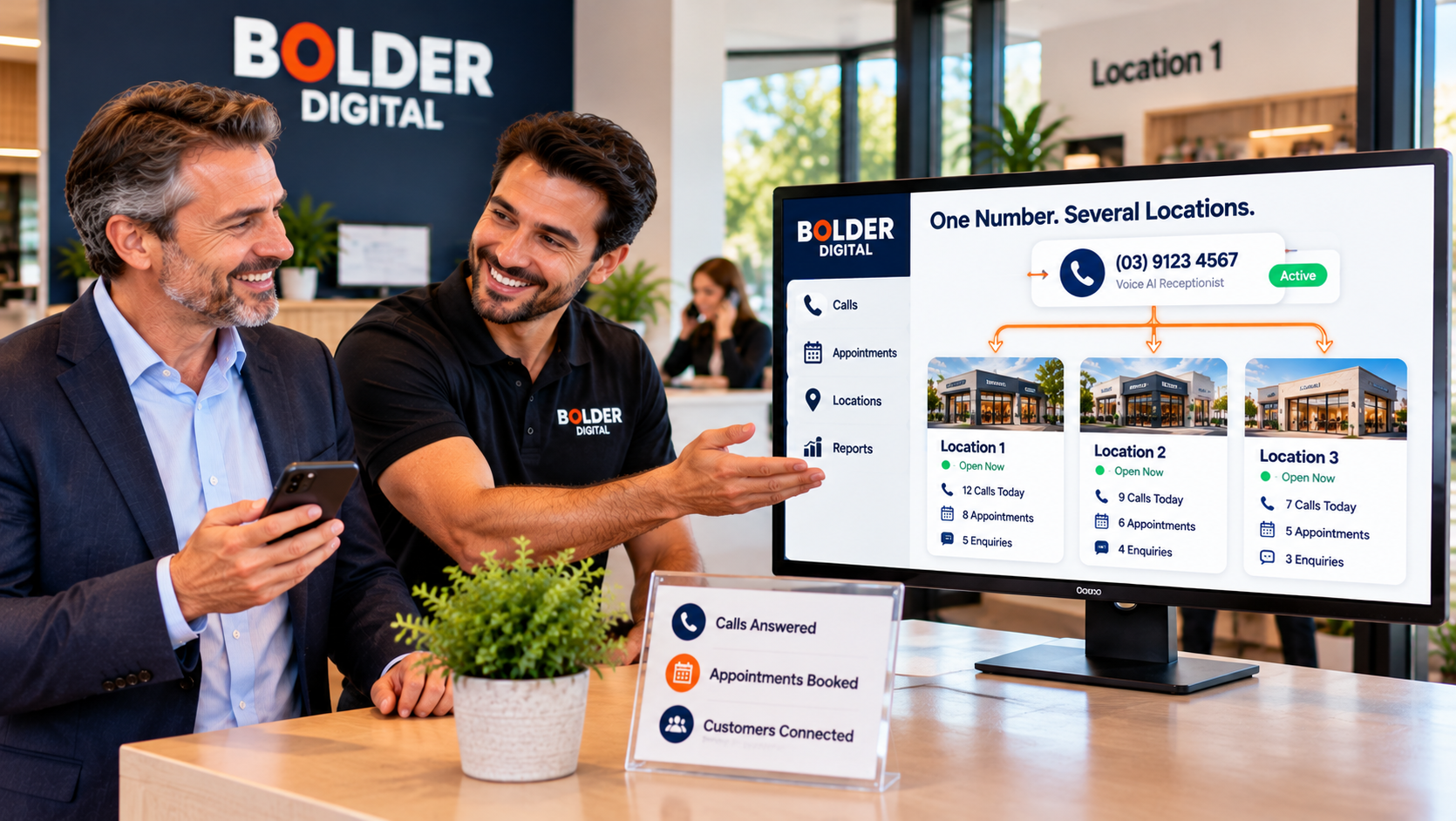
Having one agent across several sites should make your numbers clearer, not blurrier. You want to see calls answered, bookings made, handoffs, and missed calls broken down by location. That shows which sites are busiest, which struggle to answer, and where information needs tidying. It also lets you compare sites fairly.
Roll Out One Site at a Time
Turning on every location at once multiplies every mistake by the number of sites. A safer approach is to pilot one site alongside the front desk, check that every booking lands on the right calendar with the right person, and then add sites one at a time. Our first week and testing guides apply to each site in turn.
Compliance and Brand Consistency
The same rules apply at every site. The AI disclosure and recording announcement should be identical, with the wording agreed once and used everywhere. Ask where recordings and transcripts are stored, and who can access them at each location. Central control matters here, because a change to the compliance wording should reach every site together.
Local Search Still Works Site by Site
A single voice agent does not replace local search work. Each location still needs its own Google Business Profile, its own local number, and its own page, treated as its own market, which is the thinking behind our Hobart and Launceston suburb work. The agent and the local presence should agree on the details.
How Bolder Digital Approaches This
At Bolder Digital, we start by mapping each site’s real hours, holidays, staff, services, and calendars. We recommend a number strategy that suits your business, build one core agent with site specific overrides, test each location on real calls, and roll out one site at a time. You can see how this fits into our AI Receptionist service.
The Bottom Line
One number is easy to promote. One set of answers is not enough. A multi location voice agent works when it ties every call to a specific site before it speaks, keeps shared brand rules separate from local details, handles regional holidays and shared staff correctly, and reports by location. Build it that way, roll it out gradually, and customers get the right answer for the right place.
Frequently Asked Questions
Can one voice agent handle several locations?
Yes. A common approach is one core agent with site specific details for each location, such as hours, address, services, staff, and calendar. The key is making sure each call is tied to the correct site before the agent starts booking or answering.
Should each location keep its own phone number?
Usually, yes. It makes routing simple, keeps each number matched to its Google Business Profile for local search, and avoids the agent having to guess which site a caller means.
Why does Tasmania make multi location setups trickier?
Public holidays are regional, so a Hobart site and a Launceston site can be open or closed on different days. Landline numbers also share one area code, so caller ID is a weak guide to location.
What happens if a caller rings the wrong location?
A well built agent recognises the mismatch, gives the correct location’s details, and transfers the call or takes the booking for the right site, instead of leaving the caller stuck.
How should a multi location rollout be done?
One site at a time. Pilot a single location alongside the front desk, check that bookings land correctly, then add the next, so mistakes are caught before they multiply.
Jarryd Holmes, Founder & Owner, Bolder Digital | Prospect Vale, Tasmania | bolderdigital.com.au