
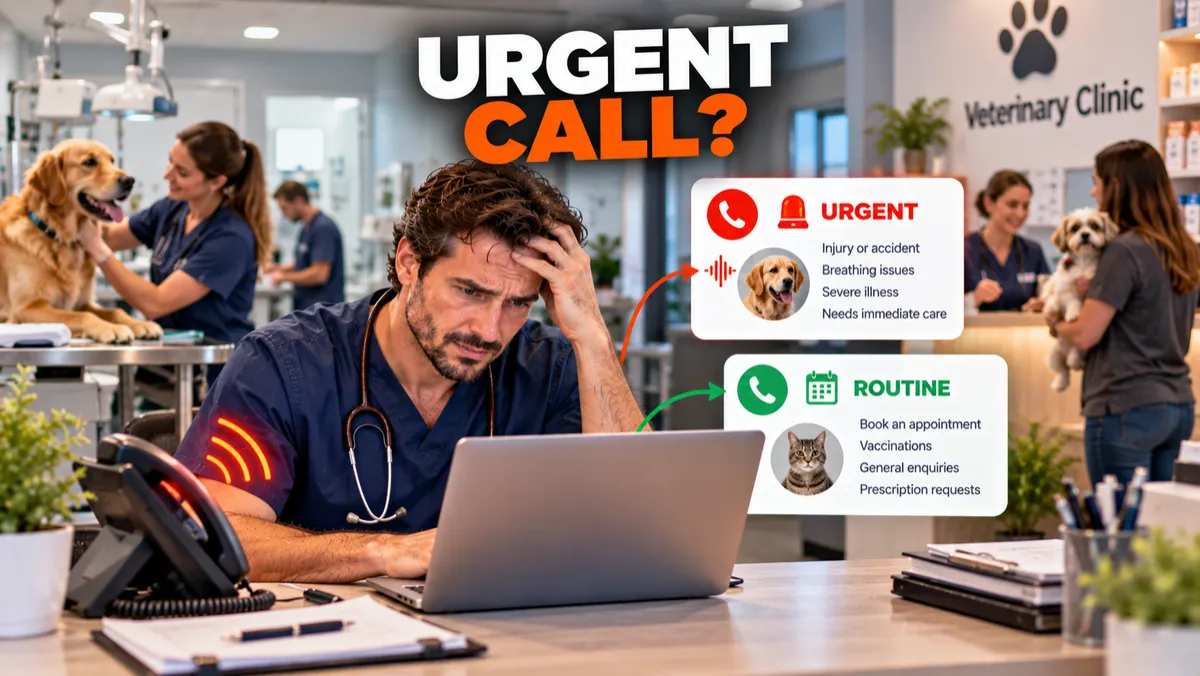
Voice AI for Veterinary Clinics: Urgent vs Routine Calls Handled Properly
A vet clinic's phone line carries two very different kinds of call. One is a puppy owner wanting to book a vaccination. The other is a frightened owner whose dog has just eaten something it should not have. Both ring the same number, and the front desk has to tell them apart in seconds, often while a surgery is running and nobody is free to answer. At Bolder Digital, this is why we see voice AI for veterinary clinics as a triage question first and a booking question second.
The Phone Problem Is Real and Structural
Vet-focused benchmarking, mostly from the United States, suggests the average small animal practice misses roughly one in four calls during business hours, and that most after hours callers hang up without leaving a message. Treat those as indicative, not exact. The pattern matches what most clinic managers already know. Calls arrive during surgeries, consults, and lunch breaks, and when the front desk is on the floor, the phone goes unanswered.
For routine calls, a missed call is a lost booking. For urgent ones, it can be far worse.
What Voice AI Can Safely Handle
The routine side is where voice AI earns its place quickly.
Booking and rescheduling vaccinations, check ups, dental appointments, and follow ups
Answering common questions about opening hours, fees, and what to bring
Taking new client details
Logging prescription refill requests for the vet to review
Passing messages to the right person
Running reminders for boosters and parasite prevention
None of this involves a clinical judgement, and all of it takes time away from the front desk.
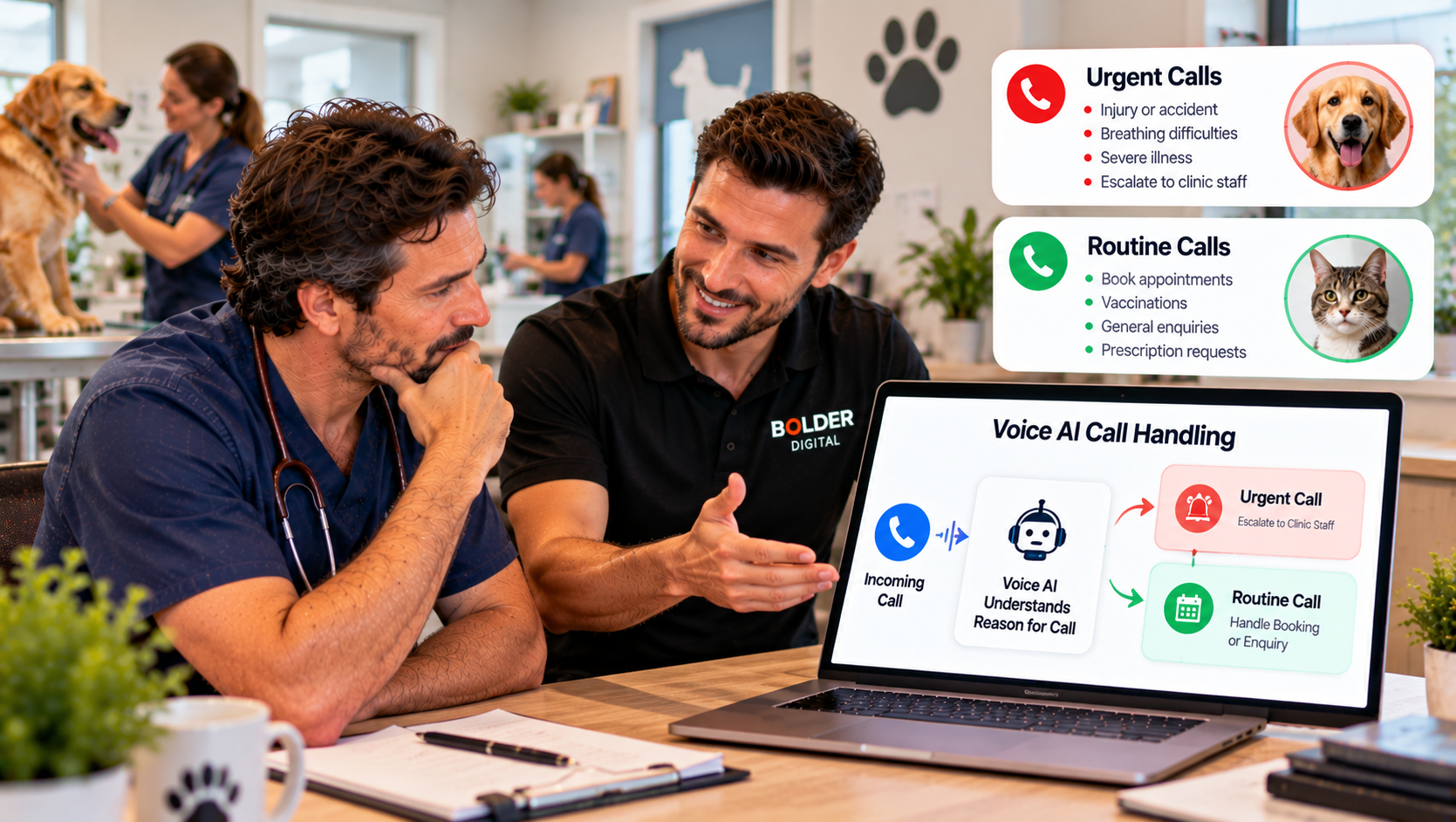
Urgent Calls: Recognise, Route, Never Reassure
Here the design principle matters more than any feature. A voice agent should not assess an animal, diagnose a problem, or tell an owner whether something is serious. Its job is to recognise warning signs and get the call to a person, or to the right emergency service, quickly.
A starting list of triggers, which your own vets must approve, typically includes:
difficulty breathing
collapse or unresponsiveness
a seizure that is prolonged or repeated
heavy bleeding
suspected poisoning, such as snail bait, chocolate, xylitol, or human medication
significant trauma, such as a fall or being hit by a car
a straining or blocked cat
labour that is going badly
When any of these come up, the agent should stop booking, transfer the call live to the vet or nurse on duty, and, if no one is available, give the clinic's approved emergency referral details straight away. It should not ask a long series of questions first.
The Dangerous Phrase: "It's Probably Fine"
Owners often downplay what they are seeing, and sometimes they ask the agent directly. Is that normal? Should I wait until the morning? A well built agent never answers those questions. It says plainly that it cannot assess animals, and it offers to connect the owner to a person or to the approved emergency contact. Reassurance from an automated system, even a kind one, is the single most dangerous thing it could say.
What the Regulation Means for a Clinic
Veterinary rules sit with each state board. Tasmania's Veterinary Service Standards guidance separates veterinary telemedicine, which may only be conducted by a registered vet, from remote triage, which concerns the urgency of a case. It also says practices do not have to offer after hours services, but they must make sure care continues. The sensible reading for a voice agent is to keep it on the information gathering and routing side of that line. Confirm exactly where your own board draws it, since other states differ. Western Australia's board, for instance, does not treat simply taking a telephone message as an after hours service for advertising purposes.
That last point has a practical consequence. If your after hours line is an agent that takes messages and routes emergencies to a partner hospital, describe it that way. Do not let your website imply there is a vet on call if there is not.
After Hours: Know Where the Call Goes
Many clinics do not run an overnight service and refer emergencies to a 24 hour hospital. The voice agent should carry that information accurately: the name, address, and phone number of the right hospital, the clinic's own on call arrangements if any, and clear wording about what the clinic itself can and cannot do. Each clinic needs to confirm these details before launch, and review them as arrangements change.
Some Calls Belong to a Human, Not a Script
Calls about a pet that is dying, has just died, or needs to be put to sleep are not routine and not urgent in the usual sense. They are about grief. A voice agent should recognise these, respond with a short, gentle acknowledgement, and put the owner through to a person, or arrange a call back from one. An efficient but cold reply at that moment can damage a client relationship that took years to build.
Recording and Privacy
Tasmania is widely reported as requiring consent from all parties before a private call is recorded, so the agent should announce at the start that the call may be recorded and that the caller is speaking with an AI assistant. I cover this in more detail in our voice AI compliance guide. Owner details and pet records are personal information, so ask any provider where transcripts are stored.
How Bolder Digital Builds This for Vet Clinics
At Bolder Digital, we start with your triage protocol, not our script. We work with your vets to define the warning signs, the transfer path, and the after hours referral details, and we write fixed wording for the moments when an owner is distressed. We then connect booking to your practice system, and test the agent against awkward scenarios, such as an owner downplaying symptoms, asking for advice, or ringing about a pet that has died, before it answers a real call.
You can see how this fits into ourAI Receptionist service, built so that routine calls are handled quickly and urgent ones reach a person.
The Bottom Line
Voice AI for veterinary clinics works best when it is clear about what it will not do. Let it handle bookings, questions, messages, and reminders. Make sure it recognises warning signs and routes them to a person fast, never reassures, hands grief to a human, and describes your after hours arrangements honestly. Built that way, it takes pressure off the front desk and gives worried owners a faster path to help.
Frequently Asked Questions
Can a voice agent tell whether my pet's problem is an emergency?
No, and it should not try. It can recognise approved warning signs, such as difficulty breathing or suspected poisoning, and route the call to a person or an emergency service straight away. Deciding how serious a condition is remains a veterinary judgement.
What calls should a vet clinic's voice agent handle on its own?
Routine tasks such as booking and rescheduling appointments, answering questions about hours and fees, taking new client details, logging prescription requests for the vet to review, and sending reminders.
What should happen when a call comes in after hours?
The agent should route suspected emergencies to the clinic's on call vet or to the approved emergency hospital, and book routine matters for the next day. The clinic should confirm those arrangements and keep them current.
Are there rules about what an AI can say on a vet clinic phone line?
Veterinary rules are set by each state board. Tasmanian guidance separates telemedicine, which only a registered vet can conduct, from remote triage. Keeping an agent to information gathering and routing is the cautious approach, and clinics should confirm their position with their board.
How does Bolder Digital set up voice AI for veterinary clinics?
We build it around your own triage protocol, with your vets approving the warning signs, the transfer path, and the after hours details. Then we connect booking to your practice system and test difficult scenarios before it takes a live call.
Jarryd Holmes, Founder & Owner, Bolder Digital | Prospect Vale, Tasmania |bolderdigital.com.au