Voice AI Greetings: Writing the First Ten Seconds of Every Call
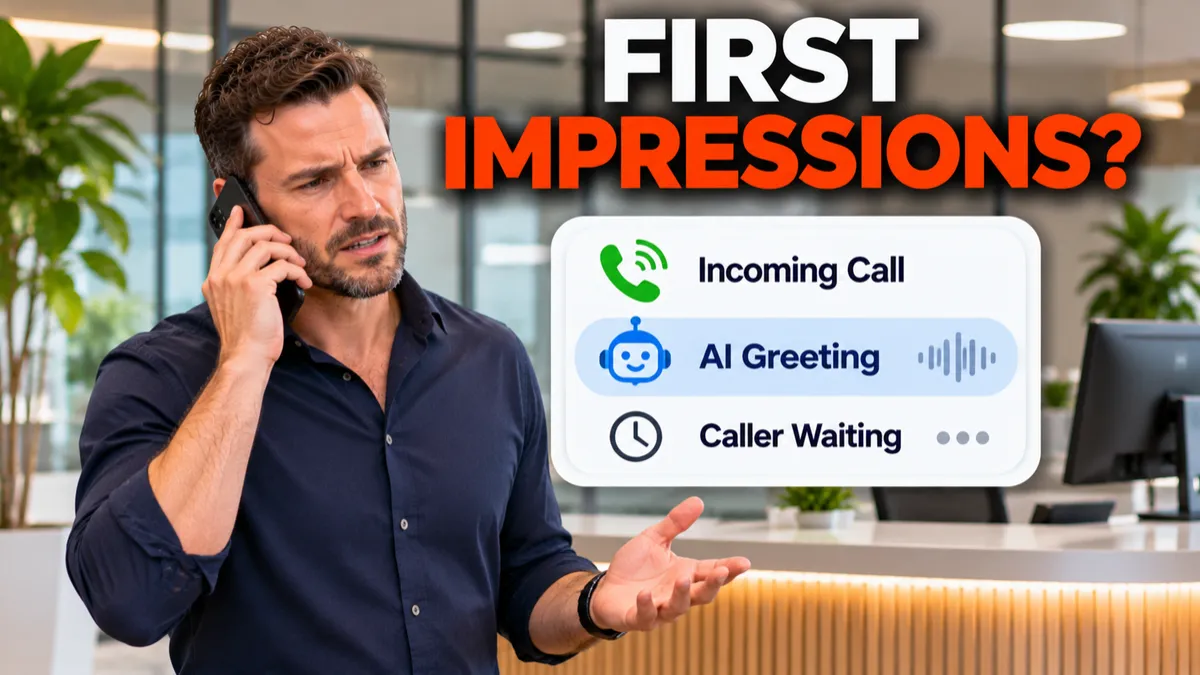
Before a caller has said a word about why they rang, they have already made three quick decisions. Is this the right business? Is this going to be helpful? And should I stay on the line? All of that happens in the first ten seconds, and the only thing that can influence it is the greeting. At Bolder Digital, we write greetings with more care than almost anything else in a voice agent, because it is the one line that every single caller hears.
What a Greeting Has to Do
A good greeting does a few jobs in very few words.
Confirm who answered.The caller wants to know they reached the right business.
Be honest that it is an AI.Clearly, and without drama.
Give the recording notice,where the call is recorded.
Point the caller towards something they can answer.A specific, easy question.
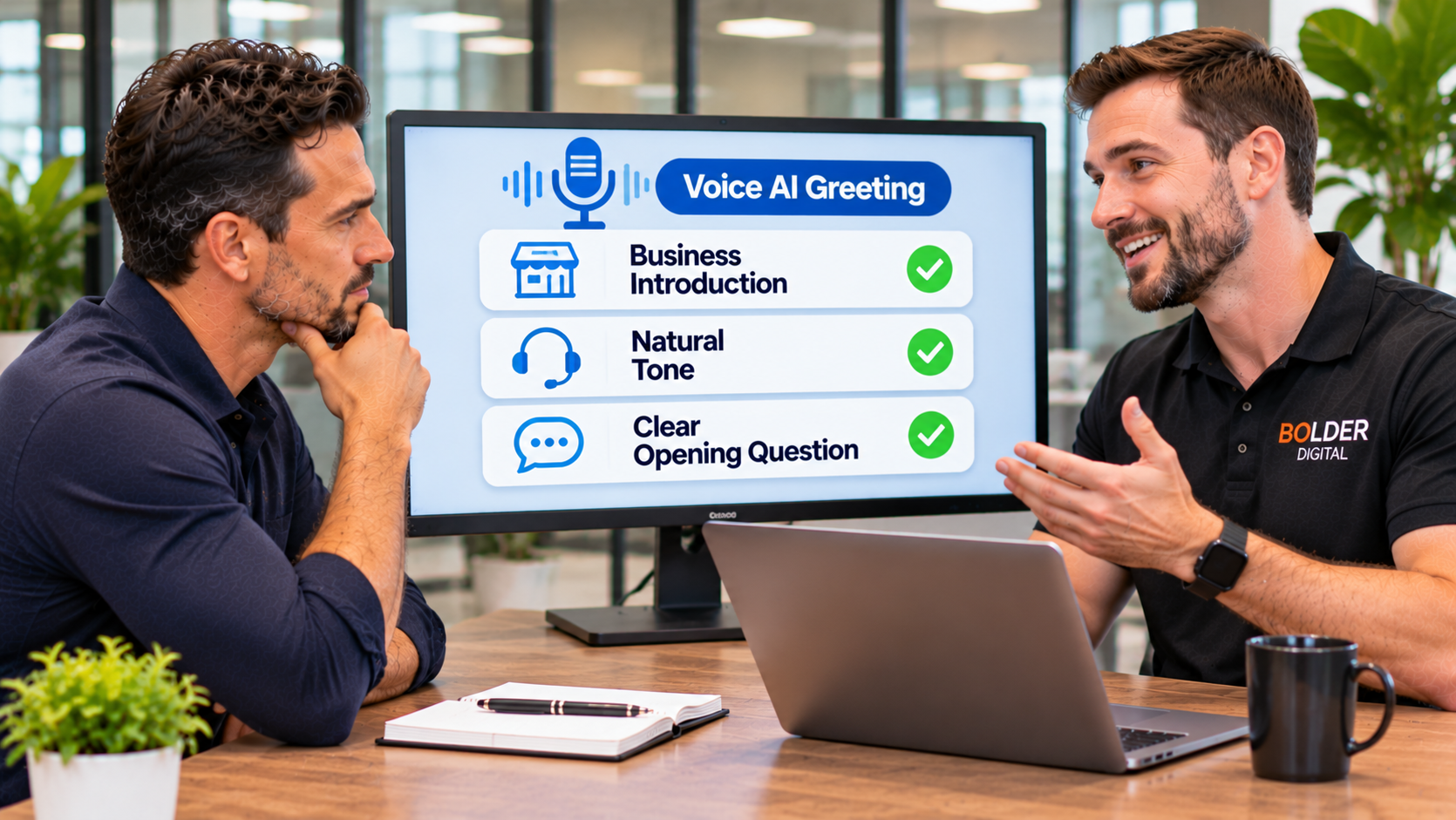
A simple formula covers it: business name, who is speaking, recording notice, a specific prompt.
For example:
“Smith Plumbing, this is the AI assistant. This call is recorded. Are you calling to book a job, change a booking, or ask a question?”
That is about ten seconds spoken, and it does all four jobs.
Keep It Short, and Let the Caller Speak
Guides on voice greetings broadly agree that shorter is better, though they differ on how short. Some say five to ten seconds, and others allow fifteen to twenty. A sensible target is about ten seconds, and certainly no more than a few short sentences. Google’s own voice design guidance says to get to the first topic as soon as possible.
Be wary of cramming. Business owners are tempted to include every service, a promotion, and a list of options. The result is a monologue that loses callers before they have spoken.
Business Name First
The caller already knows they dialled, so skip the preamble and say who you are early. Some guides suggest putting the business name first, and others use “Thank you for calling” first. It is worth testing both. Either way, say your name clearly and pronounce it correctly. Write it out phonetically if you need to, especially for Tasmanian place names and unusual business names, as we covered in our piece on accents.
Say It Is an AI
Tell callers it is an AI assistant. It is honest, it sets expectations, and it avoids the worse moment where someone works it out halfway through. Vendor surveys suggest that a share of callers lose trust or hang up when they discover mid call that they have been talking to an AI, while most are happy to carry on if told upfront. Treat the exact percentages with caution, but the direction is consistent.
A few habits help:
Say it in the second sentence, after the business name.
Sound like a receptionist, not a warning label.
Do not apologise for it. “Unfortunately you’ve reached an automated system” sets up the worst.
If you give the agent a name, follow it straight away with “AI assistant”. Do not present it as a human.
Offer a way to reach a person where you can.
Honesty is also a legal matter. Presenting an AI as a person can mislead customers under consumer law, and the OAIC expects public facing AI to be clearly identified.
The Recording Notice: Put It Where Everyone Hears It
If you record calls, the notice belongs in the greeting, in fixed words that the AI never rewords. Tasmania’s rules on recording private conversations generally require everyone’s consent, as we covered in our compliance guide, so a clear notice at the start matters.
There is a practical trap. Many callers start talking before the greeting finishes. If the notice comes last, they may never hear it, and it may not appear properly on the recording. Put it early, and make the first sentence or two difficult to talk over. Then decide what happens if someone objects. A sensible approach is to offer a person, a callback, or another way to book.
End With a Question the Caller Can Answer
An analysis of about 450,000 AI receptionist calls found that greetings that ended with no question, just “Thank you for calling [business]”, had about 15 percent more hang ups than those that ended with one. It is a vendor analysis, but it fits what every guide says. A greeting should invite a reply.
There is also a difference between open and guided questions.
Open:“How can I help?” Easy, but callers may ramble.
Guided:“Are you calling to book, change a booking, or ask a question?” Gives the caller a rail to grab.
Guided questions usually work better, as long as there are no more than two or three options. A long menu feels like a phone tree from the 1990s.
Do Not Over Promise
Avoid vague boasts such as “I can help you solve any problem”. Be specific, and only mention what the agent can really do. Guidance from Google also warns against telling callers what the agent can do in grand terms. Concrete, brief options are the better version of that idea.
Do Not Start With Bad News
A greeting that opens by saying the person you want is not available tends to push callers away. The analysis mentioned earlier found that the lowest hang up greetings skipped it altogether. Even after hours, it is usually better to start helping, not to announce that the office is closed. If you need to say it, make it brief and follow it straight away with what the agent can do.
Pauses, Pace, and the First Word
Small technical details change how a greeting feels.
Use punctuation to create pauses,such as after the business name.
Write numbers and unusual words the way they should be spoken.
Start with a short beat.On some phone lines, the first syllable can be clipped, so test how the opening sounds on a real call.
Decide whether the greeting can be interrupted.Interruptible feels natural, but it can cut off the recording notice.
Variations Worth Having
One greeting rarely fits every situation. Consider variants for:
After hours and overflow,with the same structure and a different prompt, such as taking a message.
Public holidays,where the agent can mention special hours.
Multiple locations,where the greeting names the location the caller reached.
Returning callers,where you might greet by name. Do this sparingly. Some people do not like being recognised, and caller ID is not proof of identity, as we covered in our piece on business numbers.
Emergency lines,where the first words should help someone in trouble straight away, using approved wording.
For outbound calls, the person usually speaks first. Let them say hello, then identify yourself and the reason for the call quickly, and make sure you have the right to call.
Tone: Sound Like Your Business
Plain, friendly Australian English works for most. Avoid phrases such as “Greetings, valued customer”, and anything that sounds like a recorded menu. A trade business can sound practical and quick. A clinic can sound calm. A restaurant can sound warm. If you choose a voice, make sure it suits your customers.
Sample Greetings
Tradie:“Smith Plumbing, this is the AI assistant, and this call is recorded. Are you after a booking, a quote, or something urgent?”
Salon:“Hi, it’s the AI assistant at the salon. This call is recorded. Would you like to book, change an appointment, or ask a question?”
Accountant:“Thanks for calling Smith and Co. I’m an AI assistant, and this call is recorded. Are you calling to book a time, or leave a message for the team?”
Restaurant:“Hi, this is the AI assistant for the restaurant, and calls are recorded. Would you like to book a table or ask about tonight?”
Clinic:“You’ve reached the clinic. I’m an AI assistant, and this call is recorded. If this is an emergency, please hang up and call 000. Otherwise, would you like to book an appointment?”
For clinics and similar practices, the emergency wording should be written and approved by your clinicians.
Hang Ups Are Not Always What They Seem
When you start measuring, you will see hang ups, and it is tempting to blame the greeting. The same analysis found that most short calls were silent drops in the first few seconds, before the caller reacted to anything specific, which points to junk or spam calls more than real customers. It even suggested that a raw hang up rate says more about your phone number’s reputation than about your receptionist.
So look more carefully. Separate silent calls from callers who spoke, listen to a sample, and judge the greeting on the callers who stayed long enough to react.
Test the Greeting Like a Customer
Before and after launch:
call from a mobile, a landline, and a car speaker
test in a noisy place
ask people with different accents and ages to call
time how long it takes to the first question
listen for clipped words and awkward pauses
Then test one change at a time, such as business name first versus “Thank you for calling” first, or an open question versus a guided one. Run each for a couple of weeks, and read the transcripts. If many callers ask “Is this a real person?”, your disclosure is probably unclear or buried.
Measure
calls that end in under fifteen seconds, split into silent and spoken
callers who ask for a person straight away
callers who ask if it is real
calls where the caller answers the first question
bookings or messages from calls
A Greeting Checklist
Business name said early and pronounced correctly.
A plain, honest “AI assistant” line.
Recording notice in fixed words, early.
A short, specific question, with no more than three options.
About ten seconds, and no longer than a few short sentences.
No bad news up front.
Tested on real phones, in real conditions.
How Bolder Digital Approaches This
At Bolder Digital, we write and test the greeting with you, using your real business name, voice, and call types. We cover disclosure and the recording notice, build variants for after hours and different locations, and listen to real calls to tune it. You can see how this fits into ourAI Receptionist service.
The Bottom Line
The greeting is ten seconds that every caller hears. Say who answered, be honest that it is an AI, give the recording notice early, and end with a short question the caller can answer. Keep it brief, test it on real phones, and judge it by the callers who stayed to talk. Get that right, and everything after it starts from trust.

Frequently Asked Questions
How long should a voice AI greeting be?
Guides vary, from about five to ten seconds up to fifteen or twenty. A good target is around ten seconds, with a few short sentences, and then test it with your own callers.
Should the greeting say it is an AI?
Yes. It is honest, it sets expectations, and it avoids the worse moment where a caller discovers it mid call. Say it in the second sentence, in a natural way, without apologising.
Where should the recording notice go?
In the greeting, in fixed words, early enough that callers hear it before they start talking. If someone objects, offer a person, a callback, or another way to book.
Should the greeting ask a question?
Yes. An analysis of many AI receptionist calls found that greetings with no question had more hang ups. A short, guided question with two or three options usually works better than a bare “How can I help?”
Why do some callers hang up straight away?
Many short calls are silent drops from junk or spam callers, which says more about your number’s reputation than your greeting. Judge the greeting by the callers who spoke and then left.
Jarryd Holmes, Founder & Owner, Bolder Digital | Prospect Vale, Tasmania |bolderdigital.com.au